

Answer Summary
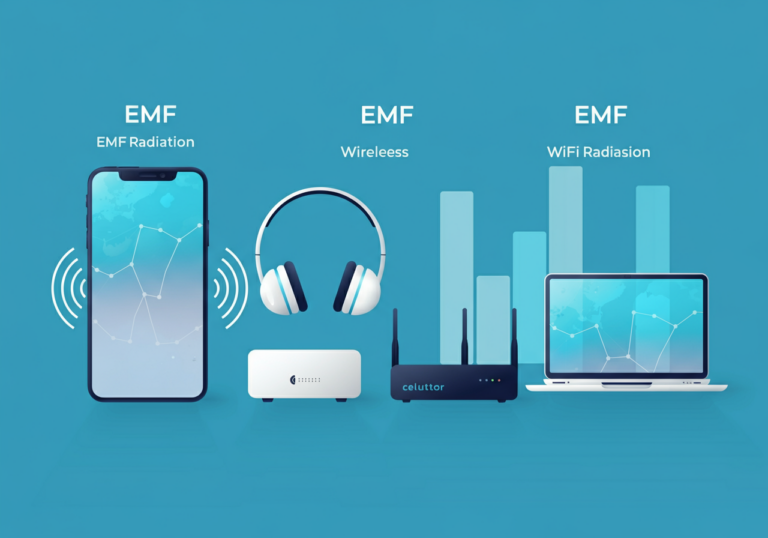
EMF radiation refers to electromagnetic fields produced by electrical devices and wireless technologies. These invisible energy fields surround us constantly, emitted by cell phones and radiation, WiFi routers, power lines, and household appliances.
Scientific research has documented biological effects at exposure levels far below current safety standards, including impacts on DNA, cellular function, and various body systems.
Key Takeaways
- EMF stands for electromagnetic field, an invisible area of energy produced by electrically charged objects including phones, routers, appliances, and power lines
- Two main types affect daily life: radiofrequencyRadiofrequency (RF) refers to electromagnetic waves in the frequency range of approximately 3 kHz to 300 GHz. This portion of the electromagnetic spectrum is used for wireless communication. RF energy... (RF) radiation from wireless devices and extremely low frequencyExtremely low frequency (ELF) refers to electromagnetic fields with frequencies between 3 Hz and 300 Hz. This range includes the 50/60 Hz fields produced by electrical power systems. ELF fields... (ELF) fields from electrical wiring and appliances
- Research documents biological effects at non-thermal exposure levels, meaning effects occur without any detectable heating of tissue
- Over 3,500 peer-reviewed studies in the BioInitiative Report link EMF exposure to effects on DNA, hormones, the nervous system, and reproductive health
- Current safety standards only address thermal effects, leaving a gap between what regulations permit and what research shows can affect biology
What is EMF Radiation?
Electromagnetic fields (EMF) are invisible areas of energy associated with electrical power and various forms of natural and artificial lighting. EMF radiation exists on a spectrum, ranging from extremely low frequency (ELF) fields produced by electrical wiring to radiofrequency (RF) radiation from wireless devices to visible light and beyond.
For a deeper understanding of how EMF sensitivity affects some individuals, see our complete guide to electromagnetic hypersensitivity.
| EMF Type | Frequency Range | Common Sources | Penetration |
|---|---|---|---|
| ELF (Extremely Low Frequency) | 3-300 Hz | Power lines, electrical wiring, appliances | Passes through most materials |
| RF (Radiofrequency) | 3 kHz – 300 GHz | Cell phones, WiFi, Bluetooth, 5G5G is the fifth generation of wireless cellular technology, offering faster data speeds, lower latency, and greater network capacity than 4G LTE. It began rolling out commercially in 2019. 5G..., smart meters | Absorbed by body tissue |
| Microwave | 300 MHz – 300 GHz | Cell phones, WiFi routers, microwave ovens | Absorbed by water-containing tissue |
The key distinction that matters for health is between ionizing and non-ionizing radiation. Ionizing radiationIonizing radiation is electromagnetic energy with enough power to remove electrons from atoms, creating charged particles called ions. This includes X-rays, gamma rays, and ultraviolet radiation. Unlike the non-ionizing radiation... (X-rays, gamma rays) has enough energy to break chemical bonds and directly damage DNA. Non-ionizing radiationNon-ionizing radiation is electromagnetic energy that lacks sufficient power to remove electrons from atoms. This includes radio waves, microwaves, infrared, visible light, and lower-energy ultraviolet. The EMF from cell phones,... (the EMF from your devices) was long assumed to be harmless because it lacks this direct bond-breaking capability.
However, this assumption has been challenged by decades of research showing that non-ionizing EMF can affect biological systems through other mechanisms.
How EMF Interacts with Your Body
When EMF radiation encounters your body, several things happen depending on the frequency and intensity of the field.
Thermal vs. Non-Thermal Effects
Thermal effects occur when EMF heats body tissue. This is how microwave ovens work and is the basis for current safety standards. Regulators assume that if EMF does not heat your tissue, it cannot harm you.

Non-thermal effects occur at exposure levels too low to cause measurable heating. Research has documented biological changes at these levels, including:
- Changes in cell membrane permeability
- Alterations in calcium signaling
- DNA strand breaks
- Changes in protein expression
- Disruption of the blood-brain barrier
The existence of non-thermal effects is why many researchers argue that current safety standards are inadequate.
The Cellular Stress Response
One of the most well-documented mechanisms linking EMF to biological effects is the cellular stress response. When cells are exposed to EMF, they activate protective mechanisms similar to those triggered by heat, toxins, or other stressors.
Dr. Martin Blank’s research at Columbia University demonstrated that EMF exposure activates the same stress response pathways in cells that other environmental stressors do. This response includes the production of heat shock proteins, which cells make to protect themselves from damage.
The fact that cells respond to EMF as a stressor, even at non-thermal levels, suggests the body perceives this exposure as something requiring a defensive response.

What the Research Shows: Health Effects of EMF
Scientific research has examined EMF’s effects across virtually every biological system. The findings paint a consistent picture: EMF exposure is associated with measurable biological changes across species and organ systems.
DNA Damage
Multiple studies have demonstrated that EMF exposure can cause DNA strand breaks. This is significant because DNA damage is a precursor to cancer and other diseases.
Research by Schuermann and Mevissen (2021) reviewed the evidence linking EMF to oxidative stress, a biological process that damages DNA, proteins, and lipids. Their analysis of 150 studies found consistent evidence that EMF exposure increases reactive oxygen species (free radicals) in cells.
Neurological Effects
The brain and nervous system appear particularly sensitive to EMF exposure. Research has documented:
| Effect | Finding | Significance |
|---|---|---|
| Blood-brain barrier | Increased permeability after EMF exposure | May allow toxins to enter brain tissue |
| Neurotransmitters | Altered dopamine and serotonin levels | Affects mood, sleep, and cognition |
| Brain metabolism | Changes in glucose uptake in brain regions near phone antenna | Indicates direct biological response |
| Cognitive function | Impaired memory and attention in some studies | May affect learning and work performance |
People who experience these effects acutely may have EMF sensitivity symptoms that range from headaches to cognitive difficulties.

Reproductive Health
Both male and female reproductive systems show sensitivity to EMF exposure:
Male fertility: – Decreased sperm count and motility – Increased sperm DNA fragmentation – Reduced testosterone levels in some studies
Female fertility: – Altered hormone levels – Potential effects on fetal development – Some studies suggest links to miscarriage risk
Cancer
The relationship between EMF and cancer has been extensively studied. Key findings include:
- IARC classification: The International Agency for Research on Cancer (part of the WHO) classified radiofrequency EMF as “possibly carcinogenic to humans” (Group 2B) in 2011
- NTP Study: The U.S. National Toxicology Program’s $30 million study found “clear evidence” of cancer in male rats exposed to cell phone radiation
- Ramazzini Institute: An Italian study replicated the NTP findings at lower, more environmentally relevant exposure levels
Other Documented Effects
Research has also linked EMF exposure to:

- Sleep disruption and altered melatonin production
- Cardiovascular changes including heart rate variability
- Immune system effects
- Endocrine system disruption
- Effects on developing children
Understanding EMF Exposure Levels
Not all EMF exposure is equal. Several factors determine your actual exposure:
Distance Matters Most
EMF exposure drops dramatically with distance due to the inverse-square law. Doubling your distance from a source reduces exposure by approximately 75%.
| Distance from Phone | Relative Exposure |
|---|---|
| Against body | 100% (baseline) |
| 1 inch away | ~50% |
| 6 inches away | ~3% |
| 12 inches away | <1% |
This is why carrying your phone away from your body, rather than in your pocket, makes a significant difference.
Duration Matters
Cumulative exposure over time adds up. Eight hours sleeping next to a WiFi router represents more total exposure than a few phone calls, even if the instantaneous exposure is lower.
Source Type Matters
Different devices emit different types and amounts of EMF:

| Source | EMF Type | Typical Concern |
|---|---|---|
| Cell phone (active call) | RF | High when against head |
| WiFi router | RF | Constant, varies with distance |
| Laptop on lap | RF + ELF | Direct body contact |
| Smart meter | RF | Pulsed emissions, varies |
| Power lines | ELF | Strongest near lines |
| Electrical panel | ELF | Localized, high intensity |
Current Safety Standards: The Gap
Current EMF safety standards in most countries are based solely on preventing thermal effects, the heating of tissue. These standards were developed decades ago and have not been updated to reflect the substantial body of research on non-thermal effects.
The Thermal-Only Approach
The Federal Communications Commission (FCC) in the United States last updated its EMF safety standards in 1996. These limits assume that if EMF does not heat your tissue by a certain amount, it cannot harm you.
However, research shows biological effects occurring at exposure levels 100 to 1,000 times below these thermal thresholds. To measure actual EMF levels in your environment, you need a quality EMF detector.
International Variations
Some countries have adopted stricter standards based on the precautionary principle:
| Region | Approach |
|---|---|
| United States (FCC) | Thermal-only, unchanged since 1996 |
| European Union (ICNIRP) | Thermal-only, with some member states adopting stricter limits |
| Switzerland | 10x stricter than ICNIRP for some sources |
| Russia | Significantly stricter limits based on non-thermal research |
| Austria | Medical guidelines recognize electromagnetic hypersensitivity |
For more on what constitutes safe EMF levels for humans, see our guide to safe EMF levels.
Why Some People Are More Affected
Not everyone responds to EMF exposure the same way. Some individuals appear to be more sensitive, experiencing noticeable symptoms at exposure levels others tolerate without issue.
Factors that may influence sensitivity include:
- Genetic variations in detoxification and stress response pathways
- Overall toxic burden from other environmental exposures
- Nutritional status affecting cellular repair mechanisms
- Pre-existing health conditions that may be exacerbated
- Cumulative exposure history over time
Those who experience pronounced symptoms may have electromagnetic hypersensitivity (EHS), a condition recognized by the WHO as producing real symptoms, even as the mechanism remains debated.
Practical Implications
Understanding EMF radiation and its potential health effects does not mean abandoning technology. It means making informed choices about how you use it.
The Precautionary Approach
Given the substantial body of research showing biological effects at non-thermal levels, many experts recommend a precautionary approach:

- Reduce unnecessary exposure where practical
- Increase distance between yourself and EMF sources
- Limit duration of high-exposure activities
- Be especially cautious with children, whose developing bodies may be more vulnerable
For specific strategies to reduce your exposure, see our EMF Protection Guide.
Common Misconceptions
Misconception: Non-ionizing radiation cannot cause biological effects because it does not have enough energy to break chemical bonds.
Reality: While non-ionizing EMF cannot break bonds directly like X-rays can, it affects biology through other mechanisms including oxidative stress, calcium signaling disruption, and activation of cellular stress responses. Thousands of studies document these non-thermal effects.
Misconception: If EMF were harmful, we would all be sick by now.
Reality: Many effects of EMF exposure are subtle, cumulative, or affect some individuals more than others. Additionally, many modern chronic health conditions have risen alongside EMF exposure, though establishing direct causation is complex. The research shows effects at a population level that may not be obvious to any single individual.
Misconception: Government safety standards protect us from harmful EMF levels.
Reality: Current standards in most countries only address thermal effects and have not been updated to reflect research on non-thermal biological effects. Many scientists and physicians have called for standards to be revised based on the substantial body of research showing effects below current limits.
This post is part of the EMF Sensitivity & Health pillar on Shield Your Body. For related content, see: – Electromagnetic Hypersensitivity: Complete EHS Guide (Pillar) – EMF Sensitivity Symptoms: Signs You May Be Affected – Safe EMF Levels: What Research Says About Exposure Limits – EMF Protection Guide: How to Reduce Your Exposure
Frequently Asked Questions
EMF radiation refers to electromagnetic fields produced by electrical devices and wireless technologies, which exist on a spectrum from extremely low frequency (ELF) fields to radiofrequency (RF) radiation.
Research has linked EMF exposure to various health effects, including DNA damage, neurological changes, reproductive health issues, and potential cancer risks.
EMF exposure decreases significantly with distance; for example, doubling your distance from a source can reduce exposure by approximately 75%.
Current safety standards primarily address thermal effects and do not account for non-thermal biological effects, which research shows can occur at exposure levels much lower than those currently permitted.
EHS is a condition where individuals experience symptoms in response to EMF exposure, which can include headaches and cognitive difficulties, even at levels tolerated by others.