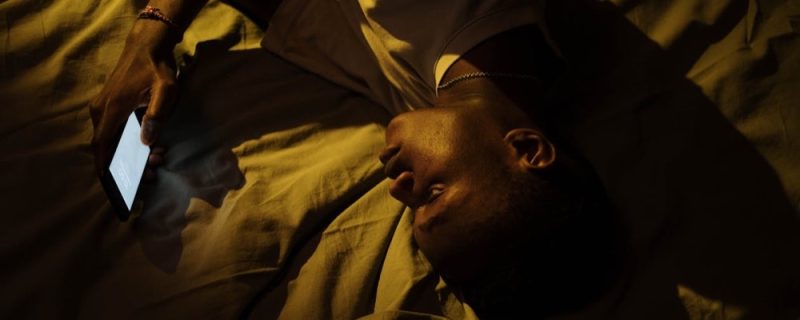

Blue light from screens directly interferes with your ability to fall asleep by suppressing melatonin, the hormone that signals sleep time to your body.
Evening exposure to phones, computers, and TVs can delay melatonin release by 90 minutes or more and reduce total melatonin production by up to 50%, leading to difficulty falling asleep, lighter sleep, and grogginess the next day.
The impact goes beyond just feeling tired. Chronic sleep disruption from nighttime blue light affects memory consolidation, immune function, metabolism, and mood. The good news is that relatively simple changes to your evening routine can protect your sleep without giving up technology entirely.
Key Takeaways
- Blue light suppresses melatonin production by up to 50% compared to dim light exposure in the evening
- E-reader users took 10 minutes longer to fall asleep and had reduced alertness the next morning compared to print book readers
- Even 2 hours of screen use before bed can significantly delay your natural sleep onset time
- The 380-500nm wavelength range is most disruptive to melatonin, with 450-480nm being the peak sensitivity
- Amber-tinted glasses worn for 3 hours before bed can restore natural melatonin production even with screen use
The Blue Light-Sleep Connection
Your body runs on an internal clock called the circadian rhythm. This 24-hour cycle governs when you feel alert, when you feel sleepy, and when various hormones are released. Light is the primary signal that sets this clock.
For millions of years, humans experienced bright light during the day and darkness at night. The sun provided blue-rich light during daytime hours, signaling alertness. Darkness after sunset allowed melatonin production to begin, preparing the body for sleep.
Modern technology has disrupted this ancient pattern. LED screens emit significant amounts of blue light, and we use them late into the evening, often in bed. Your brain can’t distinguish between blue light from the sun at noon and blue light from your phone at midnight. It responds the same way: suppress melatonin and stay awake.
For a complete understanding of blue light and the full electromagnetic spectrumThe electromagnetic spectrum is the complete range of electromagnetic radiation, organized by wavelength and frequency. It spans from radio waves (lowest frequency) through microwaves, infrared, visible light, ultraviolet, X-rays, to..., see our guide: What is Blue Light?
How Blue Light Suppresses Melatonin
The mechanism is well understood. Your eyes contain specialized cells called intrinsically photosensitive retinal ganglion cells (ipRGCs). These cells don’t help you see images. Instead, they detect light levels and send signals to your brain’s master clock, the suprachiasmatic nucleus (SCN).
When ipRGCs detect blue light, they signal the SCN to suppress melatonin production from the pineal gland. This makes biological sense: blue light signals daytime, and you shouldn’t be sleepy during the day.
The problem arises when artificial blue light tricks this system at night. Your pineal gland receives the message “it’s still daytime” and delays melatonin release. The result:
- Later sleep onset
- Reduced total melatonin production
- Shallower sleep architecture
- Less restorative deep sleep
Research shows this isn’t a subtle effect. Blue light exposure in the evening can suppress melatonin production by 50% or more compared to dim light conditions.
Research on Screens and Sleep Quality
Multiple studies have documented how screen use before bed affects sleep. The evidence is consistent and concerning.
The E-Reader Study
A landmark study published in the Proceedings of the National Academy of Sciences compared people reading on light-emitting e-readers versus printed books for 4 hours before bed.
The e-reader group:
- Took 10 minutes longer to fall asleep
- Had reduced evening sleepiness
- Showed delayed melatonin onset
- Experienced less REM sleep
- Felt more tired the next morning despite equal time in bed
The researchers concluded that light-emitting devices before bed can interfere with sleep, circadian timing, and next-morning alertness.
The Melatonin Timing Study
Research in the Journal of Clinical Endocrinology & Metabolism measured how different light exposures affected melatonin timing. Participants exposed to blue-enriched light in the evening showed melatonin onset delayed by 90 minutes compared to those in dim light conditions.
That’s an hour and a half later before your body even begins preparing for sleep.
The Teenager Studies
Adolescents appear particularly vulnerable. A study in Chronobiology International found that teenagers exposed to screens before bed had significantly delayed circadian rhythms and reported more difficulty waking for school.
Given that teenagers naturally have later chronotypes (their biology pushes toward late bedtimes), adding blue light exposure compounds the problem.
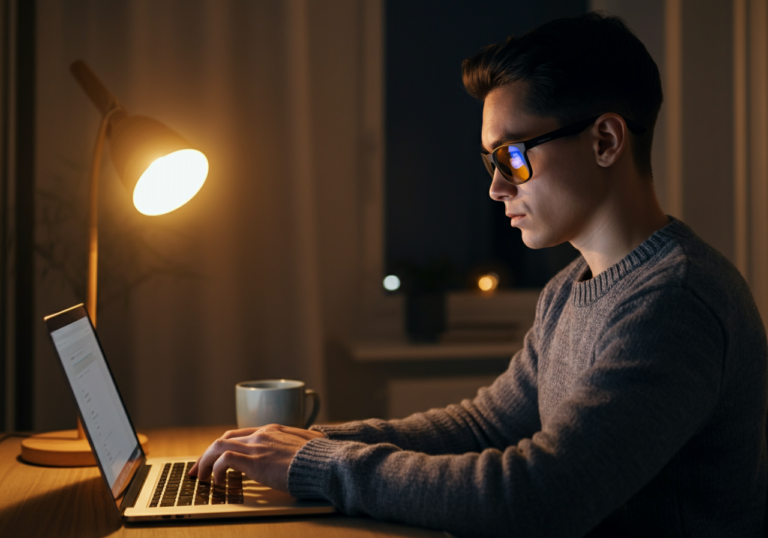
Blue Light Sleep Disruption: The Numbers
| Metric | Without Blue Light (Dim Evening) | With Blue Light (Screen Use) | Impact |
|---|---|---|---|
| Melatonin onset | 9:00 PM | 10:30 PM | 90 min delay |
| Time to fall asleep | 15 minutes | 25 minutes | +67% longer |
| Total melatonin | 100% | 50% | Half production |
| REM sleep | Normal | Reduced | Less restorative |
| Morning alertness | Normal | Reduced | Groggier awakening |
Why Evening Blue Light Is Especially Problematic
Timing matters enormously. Blue light during the day is beneficial. It suppresses melatonin when you should be awake, boosting alertness and cognitive function. The same blue light at night works against your biology.
The 2-Hour Window
The hours immediately before your intended bedtime are the most sensitive period. This is when your body should be ramping up melatonin production, not suppressing it.
Bright light exposure during this window:
- Delays the start of melatonin secretion
- Shifts your entire circadian rhythm later
- Creates a mismatch between your biological sleep time and your schedule
Cumulative Effects
One night of screen use before bed might cause mild grogginess. But chronic evening blue light exposure can shift your entire circadian rhythm, a condition called delayed sleep phase syndrome. Your natural sleep time drifts later and later, making it increasingly difficult to wake up when you need to.
Beyond Sleep Onset
Sleep disruption from blue light doesn’t just mean taking longer to fall asleep. Research shows effects on sleep architecture as well. The amount of deep, restorative sleep decreases, even if you eventually get enough total hours.
Practical Steps to Protect Your Sleep
You don’t need to eliminate screens from your life. Strategic changes can protect your sleep while maintaining your digital lifestyle.
Step 1: Establish a Screen Curfew
Set a consistent time to stop using backlit screens. A 2-hour buffer before bed is ideal. If that feels impossible, start with 1 hour and gradually extend it.
During this wind-down period, switch to non-screen activities: reading physical books, conversation, gentle stretching, or audio content with the screen off.
Step 2: Enable Night Mode on All Devices
Every major device now offers a night mode that reduces blue light emission. Set these to activate automatically in the evening:
- iPhone: Settings > Display & Brightness > Night Shift
- Android: Settings > Display > Night Light
- Mac: System Preferences > Displays > Night Shift
- Windows: Settings > Display > Night light
These settings help but don’t eliminate blue light completely. Consider them one layer of protection, not a complete solution.
Step 3: Wear Blue Light Blocking Glasses
For evening screen use, blue light blocking glasses provide stronger protection than software filters alone. Amber or orange-tinted lenses block 70-90% of blue light.
As I wrote in Empowered, “Wearing these glasses during late afternoon and evening hours is particularly beneficial. They can help buffer your eyes and brain from the effects of ambient lighting, screens, and devices, especially in environments where screen use is unavoidable after sunset.”
Step 4: Adjust Room Lighting
Screen blue light isn’t the only source. LED room lighting also emits significant blue wavelengths.
For evening hours:
- Switch to warm-toned bulbs (2700K or lower)
- Use dimmer switches to reduce overall light intensity
- Consider red-spectrum lighting for bedrooms and bathrooms
Step 5: Get Morning Light Exposure
Bright light in the morning anchors your circadian rhythm and makes you more resilient to evening blue light. Aim for 15-30 minutes of outdoor light exposure in the morning, ideally within an hour of waking.
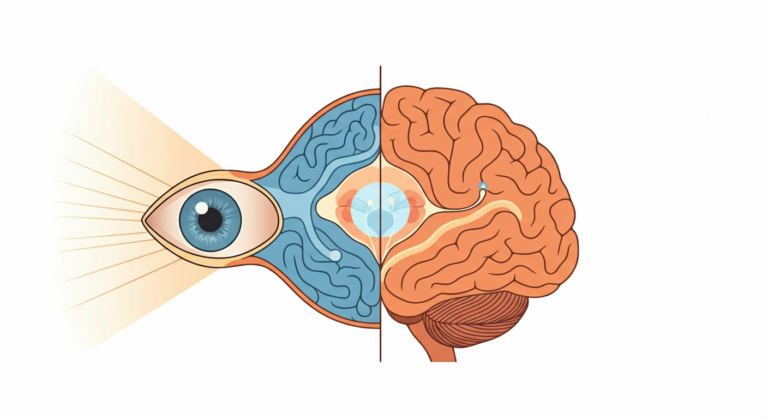
This strengthens your body’s day-night distinction and helps maintain consistent sleep timing.
Step 6: Create a Tech-Free Bedroom
The strongest intervention is removing screens from your bedroom entirely. When your phone charges in another room, you eliminate the temptation for late-night scrolling and the disruptive blue light that comes with it.
If you use your phone as an alarm, switch to a basic alarm clock. For comprehensive guidance on creating an EMF free bedroom environment that supports optimal sleep, see our complete guide.
Red Light: The Sleep-Promoting Alternative
If blue light suppresses melatonin, what light can you use at night? The answer is red light.
Red light has wavelengths between 620-750nm, far outside the range that affects melatonin production. Research shows red light exposure at night does not suppress melatonin or delay sleep onset.
This makes red light ideal for:
- Evening reading lamps
- Nighttime bathroom visits
- Ambient bedroom lighting
- Late-night activities when some light is needed
For a detailed look at how red light supports sleep, see our complete guide: Red Light for Sleep.
Common Misconceptions
Misconception: Blue light from screens causes permanent eye damage
Reality: The American Academy of Ophthalmology states there is no scientific evidence that blue light from digital devices causes permanent retinal damage. The primary concern with screen blue light is its effect on sleep and circadian rhythm, not eye tissue damage.
Misconception: Night mode on your phone fully solves the problem
Reality: Night Shift and similar features reduce blue light emission but do not eliminate it. Studies show that amber-tinted glasses blocking 70-90% of blue light are significantly more effective at preserving melatonin production than software filters alone.
Misconception: All blue light is harmful and should be avoided
Reality: Blue light during the day is beneficial. It suppresses melatonin when you should be awake, boosting alertness and cognitive function. The problem is specifically evening blue light exposure, which tricks your brain into thinking it is still daytime.
Next Steps
Protecting your sleep from blue light doesn’t require dramatic lifestyle changes. Start with one or two strategies that fit your routine:
- Set your devices to automatically enable night mode at sunset
- Move your phone charger out of the bedroom
- Try amber glasses for your evening screen time
Small changes compound into significant improvements in sleep quality and daytime energy.
Ready to find the right blue light protection? Browse our blue light blocking glasses and sleep products.
Frequently Asked Questions
Melatonin suppression begins within 15-30 minutes of blue light exposure. The effect increases with longer exposure and higher intensity. Peak suppression occurs after 1-2 hours of continuous exposure.
Both emit blue light, but phones are typically worse for sleep because you hold them closer to your eyes and often use them in bed. A TV across the room delivers less blue light to your retinas than a phone at arm's length.
Sleep debt is difficult to fully repay. While extra weekend sleep provides some recovery, it doesn't undo the health impacts of chronic weeknight sleep deprivation and can further disrupt your circadian rhythm.
E-ink devices without backlighting (like basic Kindle models) don't emit significant blue light and shouldn't affect melatonin. However, if your e-reader has a built-in light, it may still impact sleep.
Children appear more susceptible to blue light effects because their eyes transmit more blue light and their circadian systems are still developing. Screen curfews and blue light glasses may be even more important for kids.
Signs include: difficulty falling asleep despite feeling tired, needing an alarm to wake up, feeling groggy in the morning, relying on caffeine to function, and sleeping much later on weekends than weekdays.