

Electric blankets are conditionally safer when used properly and inspected regularly. They present three categories of risk: fire hazards, burn injuries, and electromagnetic field (EMFEMF stands for electromagnetic field (also called electromagnetic frequency or electromagnetic force). EMFs are invisible fields of energy produced by electrically charged objects. They exist on a spectrum ranging from...) radiation exposure.
Modern blankets with auto-shutoff features reduce fire and burn risks. However, the EMF concern persists regardless of safety certifications. For maximum safety, pre-heat your blanket then unplug before sleeping.
Medical Disclaimer: This article is for informational purposes only. It is not, nor is it intended to be, a substitute for professional medical advice, diagnosis, or treatment and should never be relied upon for specific medical advice.
Key Takeaways
- Electric blankets cause approximately 500 house fires annually in the United States
- Blankets older than 10 years have significantly higher failure rates and should be replaced
- Third-degree burns can occur when users cannot feel heat due to diabetic neuropathy or other conditions
- EMF exposure from electric blankets ranges from 5-100+ milligauss, exceeding levels linked to health effects
- Pre-heating then unplugging eliminates EMF while maintaining warmth through thermal retention
Electric Blanket Safety Overview
Electric blankets can be safer when used correctly, but “safer” depends on how you define and manage the risks. Most safety discussions focus exclusively on fire and burn prevention. While these are serious concerns, they represent only part of the picture.
Understanding the connection between heating blankets and cancer risk requires looking at electromagnetic field exposure, a factor that most safety guides ignore entirely. This complete guide addresses both traditional safety concerns and the often-overlooked EMF dimension.
The good news is that with proper precautions, you can enjoy the benefits of a warm bed while minimizing all categories of risk.
Traditional Safety Concerns: Fire, Burns, and Electrical Hazards
Fire Risk
Electric blankets cause approximately 500 house fires each year in the United States, according to the Electrical Safety Foundation International (ESFI). These fires result in roughly 10 deaths and 40 injuries annually.
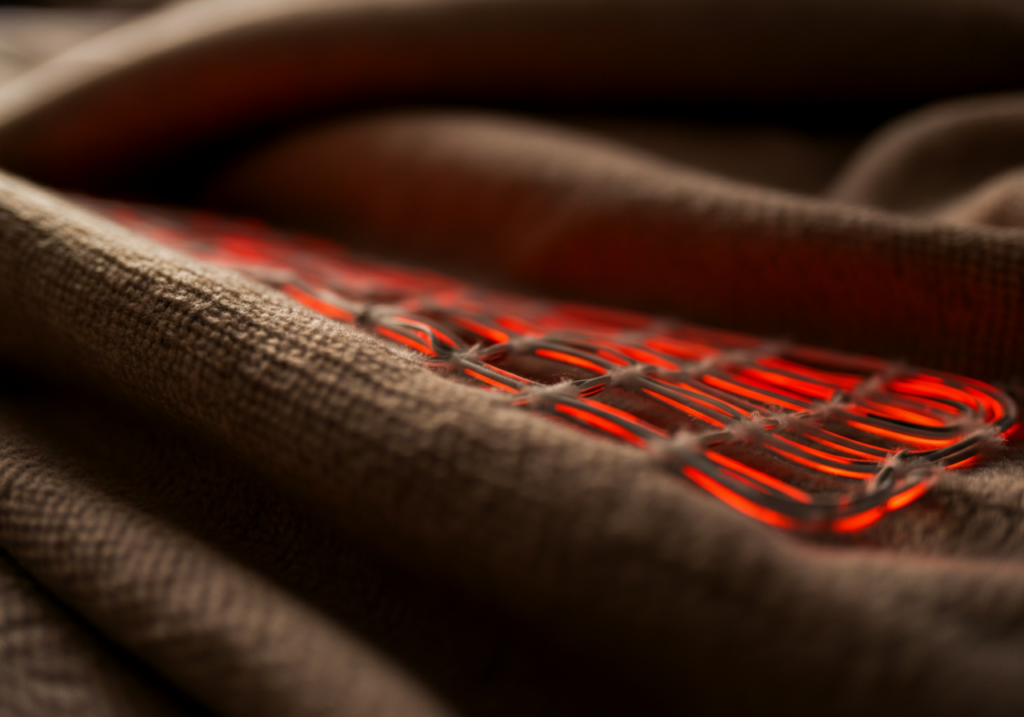
The primary causes of electric blanket fires include:
Damaged wiring. Frayed, cracked, or broken wires create hot spots that can ignite bedding materials. Damage often occurs from folding, bunching, or pets scratching the blanket.
Overheating. When blankets cannot dissipate heat properly, perhaps because they’re covered by additional blankets or tucked tightly under a mattress, temperatures can rise to dangerous levels.
Age-related degradation. Internal components deteriorate over time. Blankets more than 10 years old have significantly higher failure rates regardless of visible condition.
Manufacturing defects. While rare with certified products, defective blankets occasionally reach consumers. Always purchase from reputable manufacturers with safety certifications.
Burn Risk
Burns from electric blankets range from minor first-degree burns to severe third-degree injuries requiring hospitalization. Certain populations face elevated burn risk.
| Risk Factor | Why It Increases Burn Risk |
|---|---|
| Diabetic neuropathy | Cannot feel excessive heat |
| Peripheral artery disease | Poor circulation reduces heat sensation |
| Spinal cord injuries | Impaired sensation below injury level |
| Deep sleepers | Don’t wake when overheating occurs |
| Elderly individuals | Thinner skin burns more easily |
| Infants and young children | Cannot communicate discomfort or move away |
Burns typically occur when users fall asleep while the blanket operates at high settings for extended periods. The risk increases when users have impaired sensation and cannot detect excessive heat.
Electrical Hazards
Beyond fire and burns, electric blankets present standard electrical hazards.
Shock risk. Damaged insulation can expose live wires. This risk increases when blankets become wet or when pets chew on cords.
Short circuits. Internal wire damage can cause short circuits that trip breakers or damage other electrical systems.
Interference with medical devices. The electromagnetic fields from electric blankets can potentially interfere with pacemakers, insulin pumps, and other implanted or wearable medical devices.
EMF Exposure: The Hidden Safety Consideration
While fire and burn risks receive most attention, electromagnetic field exposure represents another significant safety factor that few guides address. Electric blankets generate ELF-EMF (extremely low frequencyExtremely low frequency (ELF) refers to electromagnetic fields with frequencies between 3 Hz and 300 Hz. This range includes the 50/60 Hz fields produced by electrical power systems. ELF fields... electromagnetic fields) whenever electrical current flows through their heating elements.
This matters because the World Health Organization’s International Agency for Research on Cancer classifies ELF-EMF as a “Group 2B possible carcinogen” based on studies linking exposure to increased childhood leukemia rates.
Electric blankets are particularly concerning because:
- Direct body contact means zero distance between you and the EMF source
- Extended duration of 6-8 hours nightly creates significant cumulative exposure
- Sleep timing means exposure occurs during critical body repair and regeneration phases
For detailed information on the research connecting electric blankets to cancer risk, see our comprehensive guide on do heating blankets cause cancer.
Who Should Avoid Electric Blankets
Certain individuals should avoid electric blankets entirely or use them only with extreme caution.
Medical Conditions Requiring Avoidance
Pacemaker or implanted defibrillator users. Electromagnetic fields can potentially interfere with device function. Consult your cardiologist before use.
Insulin pump users. EMF may affect electronic insulin delivery systems. Check with your endocrinologist and device manufacturer.
People with diabetic neuropathy. Impaired sensation significantly increases burn risk. If you cannot reliably feel temperature changes, avoid electric blankets.
Individuals with peripheral vascular disease. Poor circulation reduces your ability to sense and respond to excessive heat.
Populations Requiring Extra Caution
Pregnant women. While research is limited, the precautionary principle suggests minimizing EMF exposure during pregnancy. If you use an electric blanket, pre-heat and unplug before sleeping.
Children. Children may be more susceptible to EMF effects due to faster cell division and developing bodies. They also may not wake or respond appropriately to overheating.
Elderly individuals. Thinner skin burns more easily, and some elderly individuals have reduced heat sensation without a specific medical diagnosis.
People with electromagnetic hypersensitivity (EHS). Those who experience symptoms from EMF exposure should avoid electric blankets or ensure they’re unplugged during use.
How to Use Electric Blankets More Safely: Best Practices
If you choose to use an electric blanket, following these guidelines minimizes all categories of risk.
Pre-Use Inspection Checklist
Before each season of use, inspect your blanket for:
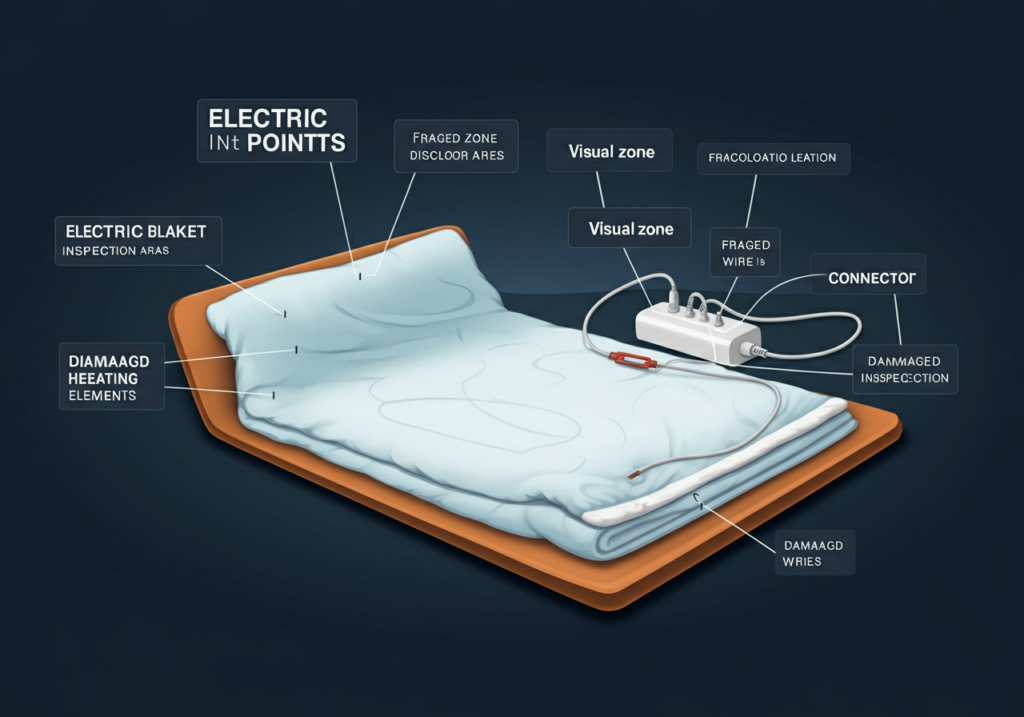
- Frayed or cracked fabric covering the wires
- Visible damage to the power cord or plug
- Dark spots or discoloration indicating overheating
- Lumps, bunching, or uneven areas where wires may have shifted
- Burn marks or melted fabric
- Controller damage or malfunction
- Age greater than 10 years (time for replacement)
Safer Usage Guidelines
1. Never fold or bunch the blanket while in use.
Folded sections trap heat and can create dangerous hot spots. Always lay the blanket flat across your bed.
2. Don’t tuck the blanket tightly under the mattress.
This prevents proper heat dissipation. Leave edges loose to allow air circulation.
3. Never use pins or sharp objects to secure the blanket.
Piercing the fabric can damage internal wires and create fire hazards.
4. Don’t place anything heavy on top while operating.
Heavy items can damage wires and trap heat. This includes thick comforters and especially your body weight concentrated in one area.
5. Pre-heat then unplug before sleeping.
Turn on the blanket 30-60 minutes before bed to warm your sleeping space. Unplug completely before getting in bed. This eliminates fire risk, burn risk, and EMF exposure during sleep while maintaining warmth through thermal retention.
6. Use only the blanket’s intended controls.
Never use external timers or extension cords. These can interfere with built-in safety features.
7. Store properly during off-season.
Roll the blanket loosely rather than folding tightly. Store in a dry location away from sharp objects or crushing weight.
Safety Features to Look For
When purchasing a new electric blanket, prioritize these safety features:
| Feature | Benefit |
|---|---|
| Auto-shutoff timer | Prevents overnight operation and associated risks |
| Overheat protection | Automatically reduces power if temperature exceeds safer limits |
| UL or ETL certification | Indicates third-party safety testing |
| Low-voltage design | Reduces shock and fire risk compared to standard voltage |
| Removable controller | Allows for easier washing without damaging electronics |
Safety Certifications: What They Do and Don’t Cover
Understanding safety certifications helps you make informed purchasing decisions.
UL (Underwriters Laboratories) and ETL (Intertek) certifications indicate that a product has been tested for fire, shock, and basic electrical safety. These organizations verify that blankets meet minimum safety standards for:
- Overheating protection
- Electrical insulation
- Cord and plug safety
- Auto-shutoff functionality
What certifications don’t cover:
Safety certifications do not evaluate or set limits on EMF emissions. A blanket can carry UL certification while still producing significant electromagnetic fields. EMF exposure is not part of the standard safety testing protocol for electrical bedding products.
This means a “safety” certified blanket may still pose EMF-related concerns. The certification confirms it won’t likely catch fire or shock you, but says nothing about the electromagnetic fields it produces.
Safer Heating Alternatives
If the combined risks of electric blankets concern you, effective alternatives exist.
Hot water bottles. Fill a quality rubber hot water bottle with hot water and place it in your bed before sleeping. Provides hours of warmth with zero electrical or EMF risk.
Microwaveable heating pads. Grain-filled or gel pads can be heated in the microwave and provide 30-60 minutes of warmth. No electrical connection required during use.
Wool blankets and layered bedding. Wool naturally regulates temperature and provides excellent insulation. Multiple layers trap body heat effectively.
Flannel sheets. The brushed cotton surface feels significantly warmer than smooth sheets, reducing the need for supplemental heating.
Room heating. A warm bedroom eliminates the need for bed heating. Programmable thermostats can warm your room before bedtime.
Heated mattress pads (with precautions). If you prefer electric heating, a mattress pad beneath your sheets puts more distance between you and the heating elements, though EMF concerns remain similar.
For a comprehensive guide to creating a warm, EMF-free sleeping environment, see our EMF-free bedroom guide.
The Bottom Line
Electric blankets are conditionally safer when you understand and manage all the risks, not just fire and burns. Modern safety features have significantly reduced fire and shock hazards, but EMF exposure remains a factor that most safety guides ignore.
For maximum safety, the pre-heat and unplug approach gives you warmth without any of the risks. If you must sleep with the blanket on, use the lowest effective setting and replace blankets older than 10 years.
Certain individuals should avoid electric blankets entirely, particularly those with medical devices, impaired sensation, or heightened EMF sensitivity. For everyone else, informed use allows you to enjoy warmth while minimizing risk.
Common Misconceptions
Misconception: If my electric blanket has a safety certification, it’s completely safer.
Reality: Safety certifications like UL address fire and shock hazards but don’t evaluate EMF emissions. A certified blanket may still produce significant electromagnetic fields.
Misconception: New electric blankets don’t have the problems of older ones.
Reality: While newer blankets have improved safety features for fire prevention, all electric blankets produce EMF when operating. Age primarily affects fire and electrical safety, not EMF output.
Misconception: Low settings are completely safer.
Reality: Lower settings reduce EMF output and fire risk but don’t eliminate them. The only way to achieve zero risk from an electric blanket is to unplug it.
Misconception: Electric blankets are only dangerous for people with health conditions.
Reality: While certain conditions increase specific risks, EMF exposure affects everyone. Healthy individuals using electric blankets still experience electromagnetic field exposure during use.
Frequently Asked Questions
Modern electric blankets with auto-shutoff features can technically be left on, but this isn't recommended from an EMF perspective. Pre-heating and unplugging before sleep provides warmth while eliminating overnight EMF exposure, fire risk, and burn risk.
Replace electric blankets every 10 years, or sooner if you notice any damage, discoloration, or malfunction. Components degrade over time even with proper care, increasing fire and electrical hazard risks.
Pets can damage electric blankets by scratching, chewing, or creating concentrated pressure points. This increases fire risk. If using an electric blanket with pets, inspect frequently and never leave pets alone with an operating blanket.
Warning signs include: dark spots or discoloration, frayed fabric, damaged cords, lumps where wires have bunched, burning smell during use, uneven heating, and controller malfunction. Stop using immediately if you notice any of these.
Electric blankets typically use 200-400 watts on high settings, comparable to a few light bulbs. Running one overnight costs roughly $0.10-0.20 depending on your electricity rates. Energy use isn't a primary safety concern.
Heated mattress pads present similar fire and EMF concerns since they use the same technology. The main difference is positioning beneath rather than on top of you. The same safety precautions apply to both products.