

An electromagnetic pulse (EMP) is a sudden burst of electromagnetic energy that can damage or destroy electronics and power systems. EMPs occur naturally from lightning and solar storms, or artificially from nuclear detonations or specialized weapons.
Understanding what EMPs actually do helps you make informed decisions about protection without succumbing to exaggerated fears.
Medical Disclaimer: This article is for informational purposes only. It is not, nor is it intended to be, a substitute for professional medical advice, diagnosis, or treatment and should never be relied upon for specific medical advice.
Key Takeaways
- An EMP is a burst of electromagnetic energy that induces damaging voltage surges in electronic circuits and long conductors like power lines
- The 1859 Carrington Event, a massive solar storm, caused telegraph systems worldwide to spark and catch fire. A modern equivalent could affect satellites and power grids for weeks
- Nuclear EMPs have three components (E1, E2, E3), each affecting electronics differently. The E1 pulse is the most damaging to personal devices
- Faraday cages and bags block EMP energy by surrounding electronics with conductive material that redirects the electromagnetic field
- Most personal electronics can be protected with proper shielding, though protecting the entire power grid requires government-scale investment
What is an Electromagnetic Pulse (EMP)?
An electromagnetic pulse is exactly what it sounds like: a pulse of electromagnetic energy. Unlike the continuous EMFEMF stands for electromagnetic field (also called electromagnetic frequency or electromagnetic force). EMFs are invisible fields of energy produced by electrically charged objects. They exist on a spectrum ranging from... emissions from your WiFi router or cell phone, an EMP is a sudden, intense burst that lasts only fractions of a second.
What makes EMPs potentially dangerous is their intensity and speed. When this burst of energy encounters electronic circuits or long conductors like power lines, it induces electrical currents that can exceed what the components are designed to handle. The result can range from temporary disruption to permanent damage.
Think of it like a pressure wave from an explosion. The pressure itself isn’t unusual. We experience atmospheric pressure constantly. But a sudden, intense pulse of pressure can shatter windows and damage structures. An EMP works similarly, but with electromagnetic energy instead of air pressure.
The term “EMP” often gets conflated with everyday EMF exposure, but they’re fundamentally different phenomena. Your cell phone emits low-level, continuous RF radiation. An EMP is a one-time, high-intensity event. Understanding this distinction matters because the protection strategies differ significantly.
Types of EMPs: Natural vs. Man-Made
EMPs come from several sources, and each type has different characteristics and ranges.
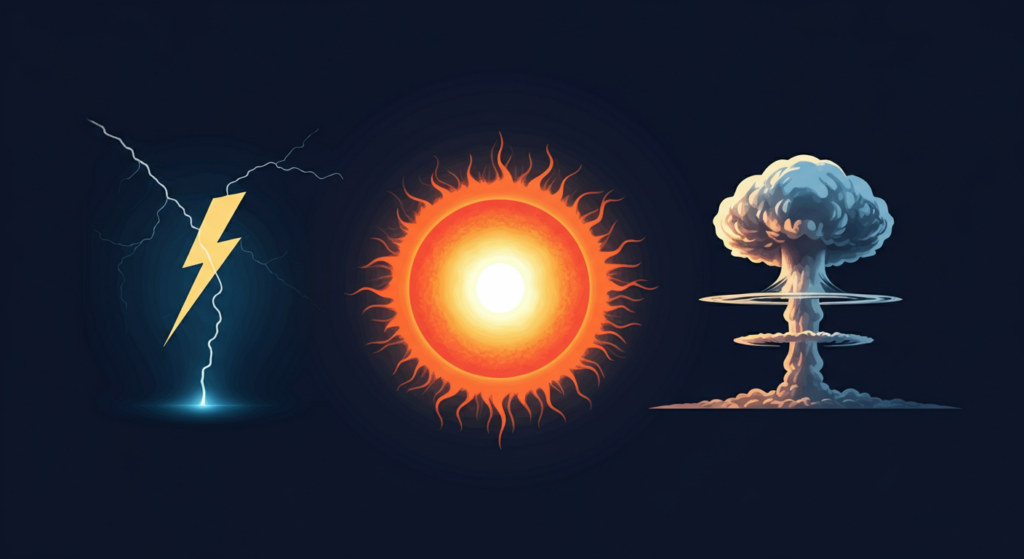
Natural EMPs
Lightning strikes produce localized EMPs every time they occur. The electromagnetic pulse from a lightning bolt can damage electronics within a few hundred feet of the strike. This is why surge protectors exist. They’re designed to handle the voltage spikes induced by nearby lightning.
Solar events represent the most significant natural EMP threat on a large scale. When the sun releases a coronal mass ejection (CME) directed at Earth, the resulting geomagnetic disturbance can induce currents in long conductors across entire continents.
The 1859 Carrington Event remains the most powerful recorded solar storm to hit Earth. Telegraph operators reported sparks flying from their equipment, some systems caught fire, and some operators received electrical shocks. Telegraph systems continued operating even after being disconnected from their power supplies. The induced currents were that powerful.
A Carrington-level event today would be far more consequential. Our infrastructure relies on electronics that didn’t exist in 1859. Satellites, GPS systems, and power transformers would be particularly vulnerable.
Man-Made EMPs
Nuclear EMPs (NEMP) occur when a nuclear weapon detonates at high altitude, typically 30 kilometers or higher. The gamma radiation from the explosion interacts with air molecules through a process called Compton scattering, releasing electrons that create an intense electromagnetic field.
A single high-altitude nuclear detonation could affect electronics across an area spanning hundreds of miles. The 1962 Starfish Prime test, conducted 250 miles above the Pacific, knocked out streetlights in Hawaii, nearly 900 miles away, and damaged several satellites.
Non-nuclear EMPs (NNEMP) are devices designed to create localized EMP effects without nuclear explosions. These are typically limited in range—affecting areas measured in meters rather than miles—but can be used to target specific facilities or equipment.
| EMP Type | Source | Typical Range | Primary Threat To |
|---|---|---|---|
| Lightning | Natural | Hundreds of feet | Local electronics |
| Solar (CME) | Natural | Continental | Power grids, satellites |
| Nuclear (HEMP) | Weapon | Hundreds of miles | All electronics in line of sight |
| Non-nuclear | Weapon | Meters to hundreds of meters | Targeted systems |
How EMPs Work: The Science Behind the Phenomenon
Understanding EMP mechanics doesn’t require a physics degree. The core concept is electromagnetic induction—the same principle that makes your wireless phone charger work, just at much higher intensity.
When an electromagnetic field changes rapidly near a conductor, it induces an electrical current in that conductor. This is Faraday’s law of induction, discovered in 1831. Your wireless charger uses this principle at controlled, reduced levels. An EMP uses the same physics at damaging levels.
The damage potential depends on several factors:
Field strengthField strength measures the intensity of an electromagnetic field at a specific point. Electric field strength is measured in volts per meter (V/m), while magnetic field strength uses amperes per...: Higher-intensity pulses induce larger currents.
Pulse duration: Extremely fast pulses (nanoseconds) are particularly damaging because circuits can’t respond quickly enough to shunt the excess energy.
Conductor length: Longer conductors collect more energy from the electromagnetic field. This is why power lines and communication cables are particularly vulnerable—they act as antennas.
Device sensitivity: Modern solid-state electronics are more vulnerable than older tube-based technology. The smaller and more densely packed the circuits, the less voltage is needed to cause damage.
The Three Components of Nuclear EMP
Nuclear EMPs are unique because they produce three distinct pulses, designated E1, E2, and E3:
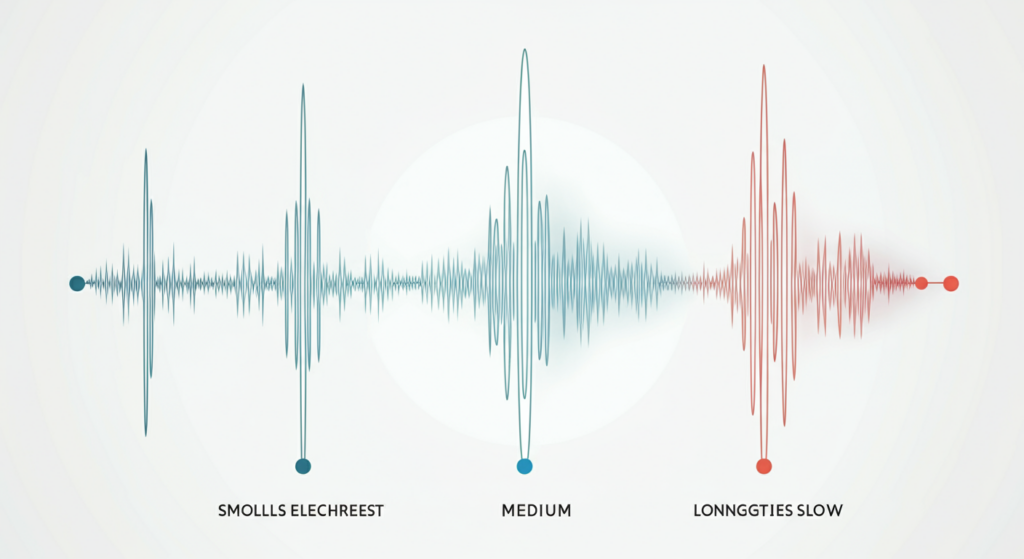
E1 Component: The fastest and most intense, lasting only nanoseconds. E1 is caused by gamma rays from the nuclear reaction interacting with air molecules. This component is particularly dangerous to personal electronics and computer systems because it happens too quickly for conventional surge protection to respond.
E2 Component: Similar to a lightning-induced EMP, lasting microseconds to milliseconds. Standard lightning protection systems can handle E2. It’s the least concerning component for prepared infrastructure.
E3 Component: The slowest, lasting seconds to minutes. E3 is caused by the nuclear fireball distorting Earth’s magnetic field. This component is particularly damaging to power grid infrastructure, especially large transformers. E3 pulses are similar to what occurs during major geomagnetic storms.
| Component | Duration | Similar To | Primary Target |
|---|---|---|---|
| E1 | Nanoseconds | Nothing natural this fast | Personal electronics, computers |
| E2 | Microseconds | Lightning | (Handled by standard protection) |
| E3 | Seconds-minutes | Solar storms | Power grid, transformers |
Real-World EMP Events and Their Impact
History provides valuable data on what EMPs actually do—information that helps separate fact from fiction.
The Carrington Event (1859)
The largest recorded solar storm struck Earth on September 1-2, 1859. British astronomer Richard Carrington observed the solar flare that preceded it. The resulting geomagnetic storm was so intense that auroras were visible as far south as the Caribbean.

Telegraph systems across Europe and North America failed. Some operators reported receiving electric shocks. Paper in telegraph offices caught fire from the sparks. Most remarkably, some systems continued operating with their batteries disconnected—the geomagnetically induced currents were powering them directly.
A 2013 Lloyd’s of London study estimated that a similar event today could cause $0.6 to $2.6 trillion in damages to the United States alone, primarily from extended power outages affecting 20-40 million people.
Starfish Prime (1962)
This American high-altitude nuclear test detonated a 1.4 megaton warhead 250 miles above Johnston Island in the Pacific. Despite the distance, the EMP affected the Hawaiian Islands nearly 900 miles away.
About 300 streetlights in Oahu failed. Several satellites in orbit were damaged or destroyed over the following months from the radiation belt effects. Burglar alarms went off, and radio communications were disrupted.
The test revealed that nuclear EMPs were more powerful than anticipated, leading to increased research and hardening of military communications systems.
The Quebec Blackout (1989)
A severe geomagnetic storm on March 13, 1989, caused the collapse of the Hydro-Quebec power grid within 90 seconds. Six million people lost power for nine hours. The storm induced currents that tripped protective relays and damaged transformers.
This event demonstrated that modern power grids are vulnerable to naturally occurring geomagnetic disturbances—no nuclear weapon required.
EMP vs. EMF: Key Differences
Given that both terms involve electromagnetic energy, it’s easy to confuse EMP and EMF. Understanding the differences matters for choosing appropriate protection strategies.
| Characteristic | EMP | EMF (everyday) |
|---|---|---|
| Duration | Single pulse (nanoseconds to minutes) | Continuous |
| Intensity | Extremely high | Low |
| Frequency | Broad spectrum | Specific frequencies |
| Source | Rare events | Common devices |
| Health concern | Electronics damage | Long-term exposure debate |
| Protection | Faraday shielding | Distance, shielding, reduced use |
EMF from your devices is a chronic, low-level exposure. You’re concerned about cumulative effects over years of use. EMP is an acute, high-intensity event. You’re concerned about immediate damage to electronics.
This is why the protection approaches differ. For everyday EMF, you might use shielding products that reduce exposure while still allowing device function. For EMP, you need complete shielding that blocks all electromagnetic energy—which means the device won’t function while protected.
What Does an EMP Actually Do to Electronics?
The effects of an EMP depend on the type, intensity, and the electronics involved.

Immediate Effects
- Semiconductor damage: Integrated circuits can be permanently destroyed by voltage spikes exceeding their ratings
- Data loss: Storage media can be corrupted or erased
- Component burnout: Capacitors, transistors, and other components can fail
- Power supply damage: Voltage regulators and power management circuits are often the first to fail
What Typically Survives
Not all electronics are equally vulnerable:
- Simple electronics: Devices with few semiconductors (flashlights with basic switches, simple battery-powered radios)
- Disconnected devices: Equipment not connected to power lines or antennas during the event
- Shielded electronics: Devices inside Faraday enclosures
- Hardened equipment: Military and some industrial electronics designed for EMP resistance
Common Myths Debunked
Myth: All cars will stop working
Reality: The Congressional EMP Commission tested 37 vehicles from various decades. None were permanently disabled by EMP. Some required restart, and a few had minor malfunctions, but no vehicles were “bricked.” Modern vehicles have more electronics but also more redundancy.
Myth: Pacemakers will fail
Reality: Modern pacemakers are designed with significant electromagnetic shielding and are tested against various electromagnetic threats. While older models may be more vulnerable, current medical devices include EMP considerations.
Myth: A solar EMP will fry your phone
Reality: Solar storms primarily affect long conductors through E3-type effects. Your phone, disconnected from the grid, is unlikely to be damaged by a geomagnetic storm. The greater concern is that the infrastructure your phone depends on (cell towers, power grid) could be affected.
EMP Attack Scenarios: Separating Fact from Fiction
Media portrayals of EMP attacks often feature instant, total technological collapse. The reality is more complex.
A high-altitude nuclear EMP would cause significant damage, but the effects would vary by:
- Location: Line of sight to the detonation matters; mountains and buildings provide some shielding
- Altitude: Higher detonation altitude means wider coverage but lower intensity
- Device state: Electronics turned off and disconnected are more likely to survive
- Grid connectivity: Devices plugged into the power grid face greater risk from the E3 pulse
The Congressional EMP Commission (established in 2001) has studied these scenarios extensively. Their reports acknowledge serious infrastructure vulnerabilities while also noting that total, permanent collapse is not the inevitable outcome often portrayed in fiction.
The real concern isn’t whether your phone survives—it’s whether the power grid and communication infrastructure can be restored quickly enough to prevent cascading failures in water treatment, medical care, and food distribution.
Personal EMP Protection: Practical Steps You Can Take
While you can’t protect the national power grid, you can take practical steps to protect important personal electronics.
Understanding Faraday Protection
A Faraday cage is any conductive enclosure that blocks electromagnetic fields. Named after Michael Faraday, who discovered the principle in the 1830s, these enclosures work by redistributing electromagnetic energy around the protected space rather than allowing it to penetrate.
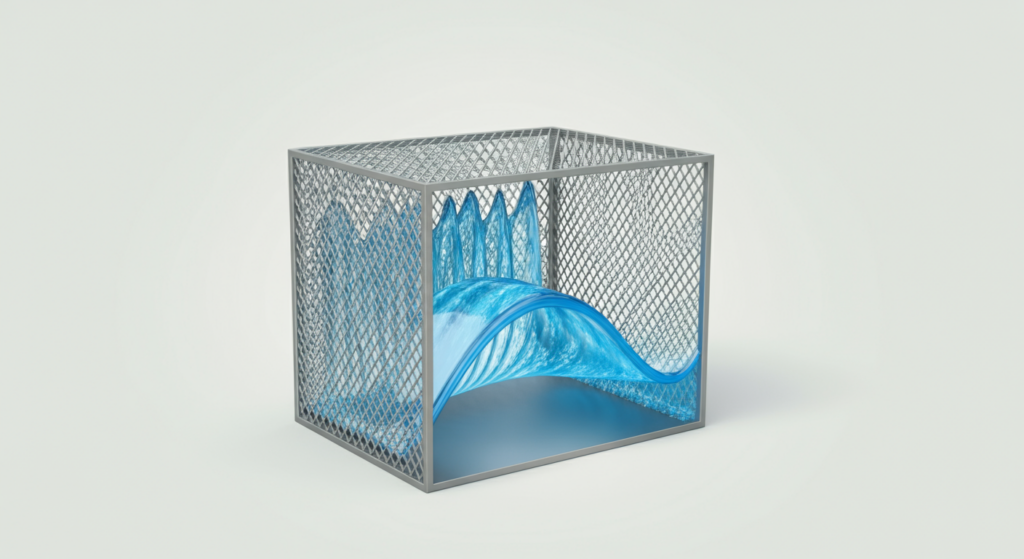
For EMP protection, a Faraday enclosure must:
- Completely surround the protected items with no gaps
- Use conductive material (metal mesh, foil, conductive fabric)
- Maintain continuity at seams and closures
- Have no direct electrical connections passing through the shield
DIY vs. Commercial Solutions
DIY options include:
- Metal garbage cans with tight-fitting lids (seal the lid seam)
- Ammo cans (ensure the rubber gasket doesn’t break conductivity)
- Aluminum foil wrapping (multiple layers, ensuring complete coverage)
Commercial options include:
- Faraday bags designed for complete signal blocking
- Faraday sleeves and pouches for phones and key fobs
- Larger Faraday enclosures for multiple devices
The advantage of commercial solutions is verified performance. Quality Faraday products are tested to confirm they actually block the frequencies they claim to block.
What to Protect
If you’re concerned about EMP, prioritize:
- Communication devices: A backup radio, phone, or satellite communicator
- Medical devices: If you depend on electronic medical equipment
- Data backups: External hard drives with important documents and photos
- Essential tools: LED flashlights, battery-powered devices you’d need in an emergency
- Charging capability: Solar chargers and power banks
Beyond Government Prep: Individual Protection Strategies
You don’t need to build a bunker to have reasonable EMP preparedness. Here’s a practical framework:
Tier 1: Basic Awareness
- Understand that surge protectors help with some EMP effects (E2, lightning)
- Keep important data backed up offline
- Know that most personal electronics would survive a solar EMP event
Tier 2: Modest Preparation
- Keep a backup radio in a Faraday enclosure
- Store a backup phone with essential contacts/information
- Have basic emergency supplies that don’t depend on electronics
Tier 3: Comprehensive Protection
- Faraday protection for critical electronics
- Whole-home surge protection
- Backup power options (solar, generator)
- Communication plans that don’t depend on cell networks
The Congressional EMP Commission recommends a focus on community and national infrastructure rather than individual preparedness. Most of us will be affected more by infrastructure failure than by damage to our personal devices. That said, having protected backup electronics provides options when infrastructure is compromised.
EMP-Resistant Electronics and Faraday Cage Basics
For those wanting to understand how Faraday cages work in more detail, or interested in building a DIY Faraday cage, we’ve created comprehensive guides on these topics.
The basic principle is straightforward: surround your electronics with conductive material, and the electromagnetic energy redistributes around the exterior without penetrating to the protected interior.
For EMP specifically, you want shielding that blocks a broad spectrum of frequencies—from the very fast E1 pulse to the slower E3 effects. Solid metal enclosures provide the most reliable protection. Mesh enclosures work too, as long as the mesh openings are smaller than the shortest wavelength you’re trying to block.
Testing your Faraday protection is simple: place a cell phone or radio inside, close the enclosure completely, and try to call the phone or tune in a station on the radio. If signals can’t reach the device, your enclosure is working.
Taking the Next Step
Understanding EMPs helps you evaluate actual risks versus media hype. The threats are real—both from potential adversaries and from the sun itself—but they’re also manageable with reasonable preparation.
For most people, the practical approach is:
- Don’t panic, but don’t ignore the risk entirely
- Understand that infrastructure vulnerability is the bigger concern
- Keep basic backup electronics protected
- Focus on broader emergency preparedness, of which EMP is just one consideration
If you want to learn more about the science behind EMPs and how they differ from everyday electromagnetic fields, our guide on how EMPs work goes deeper into the physics. For practical protection options, see our guide on EMP shielding methods or browse our Faraday bag collection.
Frequently Asked Questions
An EMP (electromagnetic pulse) is a sudden burst of electromagnetic energy that can damage electronic devices by inducing voltage spikes in circuits and wires. Think of it like a pressure wave from an explosion, but for electromagnetic energy instead of air. EMPs can come from lightning, solar storms, or nuclear weapons detonated at high altitude.
No, an EMP won't destroy all electronics. Damage depends on the EMP's intensity, the device's sensitivity, and whether the device is connected to long cables or power lines. Electronics that are turned off, disconnected, and stored in Faraday enclosures are likely to survive. Even without protection, simpler devices with fewer semiconductors are less vulnerable.
Most cars would likely work after an EMP, though some might need to be restarted. The Congressional EMP Commission tested 37 vehicles and found none were permanently disabled. Modern cars have more electronics but also more redundancy. The bigger issue would be fuel availability if the power grid is down.
The most effective protection is a Faraday cage or bag—a conductive enclosure that blocks electromagnetic fields. Metal containers, Faraday bags, and even properly wrapped aluminum foil can work. The key is complete coverage with no gaps. For everyday use, keep backup devices in Faraday protection while using your primary devices normally.
EMF from devices like phones and WiFi is continuous, low-level electromagnetic radiationElectromagnetic radiation (EMR) is energy that travels through space as waves of oscillating electric and magnetic fields. It includes everything from radio waves to visible light to gamma rays. All.... An EMP is a single, high-intensity pulse lasting fractions of a second. EMF concerns involve long-term exposure effects; EMP concerns involve immediate damage to electronics. The protection strategies are different—everyday EMF shielding allows device function, while EMP protection requires complete blocking.
No country has used a nuclear EMP as a weapon in warfare. The Starfish Prime test in 1962 was a controlled experiment that demonstrated EMP effects. Non-nuclear EMP devices have reportedly been used in limited military applications, but large-scale EMP attacks remain theoretical. The deterrent effect (an EMP attack would likely trigger nuclear retaliation) makes such attacks unlikely between major powers.
Recovery time depends on the EMP source and intensity. A solar storm like the 1989 Quebec event caused a 9-hour outage. A large nuclear EMP could damage transformers that take 12-18 months to manufacture and replace. The Congressional EMP Commission has warned that a worst-case scenario could leave some areas without power for months, primarily due to transformer damage and supply chain limitations.