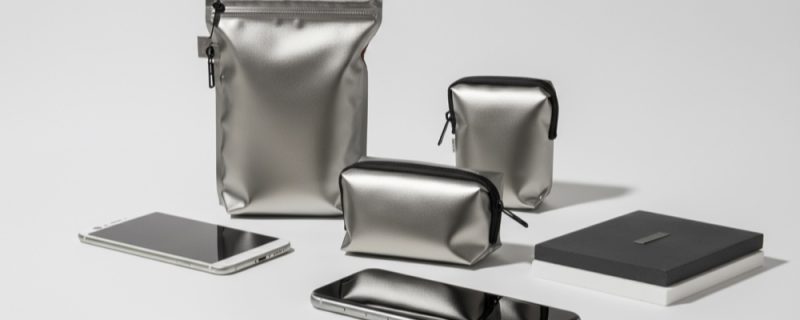

How to EMP-Proof Your Electronics: Practical Guide

featured-emp-proof-electronics-1000×400-1
Product Type Material Portability Best Use Case
Faraday bag Flexible metalized fabric Excellent Travel, grab-and-go kits
Faraday cage Rigid metal Poor Stationary protection
Faraday pouch Flexible metalized fabric Excellent Single small devices
EMP shield Various Varies Marketing term—check actual specs

“EMP shield” is often a marketing term without standardized meaning. When evaluating products marketed as “EMP shields,” look for actual specifications (attenuation in dB, frequency range tested) rather than marketing claims.

Choosing the Right Protection for Your Needs

The right solution depends on what you’re protecting, where you’re storing it, and how you plan to use it.

For Phone Protection

Need:

Protect a backup smartphone Recommended: Phone-sized Faraday bag or pouch Why: Compact, portable, easy to include in emergency kit A quality phone Faraday bag blocks all wireless signals—cellular, WiFi, Bluetooth, GPS—making the phone untrackable and protected from EMP. The SLNT Faraday Phone Sleeve is purpose-built for this application.

For Key Fob Protection

Need:

Protect vehicle key fobs from relay attacks and EMP Recommended: Small Faraday pouch or bag Why: Dual purpose—prevents relay theft and provides EMP protection Key fob Faraday bags block the signal that thieves use in relay attacks while also providing EMP protection. The SLNT Key Fob Guard addresses both concerns.

For Multiple Devices

Need:

Protect several devices (radios, batteries, chargers, backup phone) Recommended: Larger Faraday bag or purpose-built Faraday box Why: Consolidates protection in one enclosure

SLNT Faraday Laptop Bag can hold multiple smaller devices plus a laptop, making it practical for comprehensive emergency kits.

For Home Storage

Need: Long-term stationary protection Recommended: Faraday box, modified metal container, or DIY cage Why: Doesn’t need portability, can accommodate larger items A modified metal filing cabinet or galvanized trash can provides inexpensive stationary protection. Commercial Faraday boxes offer verified protection without DIY effort.

Real-World Performance: What to Expect

Understanding realistic performance helps set appropriate expectations.

What Quality Faraday Protection Can Do

  • Block 99.99%+ of electromagnetic energy (40+ dB attenuation)
  • Protect electronics from all EMP types (E1, E2, E3)
  • Maintain protection indefinitely with proper care
  • Provide security benefits beyond EMP (signal blocking, privacy)

What Faraday Protection Cannot Do

  • Protect devices while you’re using them (they need to be inside the enclosure)
  • Protect the power grid or broader infrastructure
  • Make protected devices work if supporting infrastructure is down
  • Guarantee 100% protection against all possible scenarios

Performance Specifications Explained

Attenuation is measured in decibels (dB). Here’s what the numbers mean:
dB Rating Energy Blocked Practical Meaning
20 dB 99% Basic shielding
40 dB 99.99% Good protection
50 dB 99.999% Excellent protection
60 dB 99.9999% Military-grade protection
Most quality commercial Faraday bags provide 40-60 dB attenuation across relevant frequencies. For personal EMP protection, 40+ dB is sufficient.
Components of an EMP protection emergency kit including radio power bank and communication devices

Starter Kit (~$75-125)

Item Protection Cost Estimate
Phone-sized Faraday bag For backup phone $20-35
Hand-crank/solar radio Already EMP-resistant design $25-40
Small power bank In Faraday bag when stored $20-30
LED flashlight (spare) In Faraday bag $10-20

Complete Kit (~$200-350)

Item Protection Cost Estimate
Multi-device Faraday bag Laptop-sized option $75-120
Backup smartphone In Faraday bag (Use old phone)
AM/FM/Weather radio In Faraday bag $25-40
Two-way radios (pair) In Faraday bag $30-60
Solar charger In Faraday bag $40-80
Power bank In Faraday bag $25-40
USB drive with documents In Faraday bag $10-15
Spare batteries In Faraday bag $10-20

Kit Maintenance

  • Rotate batteries annually
  • Update stored phone with current contacts, documents
  • Test Faraday protection every 6-12 months
  • Review contents for relevance

Our Top Faraday Product Picks

Best for Phone Protection

The SLNT Faraday Phone Sleeve provides verified signal blocking for phones up to 7.2″ screens. The roll-top closure ensures complete sealing, and the slim design fits in pockets and bags.

Best for Key Fobs

The SLNT Faraday Key Fob Guard blocks relay theft signals while providing EMP protection. Compact enough for keychain carry.

Best for Multiple Devices

The SLNT Faraday Laptop Bag accommodates laptops, tablets, phones, and accessories in one protected enclosure. Ideal for building a comprehensive emergency kit. → See all Faraday bags

Taking the Next Step

EMP-proofing your electronics is practical, affordable, and based on well-established physics. The key is focusing on what matters: backup devices with genuine utility, verified protection, and integration with broader emergency preparedness. Start with the essentials—a protected backup phone and radio provide the foundation. Build from there based on your specific needs and concerns. Whether you’re looking for travel EMF protection or building a comprehensive emergency kit, for deeper understanding of how EMPs work or broader EMP shielding strategies, see our related guides.
Product Type Material Portability Best Use Case
Faraday bag Flexible metalized fabric Excellent Travel, grab-and-go kits
Faraday cage Rigid metal Poor Stationary protection
Faraday pouch Flexible metalized fabric Excellent Single small devices
EMP shield Various Varies Marketing term—check actual specs
“EMP shield” is often a marketing term without standardized meaning. When evaluating products marketed as “EMP shields,” look for actual specifications (attenuation in dB, frequency range tested) rather than marketing claims.

Choosing the Right Protection for Your Needs

The right solution depends on what you’re protecting, where you’re storing it, and how you plan to use it.

For Phone Protection

Need: Protect a backup smartphone Recommended: Phone-sized Faraday bag or pouch Why: Compact, portable, easy to include in emergency kit A quality phone Faraday bag blocks all wireless signals—cellular, WiFi, Bluetooth, GPS—making the phone untrackable and protected from EMP. The SLNT Faraday Phone Sleeve is purpose-built for this application.

For Key Fob Protection

Need: Protect vehicle key fobs from relay attacks and EMP Recommended: Small Faraday pouch or bag Why: Dual purpose—prevents relay theft and provides EMP protection Key fob Faraday bags block the signal that thieves use in relay attacks while also providing EMP protection. The SLNT Key Fob Guard addresses both concerns.

For Multiple Devices

Need: Protect several devices (radios, batteries, chargers, backup phone) Recommended: Larger Faraday bag or purpose-built Faraday box Why: Consolidates protection in one enclosure
SLNT Faraday Laptop Bag can hold multiple smaller devices plus a laptop, making it practical for comprehensive emergency kits.

For Home Storage

Need: Long-term stationary protection Recommended: Faraday box, modified metal container, or DIY cage Why: Doesn’t need portability, can accommodate larger items A modified metal filing cabinet or galvanized trash can provides inexpensive stationary protection. Commercial Faraday boxes offer verified protection without DIY effort.

Real-World Performance: What to Expect

Understanding realistic performance helps set appropriate expectations.

What Quality Faraday Protection Can Do

  • Block 99.99%+ of electromagnetic energy (40+ dB attenuation)
  • Protect electronics from all EMP types (E1, E2, E3)
  • Maintain protection indefinitely with proper care
  • Provide security benefits beyond EMP (signal blocking, privacy)

What Faraday Protection Cannot Do

  • Protect devices while you’re using them (they need to be inside the enclosure)
  • Protect the power grid or broader infrastructure
  • Make protected devices work if supporting infrastructure is down
  • Guarantee 100% protection against all possible scenarios

Performance Specifications Explained

Attenuation is measured in decibels (dB). Here’s what the numbers mean:
dB Rating Energy Blocked Practical Meaning
20 dB 99% Basic shielding
40 dB 99.99% Good protection
50 dB 99.999% Excellent protection
60 dB 99.9999% Military-grade protection
Most quality commercial Faraday bags provide 40-60 dB attenuation across relevant frequencies. For personal EMP protection, 40+ dB is sufficient.
Components of an EMP protection emergency kit including radio power bank and communication devices

Starter Kit (~$75-125)

Item Protection Cost Estimate
Phone-sized Faraday bag For backup phone $20-35
Hand-crank/solar radio Already EMP-resistant design $25-40
Small power bank In Faraday bag when stored $20-30
LED flashlight (spare) In Faraday bag $10-20

Complete Kit (~$200-350)

Item Protection Cost Estimate
Multi-device Faraday bag Laptop-sized option $75-120
Backup smartphone In Faraday bag (Use old phone)
AM/FM/Weather radio In Faraday bag $25-40
Two-way radios (pair) In Faraday bag $30-60
Solar charger In Faraday bag $40-80
Power bank In Faraday bag $25-40
USB drive with documents In Faraday bag $10-15
Spare batteries In Faraday bag $10-20

Kit Maintenance

  • Rotate batteries annually
  • Update stored phone with current contacts, documents
  • Test Faraday protection every 6-12 months
  • Review contents for relevance

Our Top Faraday Product Picks

Best for Phone Protection

The SLNT Faraday Phone Sleeve provides verified signal blocking for phones up to 7.2″ screens. The roll-top closure ensures complete sealing, and the slim design fits in pockets and bags.

Best for Key Fobs

The SLNT Faraday Key Fob Guard blocks relay theft signals while providing EMP protection. Compact enough for keychain carry.

Best for Multiple Devices

The SLNT Faraday Laptop Bag accommodates laptops, tablets, phones, and accessories in one protected enclosure. Ideal for building a comprehensive emergency kit. → See all Faraday bags

Taking the Next Step

EMP-proofing your electronics is practical, affordable, and based on well-established physics. The key is focusing on what matters: backup devices with genuine utility, verified protection, and integration with broader emergency preparedness. Start with the essentials—a protected backup phone and radio provide the foundation. Build from there based on your specific needs and concerns. Whether you’re looking for travel EMF protection or building a comprehensive emergency kit, for deeper understanding of how EMPs work or broader EMP shielding strategies, see our related guides.

Answer Summary

A Faraday cage protects electronics from EMP by completely surrounding them with conductive material that blocks electromagnetic fields. When an electromagnetic pulse encounters this conductive barrier, the energy redistributes around the exterior instead of penetrating to the electronics inside. Whether you’re evaluating commercial Faraday bags, considering DIY options, or building a comprehensive protection kit, the physics are straightforward. This guide covers what to look for, what’s worth protecting, and how to verify your protection actually works.

Key Takeaways

  • Faraday bags and cages protect electronics by creating a complete conductive enclosure that redirects EMP energy around the protected space
  • Look for products rated at 40+ dB attenuation across frequencies from 10 MHz to 6 GHz—this covers cellular, WiFi, Bluetooth, and GPS
  • DIY options work but require careful sealing; commercial products offer verified protection and convenience
  • Prioritize communication devices, data storage, charging capability, and essential medical electronics
  • Always test your Faraday protection before relying on it—a simple cell phone test can verify effectiveness

How Faraday Bags Work: The Science Made Simple

A Faraday cage is named after Michael Faraday, who discovered in the 1830s that a conductive enclosure blocks electromagnetic fields from penetrating its interior. The mechanism is straightforward: when electromagnetic energy hits a conductive surface, it induces electrical currents in that surface. These currents create their own electromagnetic field that opposes and cancels the incoming field. The result is dramatically reduced electromagnetic energy inside the enclosure. For this to work, the enclosure must be:

  1. Made of conductive material (metal, metalized fabric, etc.)
  2. Completely sealed with no gaps in the conductive surface
  3. Large enough to hold the devices being protected without them touching the enclosure walls

The last point matters because devices touching the conductive surface could create pathways for energy to enter. Most Faraday bags include non-conductive linings to prevent this.

Why Complete Sealing Matters

Think of a Faraday cage like a boat. A hole anywhere in the hull lets water in; it doesn’t matter that 99% of the hull is intact. Similarly, a gap anywhere in the Faraday enclosure lets electromagnetic energy in; it doesn’t matter that 99% of the shielding is perfect. This is why quality Faraday bags use overlapping closures, roll-top designs, or multiple layers of conductive material—the goal is complete continuity with zero gaps.

Types of EMP Protection Products

The market offers several categories of Faraday protection, each suited to different needs.

Faraday Bags and Pouches

Flexible, portable Faraday enclosures made from layers of metalized fabric or metalized plastic. Best for: – Phone-sized devices – Key fobs and small electronics – Portable emergency kits – Travel and grab-and-go scenarios What to look for: – Multiple layers of conductive material – Roll-top or overlapping closure design – Stated attenuation ratings (40+ dB preferred) – Quality construction at seams Price range: $15-80 depending on size

Faraday Cages and Boxes

Rigid enclosures made from solid metal or metal mesh. Best for: – Larger electronics (laptops, tablets) – Multiple device storage – Stationary protection at home – Higher-security applications Options include: – Purpose-built Faraday boxes (metal enclosures with conductive seals) – Modified metal containers (ammo cans, filing cabinets) – DIY construction using copper mesh or metal sheeting Price range: $50-500+ for commercial; $20-50 for DIY

DIY Solutions

Home-built Faraday protection using readily available materials.

Product Type Material Portability Best Use Case
Faraday bag Flexible metalized fabric Excellent Travel, grab-and-go kits
Faraday cage Rigid metal Poor Stationary protection
Faraday pouch Flexible metalized fabric Excellent Single small devices
EMP shield Various Varies Marketing term—check actual specs
“EMP shield” is often a marketing term without standardized meaning. When evaluating products marketed as “EMP shields,” look for actual specifications (attenuation in dB, frequency range tested) rather than marketing claims.

Choosing the Right Protection for Your Needs

The right solution depends on what you’re protecting, where you’re storing it, and how you plan to use it.

For Phone Protection

Need:

Protect a backup smartphone Recommended: Phone-sized Faraday bag or pouch Why: Compact, portable, easy to include in emergency kit A quality phone Faraday bag blocks all wireless signals—cellular, WiFi, Bluetooth, GPS—making the phone untrackable and protected from EMP. The SLNT Faraday Phone Sleeve is purpose-built for this application.

For Key Fob Protection

Need:

Protect vehicle key fobs from relay attacks and EMP Recommended: Small Faraday pouch or bag Why: Dual purpose—prevents relay theft and provides EMP protection Key fob Faraday bags block the signal that thieves use in relay attacks while also providing EMP protection. The SLNT Key Fob Guard addresses both concerns.

For Multiple Devices

Need:

Protect several devices (radios, batteries, chargers, backup phone) Recommended: Larger Faraday bag or purpose-built Faraday box Why: Consolidates protection in one enclosure

SLNT Faraday Laptop Bag can hold multiple smaller devices plus a laptop, making it practical for comprehensive emergency kits.

For Home Storage

Need: Long-term stationary protection Recommended: Faraday box, modified metal container, or DIY cage Why: Doesn’t need portability, can accommodate larger items A modified metal filing cabinet or galvanized trash can provides inexpensive stationary protection. Commercial Faraday boxes offer verified protection without DIY effort.

Real-World Performance: What to Expect

Understanding realistic performance helps set appropriate expectations.

What Quality Faraday Protection Can Do

  • Block 99.99%+ of electromagnetic energy (40+ dB attenuation)
  • Protect electronics from all EMP types (E1, E2, E3)
  • Maintain protection indefinitely with proper care
  • Provide security benefits beyond EMP (signal blocking, privacy)

What Faraday Protection Cannot Do

  • Protect devices while you’re using them (they need to be inside the enclosure)
  • Protect the power grid or broader infrastructure
  • Make protected devices work if supporting infrastructure is down
  • Guarantee 100% protection against all possible scenarios

Performance Specifications Explained

Attenuation is measured in decibels (dB). Here’s what the numbers mean:
dB Rating Energy Blocked Practical Meaning
20 dB 99% Basic shielding
40 dB 99.99% Good protection
50 dB 99.999% Excellent protection
60 dB 99.9999% Military-grade protection
Most quality commercial Faraday bags provide 40-60 dB attenuation across relevant frequencies. For personal EMP protection, 40+ dB is sufficient.
5G%20operates%20up%20to%2039%20GHz)</li>%0A</ul>%0AProducts%20that%20only%20specify%20one%20frequency%20(e.g.,%20%E2%80%9Cblocks%20cell%20signals%E2%80%9D)%20may%20not%20provide%20complete%20protection.%0A<h2>Price%20vs.%20Protection:%20Budget-Friendly%20Options</h2>%0AEMP%20protection%20is%20available%20at%20every%20budget%20level.%20Here%E2%80%99s%20how%20to%20maximize%20value.%0A<h3>Budget%20Tier:%20%240-25</h3>%0A<strong>DIY%20aluminum%20foil:</strong>%20Multiple%20layers%20wrapped%20carefully%20around%20device%20(wrapped%20first%20in%20plastic%20or%20paper%20to%20prevent%20contact).%20Free%20but%20tedious%20and%20unreliable%20for%20long-term%20use.%0A%0A<strong>Modified%20containers:</strong>%20Galvanized%20trash%20can%20or%20ammo%20can%20with%20sealed%20lid.%20%2415-25%20plus%20conductive%20tape%20for%20sealing.%20Requires%20testingy.com/wp-content/uploads/2026/02/featured-emp-proof-electronics-768%C3%97419.png%E2%80%9D%20alt=%E2%80%9DElectronic%20devices%20to%20protect%20from%20EMP%E2%80%9D%20class=%E2%80%9Dwp-image-175437%E2%80%B3%20width=%E2%80%9D768%E2%80%B3%20height=%E2%80%9D419%E2%80%B3/>%0A</figure>%0A%0A%0Aand%20modification.%0A%0A<strong>Entry-level%20Faraday%20bags:</strong>%20Smaller%20pouches%20from%20reputable%20manufacturers.%20Around%20%2415-25%20for%20phone-sized%20options.%0A<h3>Mid%20Tier:%20%2425-75</h3>%0A<strong>Quality%20Faraday%20bags:</strong>%20Verified%20protection,%20good%20construction,%20multiple%20sizes.%20Most%20practical%20option%20for%20most%20people.%0A%0A<strong>Small%20Faraday%20boxes:</strong>%20Rigid%20enclosures%20for%20stationary%20storage.%0A<h3>Premium%20Tier:%20%2475-200+</h3>%0A<strong>Laptop-sized%20Faraday%20bags:</strong>%20Large%20enough%20for%20tablets,%20laptops,%20multiple%20devices.%0A%0A<!–%20wp:image%20%7B” id>
Components of an EMP protection emergency kit including radio power bank and communication devices

Starter Kit (~$75-125)

Item Protection Cost Estimate
Phone-sized Faraday bag For backup phone $20-35
Hand-crank/solar radio Already EMP-resistant design $25-40
Small power bank In Faraday bag when stored $20-30
LED flashlight (spare) In Faraday bag $10-20

Complete Kit (~$200-350)

Item Protection Cost Estimate
Multi-device Faraday bag Laptop-sized option $75-120
Backup smartphone In Faraday bag (Use old phone)
AM/FM/Weather radio In Faraday bag $25-40
Two-way radios (pair) In Faraday bag $30-60
Solar charger In Faraday bag $40-80
Power bank In Faraday bag $25-40
USB drive with documents In Faraday bag $10-15
Spare batteries In Faraday bag $10-20

Kit Maintenance

  • Rotate batteries annually
  • Update stored phone with current contacts, documents
  • Test Faraday protection every 6-12 months
  • Review contents for relevance

Our Top Faraday Product Picks

Best for Phone Protection

The SLNT Faraday Phone Sleeve provides verified signal blocking for phones up to 7.2″ screens. The roll-top closure ensures complete sealing, and the slim design fits in pockets and bags.

Best for Key Fobs

The SLNT Faraday Key Fob Guard blocks relay theft signals while providing EMP protection. Compact enough for keychain carry.

Best for Multiple Devices

The SLNT Faraday Laptop Bag accommodates laptops, tablets, phones, and accessories in one protected enclosure. Ideal for building a comprehensive emergency kit. → See all Faraday bags

Taking the Next Step

EMP-proofing your electronics is practical, affordable, and based on well-established physics. The key is focusing on what matters: backup devices with genuine utility, verified protection, and integration with broader emergency preparedness. Start with the essentials—a protected backup phone and radio provide the foundation. Build from there based on your specific needs and concerns. Whether you’re looking for travel EMF protection or building a comprehensive emergency kit, for deeper understanding of how EMPs work or broader EMP shielding strategies, see our related guides.

Frequently Asked Questions

Q: What is a Faraday cage?
A:

A Faraday cage is a conductive enclosure that blocks electromagnetic fields, protecting electronics from electromagnetic pulses (EMP).

Q: How do I test my Faraday protection?
A:

You can test your Faraday protection by placing a cell phone inside the enclosure and attempting to call it; if the call fails, the protection is effective.

Q: What should I prioritize for EMP protection?
A:

Prioritize communication devices, data storage, charging capabilities, and essential medical electronics for EMP protection.

Q: What is the recommended attenuation rating for Faraday bags?
A:

Look for Faraday bags with an attenuation rating of 40+ dB to ensure effective protection across relevant frequencies.

Q: Can I build my own Faraday protection?
A:

Yes, DIY options are available, but they require careful construction and testing to ensure they provide reliable protection.

Answer Summary

A Faraday cage protects electronics from EMP by completely surrounding them with conductive material that blocks electromagnetic fields. When an electromagnetic pulse encounters this conductive barrier, the energy redistributes around the exterior instead of penetrating to the electronics inside. Whether you’re evaluating commercial Faraday bags, considering DIY options, or building a comprehensive protection kit, the physics are straightforward. This guide covers what to look for, what’s worth protecting, and how to verify your protection actually works.

Key Takeaways

  • Faraday bags and cages protect electronics by creating a complete conductive enclosure that redirects EMP energy around the protected space
  • Look for products rated at 40+ dB attenuation across frequencies from 10 MHz to 6 GHz—this covers cellular, WiFi, Bluetooth, and GPS
  • DIY options work but require careful sealing; commercial products offer verified protection and convenience
  • Prioritize communication devices, data storage, charging capability, and essential medical electronics
  • Always test your Faraday protection before relying on it—a simple cell phone test can verify effectiveness

How Faraday Bags Work: The Science Made Simple

A Faraday cage is named after Michael Faraday, who discovered in the 1830s that a conductive enclosure blocks electromagnetic fields from penetrating its interior. The mechanism is straightforward: when electromagnetic energy hits a conductive surface, it induces electrical currents in that surface. These currents create their own electromagnetic field that opposes and cancels the incoming field. The result is dramatically reduced electromagnetic energy inside the enclosure. For this to work, the enclosure must be:

  1. Made of conductive material (metal, metalized fabric, etc.)
  2. Completely sealed with no gaps in the conductive surface
  3. Large enough to hold the devices being protected without them touching the enclosure walls

The last point matters because devices touching the conductive surface could create pathways for energy to enter. Most Faraday bags include non-conductive linings to prevent this.

Why Complete Sealing Matters

Think of a Faraday cage like a boat. A hole anywhere in the hull lets water in; it doesn’t matter that 99% of the hull is intact. Similarly, a gap anywhere in the Faraday enclosure lets electromagnetic energy in; it doesn’t matter that 99% of the shielding is perfect. This is why quality Faraday bags use overlapping closures, roll-top designs, or multiple layers of conductive material—the goal is complete continuity with zero gaps.

Types of EMP Protection Products

The market offers several categories of Faraday protection, each suited to different needs.

Faraday Bags and Pouches

Flexible, portable Faraday enclosures made from layers of metalized fabric or metalized plastic. Best for: – Phone-sized devices – Key fobs and small electronics – Portable emergency kits – Travel and grab-and-go scenarios What to look for: – Multiple layers of conductive material – Roll-top or overlapping closure design – Stated attenuation ratings (40+ dB preferred) – Quality construction at seams Price range: $15-80 depending on size

Faraday Cages and Boxes

Rigid enclosures made from solid metal or metal mesh. Best for: – Larger electronics (laptops, tablets) – Multiple device storage – Stationary protection at home – Higher-security applications Options include: – Purpose-built Faraday boxes (metal enclosures with conductive seals) – Modified metal containers (ammo cans, filing cabinets) – DIY construction using copper mesh or metal sheeting Price range: $50-500+ for commercial; $20-50 for DIY

DIY Solutions

Home-built Faraday protection using readily available materials.

Product Type Material Portability Best Use Case
Faraday bag Flexible metalized fabric Excellent Travel, grab-and-go kits
Faraday cage Rigid metal Poor Stationary protection
Faraday pouch Flexible metalized fabric Excellent Single small devices
EMP shield Various Varies Marketing term—check actual specs
“EMP shield” is often a marketing term without standardized meaning. When evaluating products marketed as “EMP shields,” look for actual specifications (attenuation in dB, frequency range tested) rather than marketing claims.

Choosing the Right Protection for Your Needs

The right solution depends on what you’re protecting, where you’re storing it, and how you plan to use it.

For Phone Protection

Need:

Protect a backup smartphone Recommended: Phone-sized Faraday bag or pouch Why: Compact, portable, easy to include in emergency kit A quality phone Faraday bag blocks all wireless signals—cellular, WiFi, Bluetooth, GPS—making the phone untrackable and protected from EMP. The SLNT Faraday Phone Sleeve is purpose-built for this application.

For Key Fob Protection

Need:

Protect vehicle key fobs from relay attacks and EMP Recommended: Small Faraday pouch or bag Why: Dual purpose—prevents relay theft and provides EMP protection Key fob Faraday bags block the signal that thieves use in relay attacks while also providing EMP protection. The SLNT Key Fob Guard addresses both concerns.

For Multiple Devices

Need:

Protect several devices (radios, batteries, chargers, backup phone) Recommended: Larger Faraday bag or purpose-built Faraday box Why: Consolidates protection in one enclosure

SLNT Faraday Laptop Bag can hold multiple smaller devices plus a laptop, making it practical for comprehensive emergency kits.

For Home Storage

Need: Long-term stationary protection Recommended: Faraday box, modified metal container, or DIY cage Why: Doesn’t need portability, can accommodate larger items A modified metal filing cabinet or galvanized trash can provides inexpensive stationary protection. Commercial Faraday boxes offer verified protection without DIY effort.

Real-World Performance: What to Expect

Understanding realistic performance helps set appropriate expectations.

What Quality Faraday Protection Can Do

  • Block 99.99%+ of electromagnetic energy (40+ dB attenuation)
  • Protect electronics from all EMP types (E1, E2, E3)
  • Maintain protection indefinitely with proper care
  • Provide security benefits beyond EMP (signal blocking, privacy)

What Faraday Protection Cannot Do

  • Protect devices while you’re using them (they need to be inside the enclosure)
  • Protect the power grid or broader infrastructure
  • Make protected devices work if supporting infrastructure is down
  • Guarantee 100% protection against all possible scenarios

Performance Specifications Explained

Attenuation is measured in decibels (dB). Here’s what the numbers mean:
dB Rating Energy Blocked Practical Meaning
20 dB 99% Basic shielding
40 dB 99.99% Good protection
50 dB 99.999% Excellent protection
60 dB 99.9999% Military-grade protection
Most quality commercial Faraday bags provide 40-60 dB attenuation across relevant frequencies. For personal EMP protection, 40+ dB is sufficient.
Components of an EMP protection emergency kit including radio power bank and communication devices

Starter Kit (~$75-125)

Item Protection Cost Estimate
Phone-sized Faraday bag For backup phone $20-35
Hand-crank/solar radio Already EMP-resistant design $25-40
Small power bank In Faraday bag when stored $20-30
LED flashlight (spare) In Faraday bag $10-20

Complete Kit (~$200-350)

Item Protection Cost Estimate
Multi-device Faraday bag Laptop-sized option $75-120
Backup smartphone In Faraday bag (Use old phone)
AM/FM/Weather radio In Faraday bag $25-40
Two-way radios (pair) In Faraday bag $30-60
Solar charger In Faraday bag $40-80
Power bank In Faraday bag $25-40
USB drive with documents In Faraday bag $10-15
Spare batteries In Faraday bag $10-20

Kit Maintenance

  • Rotate batteries annually
  • Update stored phone with current contacts, documents
  • Test Faraday protection every 6-12 months
  • Review contents for relevance

Our Top Faraday Product Picks

Best for Phone Protection

The SLNT Faraday Phone Sleeve provides verified signal blocking for phones up to 7.2″ screens. The roll-top closure ensures complete sealing, and the slim design fits in pockets and bags.

Best for Key Fobs

The SLNT Faraday Key Fob Guard blocks relay theft signals while providing EMP protection. Compact enough for keychain carry.

Best for Multiple Devices

The SLNT Faraday Laptop Bag accommodates laptops, tablets, phones, and accessories in one protected enclosure. Ideal for building a comprehensive emergency kit. → See all Faraday bags

Taking the Next Step

EMP-proofing your electronics is practical, affordable, and based on well-established physics. The key is focusing on what matters: backup devices with genuine utility, verified protection, and integration with broader emergency preparedness. Start with the essentials—a protected backup phone and radio provide the foundation. Build from there based on your specific needs and concerns. Whether you’re looking for travel EMF protection or building a comprehensive emergency kit, for deeper understanding of how EMPs work or broader EMP shielding strategies, see our related guides.

Frequently Asked Questions

Q: What is a Faraday cage?
A:

A Faraday cage is a conductive enclosure that blocks electromagnetic fields, protecting electronics from electromagnetic pulses (EMP).

Q: How do I test my Faraday protection?
A:

You can test your Faraday protection by placing a cell phone inside the enclosure and attempting to call it; if the call fails, the protection is effective.

Q: What should I prioritize for EMP protection?
A:

Prioritize communication devices, data storage, charging capabilities, and essential medical electronics for EMP protection.

Q: What is the recommended attenuation rating for Faraday bags?
A:

Look for Faraday bags with an attenuation rating of 40+ dB to ensure effective protection across relevant frequencies.

Q: Can I build my own Faraday protection?
A:

Yes, DIY options are available, but they require careful construction and testing to ensure they provide reliable protection.

About the Author

R Blank is the CEO of Shield Your Body (SYB), which he founded in 2012 to make science-based EMF protection accessible worldwide. Today, SYB has served hundreds of thousands of customers across more than 100 countries. A globally recognized expert on EMF health and safety, R has been featured on platforms including Dr. Phil, ABC News, and ElectricSense. He also hosts the popular Healthier Tech Podcast, available on Apple, Spotify, and all major podcasting platforms.

R is the author of Empowered: A Consumer’s Guide to Legitimate EMF Protection to Shield Your Body, and the co-author, with his late father Dr. Martin Blank, of Overpowered (Seven Stories Press), one of the foundational works on the science of EMF health effects. His mission is to cut through misinformation and give people the knowledge and tools they need to live healthier, more empowered lives in today’s wireless world.

Previously, R was a software engineer and entrepreneur in Los Angeles, developing enterprise solutions for clients including Apple, NBC, Disney, Microsoft, Toyota, and the NFL. He also served on the faculty at the University of Southern California’s Viterbi School of Engineering and at UC Santa Cruz. R holds an MBA from the UCLA Anderson School of Management and a bachelor’s degree with honors from Columbia University. He has also studied at Cambridge University, the University of Salamanca, and the Institute of Foreign Languages in Nizhny Novgorod, Russia.

Connect with R here at ShieldYourBody.com or on LinkedIn.

Have a Question?

I take pride in designing great, effective products, based on real, measurable science – AND taking the time to ensure that each and every one of you has the information you need to understand EMF and make informed decisions.

So if you have a question, just email me and ask.

R Blank

R Blank
CEO, SYB