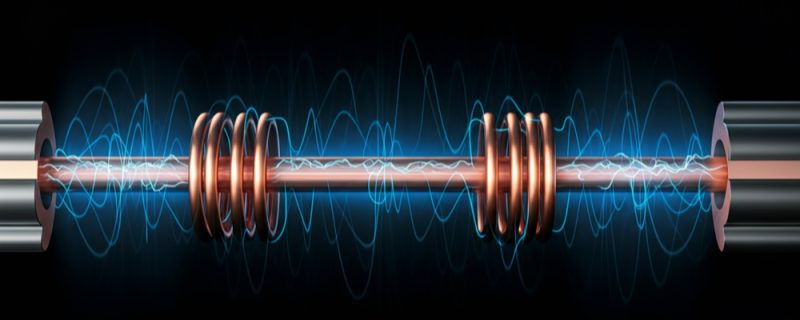

An EMP (electromagnetic pulse) works through electromagnetic induction, the same physics that powers your wireless charger, but at intensities that can damage or destroy electronics.
When an EMP occurs, rapidly changing electromagnetic fields induce electrical currents in any nearby conductors, from computer circuits to power lines.
The key to understanding EMPs is recognizing that the damage comes from induced voltage, not from the electromagnetic field itself. A wire in an EMP field acts like an antenna, collecting electromagnetic energy and converting it into electrical current. That current can exceed what circuits are designed to handle.
Medical Disclaimer: This article is for informational purposes only. It is not, nor is it intended to be, a substitute for professional medical advice, diagnosis, or treatment and should never be relied upon for specific medical advice.
Key Takeaways
- EMPs work through electromagnetic induction, converting electromagnetic energy into damaging electrical currents within circuits and wires
- Nuclear EMPs produce three distinct pulse components (E1, E2, E3) that each affect electronics differently. E1 is the fastest and most damaging to personal electronics
- The E1 pulse from a nuclear EMP travels at nearly the speed of light and can arrive before conventional surge protectors have time to respond
- Longer conductors (power lines, antennas, cables) collect more EMP energy than short circuits, making grid infrastructure more vulnerable than battery-powered devices
- Protection works by surrounding electronics with conductive material that redirects the electromagnetic field around the protected space: the Faraday cage principle
What is an Electromagnetic Pulse (EMP)?
An electromagnetic pulse is a burst of electromagnetic energy that occurs over a very short time period, from nanoseconds to minutes, depending on the source. Unlike the continuous electromagnetic fields from your WiFi router or cell phone, an EMP is a transient event that produces intense electromagnetic fields for a brief moment.
The term “pulse” is key. It’s not a steady emission but a sudden spike of energy. Imagine the difference between holding a flashlight steady versus taking a flash photograph. Both involve light, but the flash concentrates far more energy into a tiny fraction of a second.
EMPs can come from:
- Lightning strikes: Natural, localized, happens roughly 100 times per second globally
- Solar events: Massive coronal mass ejections that can affect entire hemispheres
- Nuclear detonations: Particularly at high altitude, affecting areas spanning hundreds of miles
- Specialized weapons: Non-nuclear EMP devices designed for targeted disruption
Each source produces EMPs with different characteristics, but all work through the same fundamental physics: electromagnetic induction.
The Science Behind How EMPs Work
The physics of EMPs centers on Faraday’s law of electromagnetic induction, discovered in 1831. Put simply: a changing magnetic field creates an electric field, and a changing electric field creates a magnetic field. When either field changes near a conductor, it induces an electrical current.
Electromagnetic Induction Explained
When an electromagnetic pulse reaches a wire or circuit, several things happen simultaneously:
- The electromagnetic field changes rapidly across the conductor
- This changing field induces a voltage along the length of the conductor
- The induced voltage drives a current through the circuit
- If the current exceeds component ratings, damage occurs
The faster the electromagnetic field changes, the higher the induced voltage. This is why the E1 component of nuclear EMPs is so damaging: it changes in nanoseconds, inducing voltage spikes that peak before protection circuits can react.
Why Longer Conductors Collect More Energy
The voltage induced in a conductor depends on several factors:
| Factor | Effect on Induced Voltage |
|---|---|
| Field strengthField strength measures the intensity of an electromagnetic field at a specific point. Electric field strength is measured in volts per meter (V/m), while magnetic field strength uses amperes per... | Higher field = higher voltage |
| Rate of change | Faster change = higher voltage |
| Conductor length | Longer conductor = higher voltage |
| Conductor orientation | Perpendicular to field = maximum collection |
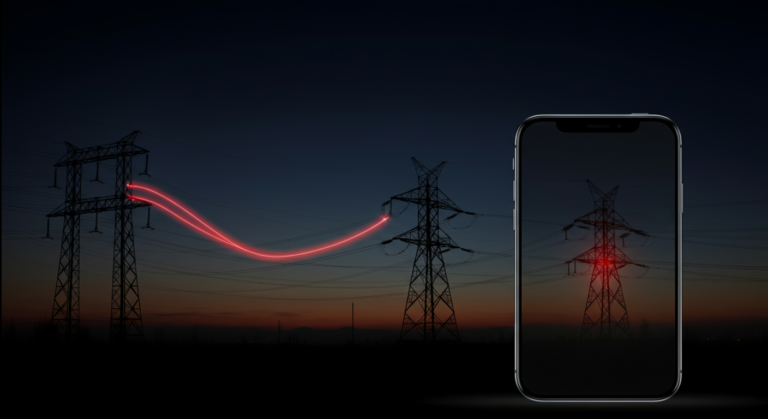
This is why power lines are particularly vulnerable to EMPs. A power line stretching for miles acts like a giant antenna, collecting electromagnetic energy over its entire length. The voltage induced can be enormous, enough to damage transformers and other grid equipment.
Your smartphone, by contrast, has very short internal conductors. It collects far less energy from an EMP than a mile of power line. This doesn’t mean it’s immune, but the vulnerability scales with conductor length.
The Role of Frequency
EMPs contain a spectrum of frequencies, not just one. The E1 component of a nuclear EMP includes frequencies from roughly 1 MHz to over 100 MHz. Different frequencies interact with different-sized conductors:
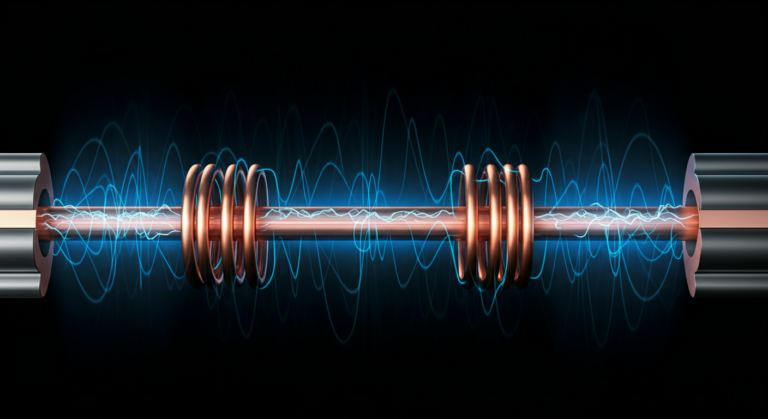
- Lower frequencies (longer wavelengths) couple efficiently with long conductors like power lines
- Higher frequencies (shorter wavelengths) can couple with smaller circuits and components
This broad-spectrum nature is part of what makes EMPs challenging to protect against. A shield that blocks one frequency range might not block another.
Types of EMPs: Natural vs. Human-Made
Understanding the different EMP sources helps explain why protection strategies vary.
Lightning-Generated EMPs
Every lightning strike produces an EMP. The electromagnetic pulse radiates outward from the lightning channel at the speed of light, inducing currents in nearby conductors.
Lightning EMPs are:
- Localized: Significant effects within hundreds of feet
- Relatively slow: Rise time of microseconds (slower than nuclear E1)
- Well-understood: We’ve been designing protection against them for over a century
The surge protector in your home is designed to handle lightning-induced voltage spikes. When the induced voltage exceeds a threshold, the surge protector diverts the excess energy to ground. This works because lightning EMPs are slow enough for the protection circuit to respond.
Solar EMPs (Geomagnetic Disturbances)
When the sun releases a coronal mass ejection (CME) directed at Earth, the resulting interaction with Earth’s magnetic field creates slowly changing electromagnetic conditions that induce currents in very long conductors.
Solar EMPs are:
- Continental in scale: Can affect entire power grids
- Very slow: Develop over minutes to hours
- Primarily affecting long conductors: Power lines, pipelines, communication cables
The physics is the same as other EMPs: changing electromagnetic fields inducing currents—but the timescale is completely different. A solar geomagnetic storm isn’t going to damage the phone in your pocket. But it can induce currents in power transmission lines that overload transformers and cause widespread blackouts, like the 1989 Quebec event that affected six million people.
Nuclear EMPs (HEMP)
A nuclear weapon detonated at high altitude (typically above 30 km) produces the most complex and potentially damaging EMP. This is called a High-altitude Electromagnetic Pulse (HEMP).

The process involves:

- Nuclear detonation releases gamma rays in all directions
- Gamma rays interact with air molecules through Compton scattering
- This interaction releases electrons which are accelerated by the gamma rays
- Earth’s magnetic field curves the electron paths
- The moving electrons create an intense electromagnetic field that propagates downward
What makes nuclear EMPs unique is that they produce three distinct pulse components, each with different characteristics and effects.
The Three Phases of Nuclear EMP (E1, E2, E3)
Nuclear EMPs aren’t a single pulse but three overlapping pulses, designated E1, E2, and E3. Understanding these components is crucial for effective protection planning.
E1 Component: The Fast Killer
The E1 pulse is the first and fastest component, lasting only nanoseconds.
Characteristics:
- Rise time: Less than 5 nanoseconds
- Duration: A few hundred nanoseconds
- Peak field strength: Up to 50,000 volts per meterVolts per meter (V/m) is the standard unit for measuring electric field strength. It quantifies how much electrical potential exists across a given distance. Electric fields measured in V/m are...
Why it’s dangerous: The E1 pulse is too fast for conventional surge protectors to respond. By the time a standard surge protector’s metal oxide varistor reacts, the damaging voltage spike has already passed through. This is why E1 is the primary threat to unprotected personal electronics.
What it affects:
- Computers and digital electronics
- Communications equipment
- Semiconductor-based devices
- Anything with integrated circuits
E2 Component: Lightning-Like
The E2 pulse follows E1 and lasts from microseconds to milliseconds.
Characteristics:
- Duration: Microseconds to milliseconds
- Similarity: Very close to lightning-induced EMP
Why it’s less concerning: Standard lightning protection systems can handle E2. The electrical grid and most buildings already have protection designed for lightning, which is essentially equivalent to E2.
The catch: If the E1 pulse has already damaged protection systems, E2 can cause additional damage to equipment that would otherwise be protected. E1 and E2 arrive in quick succession. E1 might punch through a surge protector, leaving the circuit vulnerable to E2.

E3 Component: The Grid Killer
The E3 pulse is the slowest, lasting from seconds to minutes.
Characteristics:
- Duration: Seconds to minutes
- Mechanism: Caused by the nuclear fireball distorting Earth’s magnetic field
- Similarity: Very close to geomagnetic storms from solar events
What it affects:
- Power transmission infrastructure
- Large transformers
- Any system with very long conductors
Why it matters: E3 is primarily a threat to the power grid, not to your personal electronics. The long-duration pulse induces quasi-DC currents in power lines that can saturate and damage large transformers. These transformers are expensive, difficult to replace, and critical to power distribution.
| Component | Duration | Primary Threat | Protection Status |
|---|---|---|---|
| E1 | Nanoseconds | Personal electronics | Not protected by standard surge suppressors |
| E2 | Microseconds-milliseconds | Systems without lightning protection | Usually protected by existing systems |
| E3 | Seconds-minutes | Power grid infrastructure | Limited protection, long recovery time |
How EMPs Affect Different Electronic Systems
Not all electronics are equally vulnerable to EMPs. Understanding what makes devices susceptible helps prioritize protection efforts.
Most Vulnerable: Digital Electronics with Long Cables
The highest-risk category includes:
- Computers connected to networks and power outlets
- Televisions and entertainment systems
- Smart home devices
- Network routers and switches
These devices combine two risk factors: sensitive semiconductor electronics and connections to long conductors (power lines, network cables). The cables act as antennas, collecting EMP energy and delivering it directly to the device’s circuits.
Moderately Vulnerable: Standalone Digital Devices
Battery-powered devices without external connections face lower risk:
- Smartphones not connected to chargers
- Tablets and e-readers
- Battery-powered radios
These devices have short internal conductors that collect less EMP energy. They’re not immune, but they’re more likely to survive than connected equipment.
Least Vulnerable: Simple Devices and Analog Equipment
The lowest-risk electronics include:

- LED flashlights with simple circuits
- Older vehicles with minimal electronics
- Hand tools and simple appliances
- Devices inside Faraday enclosures
The simpler the circuit and the fewer semiconductors involved, the more likely a device is to survive an EMP.
EMP vs. EMF: Understanding the Difference
Since both terms involve electromagnetic energy, it’s worth clarifying how EMPs differ from the everyday EMFEMF stands for electromagnetic field (also called electromagnetic frequency or electromagnetic force). EMFs are invisible fields of energy produced by electrically charged objects. They exist on a spectrum ranging from... your devices emit.
Electromagnetic Fields (EMF) from devices like phones and WiFi routers:
- Continuous emission at specific frequencies
- Low power levels
- Designed to carry information (voice, data, etc.)
- Health concerns relate to long-term cumulative exposure
Electromagnetic Pulses (EMP):
- Single transient event
- Extremely high power for a brief moment
- Not carrying information—just raw electromagnetic energy
- Concerns relate to immediate damage to electronics
The protection strategies differ fundamentally. For everyday EMF, you might use shielding that reduces exposure while still allowing your device to function. For EMP protection, you need complete shielding that blocks all electromagnetic energy, which means the device can’t function while protected.
This is why Faraday bags are useful for EMP preparation but not for everyday EMF reduction. A Faraday bag blocks all signals, making your phone completely non-functional while inside. That’s exactly what you want for EMP protection of a backup device, but not practical for a phone you’re actively using.
EMP Protection Principles and Faraday Cages
Understanding how EMPs work naturally leads to understanding how to block them. The fundamental principle is electromagnetic shielding using conductive enclosures.
How Faraday Cages Work
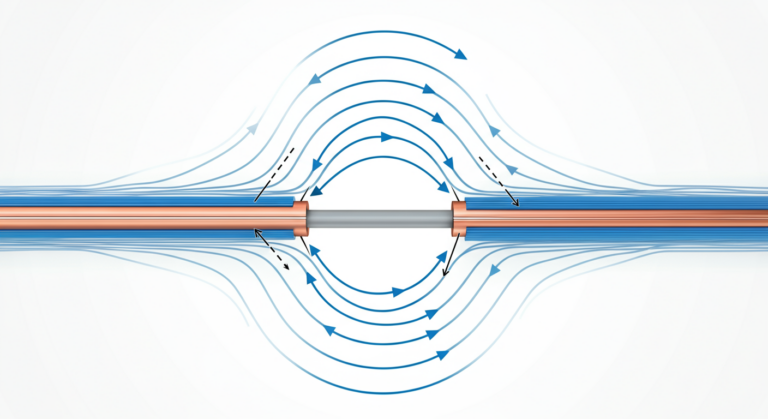
A Faraday cage is any conductive enclosure that blocks electromagnetic fields. When an electromagnetic pulse encounters the conductive surface:
- The electromagnetic field induces currents in the conductive material
- These induced currents create their own electromagnetic field
- The induced field opposes and cancels the incoming field
- The interior of the enclosure experiences dramatically reduced field strength
The key requirement is continuity: the conductive material must completely surround the protected space with no gaps. Even small openings can allow EMP energy to penetrate.
Why Complete Enclosure Matters
Think of how Faraday cages work like a boat. A boat with one small hole will still sink; it doesn’t matter that 99% of the hull is intact. Similarly, a Faraday enclosure with gaps will still allow EMP energy to enter; it doesn’t matter that most of the enclosure is properly shielded.
This is why commercial Faraday bags are designed with overlapping closures and conductive seals. The goal is to maintain complete electromagnetic continuity even when the bag is sealed.
Material Considerations
Any conductive material can provide shielding, but effectiveness varies:
| Material | Conductivity | Practical Use |
|---|---|---|
| Silver | Highest | High-performance applications, wearables |
| Copper | Very High | Building shielding, premium enclosures |
| Aluminum | High | Consumer Faraday bags, DIY projects |
| Steel | Moderate | Structural applications, filing cabinets |
For EMP protection, any of these materials can be effective if properly implemented. The critical factors are complete coverage and no gaps, not whether you use copper versus aluminum.
Debunking EMP Myths and Misconceptions
Understanding the actual science helps separate legitimate concerns from exaggerated fears.
Myth: EMPs Will Instantly Destroy All Electronics
Reality: Damage depends on the EMP’s intensity, the device’s sensitivity, and whether the device is connected to long conductors. Many devices, especially battery-powered ones not connected to the grid, would survive most EMP scenarios.
Myth: Your Car Will Be Permanently Disabled
Reality: The Congressional EMP Commission tested 37 vehicles and found none were permanently disabled by EMP. Some required restarting, and a few experienced minor malfunctions, but no vehicles were “bricked.” Modern vehicles have more electronics but also more redundancy.
Myth: Surge Protectors Provide Complete EMP Protection
Reality: Standard surge protectors are designed for lightning-induced surges (similar to E2). They’re too slow to protect against the nanosecond-scale E1 pulse from a nuclear EMP. They provide some protection, but not complete protection.
Myth: Solar Flares Will Fry Your Phone
Reality: Solar EMPs (geomagnetic disturbances) primarily affect long conductors through slow E3-type effects. Your disconnected phone is unlikely to be damaged by a solar event. The concern with solar EMPs is infrastructure damage, not personal device damage.
Myth: EMPs and EMF Are Basically the Same Thing
Reality: While both involve electromagnetic energy, they’re fundamentally different in duration, intensity, and effects. EMF concerns involve long-term exposure to low-level fields. EMP concerns involve instant damage from high-intensity pulses.
What This Means for You
Understanding how EMPs work provides the foundation for making informed decisions about protection.
The key takeaways:
- EMPs damage electronics through induced voltage, not through the electromagnetic field directly
- Longer conductors are more vulnerable than short circuits
- E1 is the primary threat to personal electronics from nuclear EMPs
- Solar EMPs primarily threaten infrastructure, not disconnected devices
- Faraday enclosures work by redirecting electromagnetic energy around protected spaces
For practical protection guidance, see our guide on EMP shielding. For product options, explore our Faraday bag collection.
Frequently Asked Questions
An EMP can be caused by natural events like lightning strikes and solar coronal mass ejections, or by human-made sources such as nuclear detonations and specialized EMP weapons.
An EMP induces electrical currents in conductors, which can exceed the voltage ratings of electronic components, leading to damage or destruction of the devices.
A nuclear EMP consists of three components: E1, E2, and E3, each affecting electronics differently, with E1 being the fastest and most damaging.
Longer conductors, like power lines, act as antennas that collect more electromagnetic energy, resulting in higher induced voltages that can damage connected equipment.
A Faraday cage is a protective enclosure made of conductive material that redirects electromagnetic fields around the protected space, preventing EMP energy from reaching the electronics inside.