

A typical cross-country flight exposes you to approximately 0.03-0.04 millisieverts (mSv) of cosmic radiation, roughly equivalent to one-third of a chest X-ray.
Longer flights deliver proportionally more: a transatlantic flight runs 0.05-0.08 mSv, while transpacific routes can exceed 0.1 mSv. For occasional travelers, these doses are insignificant compared to annual background radiation of about 3 mSv.
Key Takeaways
- A cross-country flight delivers approximately 0.03-0.04 mSv of cosmic radiation, roughly one-third of a chest X-ray
- Radiation dose increases with altitude, latitude, and flight duration: polar routes at 40,000 feet deliver the highest exposure
- Frequent flyers logging 100,000+ miles annually can add 2-4 mSv per year, potentially doubling their total radiation intake
- Flight crew receive among the highest occupational radiation doses of any profession, averaging 2-5 mSv annually
- For occasional travelers taking a few flights per year, flight radiation is negligible compared to the 3 mSv annual background average
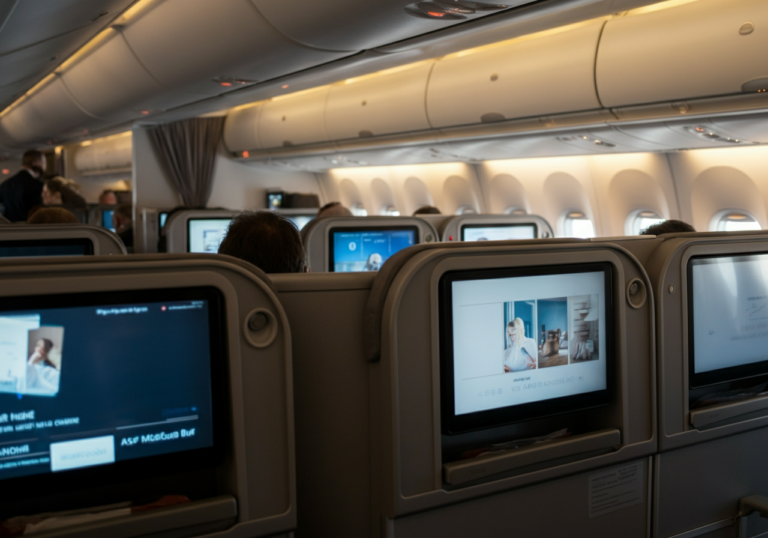
For occasional travelers, these doses are insignificant compared to annual background radiation of about 3 mSv. For frequent flyers logging 100,000+ miles annually, cumulative exposure can add 2-4 mSv per year, potentially doubling total radiation intake.
Medical Disclaimer: This article is for informational purposes only. It is not, nor is it intended to be, a substitute for professional medical advice, diagnosis, or treatment and should never be relied upon for specific medical advice.
Quick Answer: Flying Radiation Doses Explained
When you fly, you’re exposed to cosmic radiation that Earth’s atmosphere normally blocks. At cruising altitude of 30,000-40,000 feet, you’re above most of this protective layer, receiving radiation doses that vary based on flight duration, altitude, and route.
For context, here’s how flying compares to your annual baseline. The average American receives about 3 millisieverts (mSv) of background radiation annually from natural sources like radon, soil, and cosmic rays at ground level. A single cross-country flight adds roughly 1% to that annual total.
For a comprehensive overview of airplane radiation sources and protection strategies, see our complete airplane radiation guide.
Radiation Dose Comparisons: Flying vs Common Sources
Understanding flight doses requires comparison to familiar radiation exposures.
Flight Routes Compared
| Route | Distance | Approximate Dose | Equivalent To |
|---|---|---|---|
| New York to Los Angeles | 2,450 mi | 0.03-0.04 mSv | 1/3 chest X-ray |
| New York to London | 3,460 mi | 0.05-0.08 mSv | 1/2 chest X-ray |
| Los Angeles to Tokyo | 5,470 mi | 0.08-0.12 mSv | 1 chest X-ray |
| New York to Sydney | 9,930 mi | 0.10-0.15 mSv | 1.5 chest X-rays |
| London to Singapore | 6,760 mi | 0.08-0.10 mSv | 1 chest X-ray |
Common Medical Exposures
| Procedure | Typical Dose |
|---|---|
| Dental X-ray | 0.005 mSv |
| Chest X-ray | 0.1 mSv |
| Mammogram | 0.4 mSv |
| CT scan (head) | 2 mSv |
| CT scan (chest) | 7 mSv |
| CT scan (abdomen) | 10 mSv |
Everyday Radiation Sources
| Source | Annual Dose |
|---|---|
| Natural background (US average) | 3.0 mSv |
| Living in Denver vs sea level | +0.5 mSv |
| Radon in average home | 2.0 mSv |
| Food and water | 0.3 mSv |
| Cosmic rays at ground level | 0.3 mSv |
A frequent flyer taking 50 cross-country round trips annually adds roughly 3 mSv to their baseline, effectively doubling their total radiation exposure compared to a non-flyer.
Factors That Affect Your Radiation Dose
Not all flights deliver equal radiation doses. Several variables significantly affect your exposure.
Altitude
Cosmic radiation intensity increases with altitude. The relationship is roughly exponential: radiation dose rate doubles for every 6,500 feet (2,000 meters) of altitude gain.
| Altitude | Relative Dose Rate |
|---|---|
| Sea level | 1x (baseline) |
| 20,000 ft | ~4x |
| 30,000 ft | ~10x |
| 40,000 ft | ~20x |
Most commercial flights cruise between 30,000 and 40,000 feet. Shorter regional flights at lower altitudes deliver less radiation per hour than long-haul flights at maximum cruising altitude.
Latitude
Earth’s magnetic field deflects charged cosmic particles toward the poles. This means flights at higher latitudes receive more radiation than equatorial routes.
| Route Type | Relative Exposure |
|---|---|
| Equatorial (0-30°) | Lower |
| Mid-latitude (30-60°) | Moderate |
| Polar (60-90°) | Higher |
A polar route from New York to Tokyo receives roughly 20-30% more radiation than an equatorial route of similar distance. When booking flights, this is rarely a practical consideration since route options are limited, but it explains why crew on polar routes face higher cumulative exposure.
Flight Duration
Time at altitude is the primary determinant of total dose. A 5-hour flight delivers roughly five times the radiation of a 1-hour flight at similar altitude and latitude.
This is why:
- Long-haul flights deliver significantly higher doses than short hops
- Multiple connections with shorter flights may deliver less radiation than a single long-haul flight
- Time spent at cruising altitude matters more than total travel time (ascent and descent at lower altitudes contribute less)
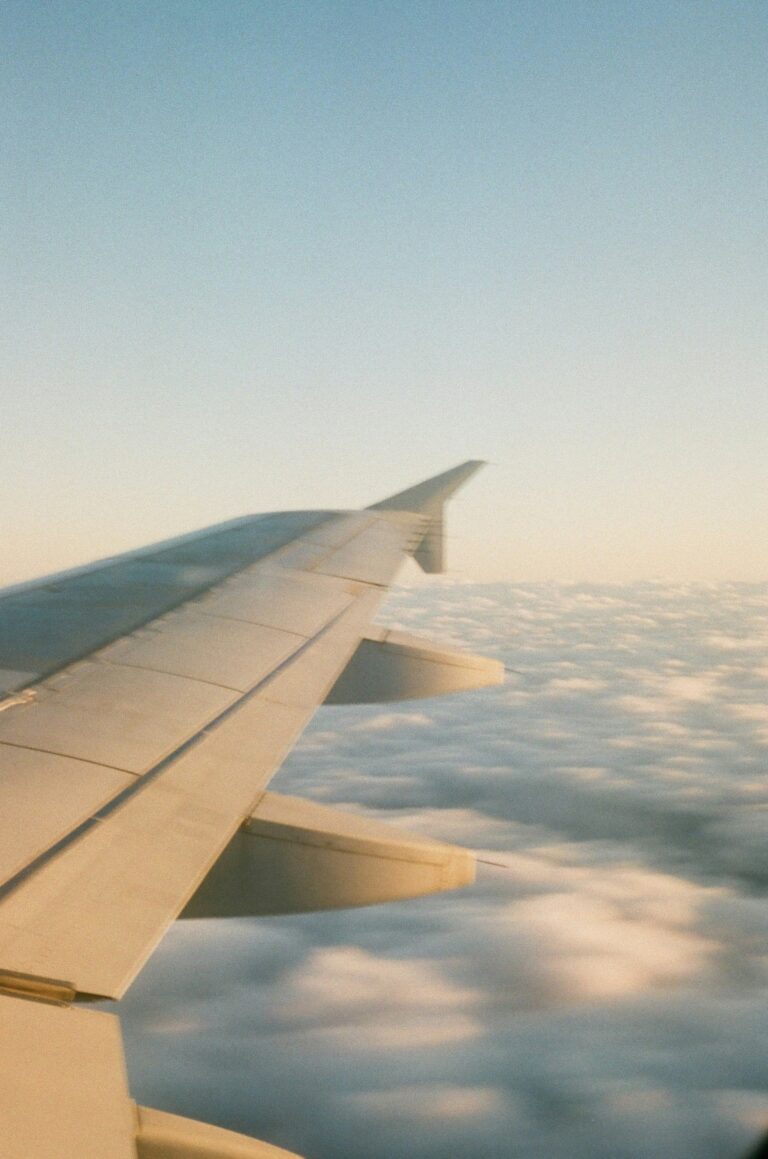
ht – Time spent at cruising altitude matters more than total travel time (ascent and descent at lower altitudes contribute less)
Solar Activity
The sun’s activity level affects cosmic radiation reaching Earth. Counterintuitively, solar maximum (peak sunspot activity) slightly reduces galactic cosmic ray exposure because the sun’s enhanced magnetic field deflects some incoming particles.
However, solar storms can dramatically increase radiation, particularly on polar routes. During significant solar events, airlines may reroute flights away from polar regions or reduce cruising altitude. Passengers rarely notice these adjustments, but they’re made specifically to limit radiation exposure.
Cumulative Exposure: What Frequent Flyers Should Know
Single flights pose negligible radiation risk. Cumulative exposure over time is where the numbers become meaningful.
Annual Dose Calculations
| Traveler Type | Annual Miles | Estimated Annual Dose |
|---|---|---|
| Occasional traveler | 10,000 | 0.1-0.2 mSv |
| Regular business traveler | 50,000 | 0.5-1.0 mSv |
| Frequent flyer | 100,000 | 2.0-4.0 mSv |
| Flight crew | 500,000+ | 2.0-5.0 mSv |
To put this in regulatory context: the annual occupational limit for radiation workers is 50 mSv. Even the most frequent flyers remain well below occupational limits, but flight crew approach or exceed the 1 mSv annual limit recommended for the general public.
Occupational Exposure for Flight Crew
Pilots and flight attendants receive among the highest occupational radiation doses of any profession. A full-time crew member logging 700-900 flight hours annually typically accumulates 2-5 mSv from cosmic radiation alone.
The European Union formally classifies flight crew as radiation workers and requires airlines to:
- Monitor crew radiation doses
- Inform crew of their exposure levels
- Schedule assignments to limit annual doses
- Restrict pregnant crew members from high-exposure routes
US regulations are less stringent. The FAA acknowledges flight crew radiation exposure but doesn’t require the same monitoring or scheduling protections mandated in Europe.
Tracking Your Exposure
Several tools exist for estimating flight radiation doses:
FAA’s CARI Tool: The FAA provides the CARI-7 calculator, which estimates radiation dose based on flight route, altitude, and date. You can input specific flights to calculate exposure or run hypothetical scenarios.
Flight Tracking Apps: Some apps and websites calculate radiation dose as part of flight tracking, though accuracy varies.
Simple Estimation: As a rough rule, assume 0.003-0.005 mSv per hour of flight time at typical cruising altitude. A 5-hour flight delivers approximately 0.015-0.025 mSv.
Putting It In Perspective
Context matters when evaluating radiation exposure. Here’s how flight radiation compares to other life activities and risks.
Comparative Lifetime Risks
The radiation from flying is a small contributor to overall lifetime radiation exposure for most people. Consider:
- Living at sea level vs 5,000 feet elevation adds ~1.5 mSv annually
- Living in a home with average radon levels adds ~2 mSv annually
- Medical imaging (for those who receive it) typically adds 0.5-3 mSv annually
A moderate business traveler’s annual flight radiation (1-2 mSv) is comparable to moving from Miami to Denver or having an extra medical imaging procedure.
When to Be Concerned
Radiation concern is proportional to exposure. Consider your flight radiation dose if:
- You fly 100,000+ miles annually
- You’re pregnant and fly frequently
- You have occupational radiation exposure from other sources
- You’re undergoing radiation therapy
- You fly very frequently on polar routes
For occasional travelers taking a few flights per year, flight radiation is a negligible contributor to lifetime exposure and doesn’t warrant special concern or behavioral changes.
When Not to Worry
The vast majority of air travelers receive radiation doses that are:
- Small compared to annual background radiation
- Comparable to common medical procedures
- Well below any threshold associated with measurable health effects
If you fly a few times a year for vacation or occasional business, flight radiation should not be a significant factor in your travel decisions.
Radiation Protection Options
While flight radiation exposure is generally minimal for occasional travelers, some frequent flyers store sensitive electronic devices in a faraday bag during flights to protect against electromagnetic radiationElectromagnetic radiation (EMR) is energy that travels through space as waves of oscillating electric and magnetic fields. It includes everything from radio waves to visible light to gamma rays. All.... However, it’s worth noting that safe emf levels for human exposure are well-established, and flight radiation remains within acceptable bounds even for frequent travelers.
Common Misconceptions
Misconception: Any amount of radiation from flying is dangerous
Reality: A single cross-country flight delivers approximately 0.03-0.04 mSv, roughly one-third of a chest X-ray. For occasional travelers taking a few flights per year, this exposure is negligible compared to the 3 mSv of background radiation every American receives annually from natural sources.
Misconception: Flying is your biggest source of radiation exposure
Reality: For most people, radon gas in the home contributes roughly 2 mSv per year, making it a far larger source than occasional flights. Medical imaging, particularly CT scans at 2-10 mSv per procedure, also typically exceeds flight exposure. Flight radiation only becomes significant for those logging 100,000+ miles annually.
Misconception: You can shield yourself from cosmic radiation during a flight
Reality: Cosmic radiation at cruising altitude passes through the aircraft fuselage and everything inside it. No wearable product or seat selection can reduce your exposure. The only factors that change your dose are altitude, latitude, flight duration, and solar activity, which are determined by the route and conditions, not personal protective measures.
The Bottom Line
A cross-country flight delivers approximately 0.03-0.04 mSv of cosmic radiation, roughly one-third of a chest X-ray. Longer flights deliver proportionally more, with transoceanic flights potentially exceeding 0.1 mSv.
For occasional travelers, these doses are insignificant. For frequent flyers, cumulative annual exposure can reach 2-4 mSv, meaningfully increasing total radiation intake. Flight crew face the highest exposure, receiving doses that place them among the most radiation-exposed workers in any profession.
Understanding these numbers allows you to make informed decisions about flight frequency and timing without unnecessary fear. For most people, the benefits of air travel far outweigh the modest radiation exposure involved.
Frequently Asked Questions
A typical cross-country flight exposes you to approximately 0.03-0.04 millisieverts (mSv) of cosmic radiation, which is roughly equivalent to one-third of a chest X-ray.
Frequent flyers logging 100,000+ miles annually can accumulate an additional 2-4 mSv of radiation exposure per year, potentially doubling their total radiation intake.
Radiation intensity increases with altitude; for example, at 30,000 feet, the dose rate is approximately 10 times that at sea level.
Pregnant travelers should consider their flight radiation exposure, especially if flying frequently, as cumulative exposure may be a concern.
The radiation from flying is small compared to annual background radiation and common medical procedures, making it negligible for occasional travelers.