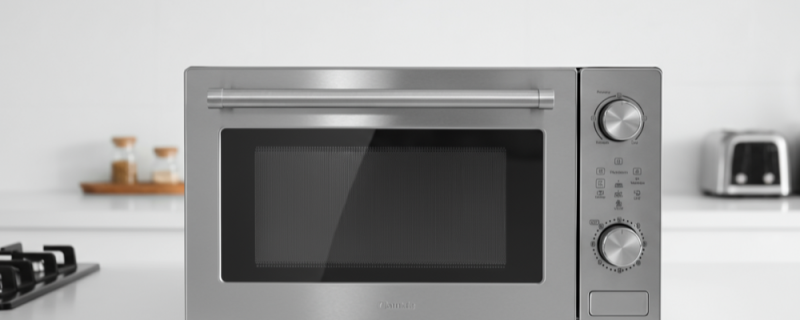

Microwave ovens emit RF radiation at 2.45 GHz to heat food. While shielded, some leakage occurs. The FDA limits leakage to 5 mW/cm² at 5 cm from the surface.
The key to safety is distance—exposure drops dramatically as you step back. Standing a few feet away significantly reduces exposure. Regular door seal inspection keeps your microwave within recommended limits.
Medical Disclaimer: This article is for informational purposes only. It is not, nor is it intended to be, a substitute for professional medical advice, diagnosis, or treatment and should never be relied upon for specific medical advice.
Key Takeaways
- Microwave ovens use RF radiation at 2.45 GHz (the same frequency band as WiFi routers) to heat food by causing water molecules to vibrate
- FDA regulations limit microwave leakage to 5 mW/cm² at 5 cm from the oven, though actual leakage from properly functioning units is typically much lower
- Distance is your best protection: radiation intensity drops by 75% when you double your distance from the source
- Research on microwave radiation shows 81% of peer-reviewed studies found biological effects, though most focus on direct exposure rather than oven leakage
- Damaged door seals, worn hinges, or visible rust around the door frame are signs your microwave may be leaking more radiation than intended
What Is Microwave Radiation?
Microwave radiation is a form of electromagnetic energy that falls between radio waves and infrared light on the electromagnetic spectrumThe electromagnetic spectrum is the complete range of electromagnetic radiation, organized by wavelength and frequency. It spans from radio waves (lowest frequency) through microwaves, infrared, visible light, ultraviolet, X-rays, to.... It spans frequencies from 300 MHz to 300 GHz, with microwave ovens specifically using 2.45 GHz (2,450 MHz).
This places microwave oven radiation in the same general category as the signals from your WiFi router, cell phone, and Bluetooth devices. The difference lies in the power level. While your WiFi router might emit around 100 milliwatts, a microwave oven generates 600 to 1,200 watts of power to cook your food.
The term “radiation” often triggers concern, but it’s important to understand the distinction between ionizing and non-ionizing radiationNon-ionizing radiation is electromagnetic energy that lacks sufficient power to remove electrons from atoms. This includes radio waves, microwaves, infrared, visible light, and lower-energy ultraviolet. The EMF from cell phones,.... Ionizing radiationIonizing radiation is electromagnetic energy with enough power to remove electrons from atoms, creating charged particles called ions. This includes X-rays, gamma rays, and ultraviolet radiation. Unlike the non-ionizing radiation..., like X-rays and gamma rays, carries enough energy to break chemical bonds and damage DNA directly. Microwave radiation is non-ionizing, meaning it doesn’t have enough energy per photon to break molecular bonds.
However, non-ionizing doesn’t mean no biological effects. As we’ll explore, research indicates that microwave radiation can affect biological systems through mechanisms beyond simple heating.
How Microwave Ovens Work
Inside every microwave oven sits a component called a magnetron. This vacuum tube converts electrical energy into microwave radiation, which is then directed into the cooking chamber through a waveguide.
When these microwaves encounter food, they cause water, fat, and sugar molecules to rotate rapidly, roughly 2.45 billion times per second. This molecular friction generates heat, cooking your food from the inside out.
The metal walls of the microwave oven act as a Faraday cage, reflecting the microwaves back into the cooking chamber rather than allowing them to escape. The mesh screen in the door serves the same purpose. The holes in this mesh are small enough (typically about 1 millimeter) to block the 12-centimeter wavelength of microwave radiation while still allowing visible light through so you can watch your food cook.
This shielding is remarkably effective when the oven is in good condition. But it’s not perfect, and it can degrade over time.
How Much Radiation Do Microwaves Emit?
The FDA sets the standard for microwave oven emissions in the United States. According to federal regulations, a microwave oven cannot leak more than 5 milliwatts of radiation per square centimeter (mW/cm²) at a distance of 5 centimeters (about 2 inches) from any surface of the oven.
To put this in perspective, here’s how microwave oven leakage compares to other common EMFEMF stands for electromagnetic field (also called electromagnetic frequency or electromagnetic force). EMFs are invisible fields of energy produced by electrically charged objects. They exist on a spectrum ranging from... sources:
| Source | Typical Exposure Level | Distance |
|---|---|---|
| Microwave oven (FDA limit) | 5 mW/cm² | 5 cm (2 inches) |
| Microwave oven (typical new) | 0.1-0.5 mW/cm² | 5 cm (2 inches) |
| Cell phone (during call) | 0.1-1.0 mW/cm² | Against head |
| WiFi router | 0.001-0.01 mW/cm² | 1 meter |
| Cell tower | 0.0001-0.001 mW/cm² | 100 meters |
The good news is that most properly functioning microwave ovens emit far less than the FDA limit. Testing by consumer organizations typically finds levels between 0.1 and 0.5 mW/cm² at the standard testing distance.
The even better news is that radiation intensity drops off rapidly with distance. Thanks to the inverse square law, doubling your distance from the microwave reduces your exposure to one-quarter of its original level. At arm’s length (about 3 feet), exposure from even a microwave at the FDA limit drops to negligible levels.
Are Microwave Ovens Safe?
This is where the conversation gets more nuanced than simple “yes” or “no” answers allow.
From a regulatory standpoint, microwave ovens that meet FDA standards are considered safe for normal use. The thermal effects of microwave radiation are well understood. At the power levels that leak from a properly functioning oven, there isn’t enough energy to heat your tissue in any meaningful way.
But here’s what’s worth knowing: research on microwave frequency radiation extends beyond just thermal effects.
The SYB Research Hub catalogs 259 peer-reviewed studies examining microwave frequency radiation, with 81% finding some form of biological effect. These studies examine various aspects of microwave exposure, including effects on cells, tissues, and organisms.
It’s important to note that many of these studies involve direct microwave exposure at levels higher than what you’d experience from oven leakage. The relevance to standing near your kitchen microwave is a subject of ongoing scientific investigation.
What we can say with confidence is this: the precautionary approach makes sense. Minimizing unnecessary exposure costs you nothing and aligns with how scientists who study this field often behave in their own lives.
Testing Your Microwave for Leakage
If you’re concerned about your microwave’s radiation output, you have several options for testing.

Signs Your Microwave May Be Leaking
Before reaching for testing equipment, look for these physical warning signs:
- Door doesn’t close firmly – The door should click shut with a solid seal
- Visible damage to the door seal – Look for cracks, tears, or gaps in the rubber gasket
- Rust around the door frame – Corrosion can create gaps in the shielding
- Food heats unevenly – Can indicate magnetron or shielding problems
- Microwave runs with door slightly open – The safety interlock may be failing
How to Test with an EMF Meter
For a more precise assessment, you can use an RF EMF meter to measure actual emissions:
- Get an appropriate meter – You need a meter that measures in the microwave frequency range (2.4 GHz). Our EMF meters collection includes options suitable for this purpose.
- Place a cup of water in the microwave – Never run a microwave empty
- Start the microwave on high
- Hold the meter 5 cm (2 inches) from the door surface
- Slowly move the meter around the door perimeter, especially near the hinges and latch
- Compare readings to the FDA limit – Anything over 5 mW/cm² indicates a problem
If you find elevated readings, the microwave should be serviced or replaced.
Safe Distance from Microwaves
The single most effective way to reduce your microwave radiation exposure is simply to increase your distance from the oven while it’s running.
Here’s how distance affects exposure, based on the inverse square law:
| Distance from Microwave | Relative Exposure |
|---|---|
| 2 inches (5 cm) | 100% (FDA testing distance) |
| 1 foot (30 cm) | 2.8% |
| 2 feet (60 cm) | 0.7% |
| 3 feet (90 cm) | 0.3% |
| 6 feet (180 cm) | 0.08% |
Put simply: if you step back just one foot from your microwave instead of watching your food through the door, you’ve reduced your exposure by over 97%.
Practical Distance Recommendations
- During operation: Stand at least 3 feet away when possible
- For children: Keep them out of the kitchen while the microwave is running, or at minimum, several feet away
- Workstation placement: If your kitchen allows, avoid positioning seating or work areas directly adjacent to the microwave
- Cooking duration: The longer the microwave runs, the more exposure you accumulate, so distance matters more for longer cook times
Microwave Safety Tips
Here are practical steps to minimize your microwave radiation exposure:
- Maintain your distance – Step back at least 3 feet while the microwave is running
- Inspect the door seal regularly – Look for damage, gaps, or wear in the rubber gasket
- Don’t use a damaged microwave – If the door doesn’t close properly, stop using it
- Keep the door area clean – Food buildup can prevent a proper seal
- Replace old microwaves – Units over 10 years old may have degraded shielding
- Never operate empty – Running without food can damage the magnetron and shielding
- Test periodically – Use an EMF meter to check for leakage, especially on older units
For a more detailed guide, see our complete article on microwave oven safety tips.
Common Misconceptions
Misconception: Microwaves make food radioactive
Reality: Microwave radiation does not make food radioactive. Radioactivity involves unstable atomic nuclei, which requires ionizing radiation to create. Microwave ovens use non-ionizing radiation that simply causes molecules to vibrate and generate heat. When the microwave stops, so does the radiation, and nothing is left behind in your food.
Misconception: Standing near a microwave causes cancer
Reality: There’s no direct evidence that exposure to microwave oven leakage at normal levels causes cancer. The radiation is non-ionizing, meaning it doesn’t directly damage DNA the way X-rays can. However, research on long-term, low-level microwave exposure continues, and minimizing unnecessary exposure remains prudent.
Misconception: New microwaves are safer than old ones
Reality: New microwaves meet the same FDA leakage standards that have been in place for decades. However, new microwaves have intact seals and properly functioning components, while older units may have degraded over time. A well-maintained older microwave can be just as safe as a new one, but wear and tear is real.
Misconception: The mesh screen on the door lets radiation through
Reality: The mesh screen is specifically designed to block microwave radiation while allowing visible light to pass. The holes in the mesh (about 1mm) are far smaller than the wavelength of microwave radiation (about 12cm), making the mesh an effective barrier. Think of it like a chain-link fence stopping a soccer ball.
Misconception: Microwaves destroy nutrients more than other cooking methods
Reality: All cooking methods affect nutrient content to some degree. Because microwave cooking is often faster and uses less water than boiling, it can actually preserve more nutrients in some foods. The method of cooking matters less than factors like cooking time and temperature.
Understanding the Broader Context
Microwave ovens represent just one source of RF radiation in modern life. When you consider your total EMF exposure, your microwave is likely a minor contributor compared to devices you carry on your body or use for hours each day.
That said, every bit of exposure reduction helps, especially when it’s easy to achieve. Stepping back from the microwave costs nothing and takes no effort. It’s a simple example of the “minimize and maximize distance” principle that applies to all EMF sources.
If you want to learn more about how microwaves emit radiation or explore whether microwave radiation is harmful, we’ve created detailed guides on each topic.
The goal isn’t fear. It’s awareness and practical action. You don’t need to throw out your microwave. You just need to use it wisely.
Frequently Asked Questions
Yes. Microwave ovens use electromagnetic radiationElectromagnetic radiation (EMR) is energy that travels through space as waves of oscillating electric and magnetic fields. It includes everything from radio waves to visible light to gamma rays. All... at 2.45 GHz to heat food. While the oven is designed to contain this radiation, studies show that microwave ovens can leak small amounts of RF radiation, particularly around door seals as ovens age. The FDA allows leakage up to 5 mW/cm² at 5 cm distance, but any leakage means some radiation reaches your environment.
Microwave radiation is non-ionizing, meaning it doesn't have enough energy to break chemical bonds directly. However, research shows biological effects beyond simple heating. Lai and Singh (1996, 503 citations) found DNA breaks from microwave-frequency radiation, and de Pomerai (2003, 212 citations) demonstrated protein changes without measurable heating. Safety standards address thermal effects only.
RF radiation follows the inverse square law — doubling your distance reduces exposure by approximately 75%. Standing 3-4 feet from an operating microwave oven reduces your exposure significantly compared to standing directly in front of it. Since microwave cooking cycles are typically short (1-5 minutes), the total exposure from maintaining distance is very low.
All cooking methods affect nutrients, but microwave cooking can be particularly aggressive with certain compounds. A 2007 study (77 citations) found that microwaving broccoli destroyed significantly more antioxidants and bioactive compounds than steaming or other methods. Using lower power settings and shorter cook times can help preserve more nutritional value.
The most reliable method is using an RF-capable EMF meter held near the door seal while the microwave operates. You can also check for physical signs of wear: gaps in the door seal, visible damage to the door or hinges, or the door not closing firmly. If your microwave is more than 10 years old, the door seal may have degraded enough to increase leakage.