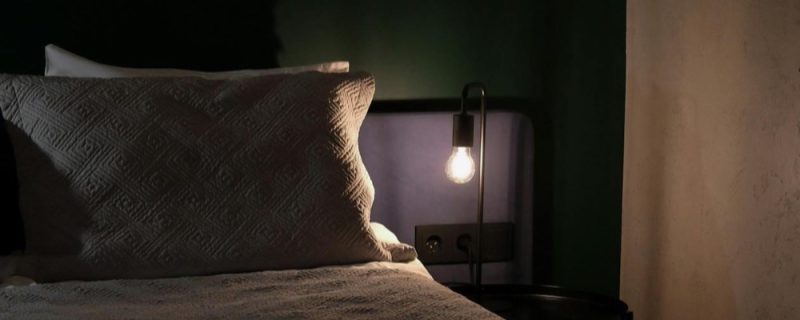

Red light supports better sleep because it doesn’t suppress melatonin the way blue light does. With wavelengths between 620-750 nanometers, red light falls at the opposite end of the visible spectrum from sleep-disrupting blue light.
Your brain’s melatonin-regulating cells barely respond to red wavelengths, making red light ideal for evening use when you need visibility without sacrificing sleep quality.
Using red light in the hours before bed helps maintain your natural melatonin production cycle. This means you can see well enough to read, navigate your home, or complete evening tasks without sending “stay awake” signals to your brain. The result is easier sleep onset and better sleep quality.
Key Takeaways
- Red light wavelengths (620-750nm) have minimal effect on melatonin production compared to blue light and sleep (380-500nm)
- Athletes using red light therapy showed 50% better sleep quality in a study on female basketball players
- Your melatonin-sensing cells (ipRGCs) are 1,000 times more sensitive to blue light than red light
- Red light at night preserves your circadian rhythm while providing enough visibility for evening activities
- Even dim red light is better than bright white light for nighttime bathroom visits and late activities
Why Red Light Doesn’t Disrupt Sleep
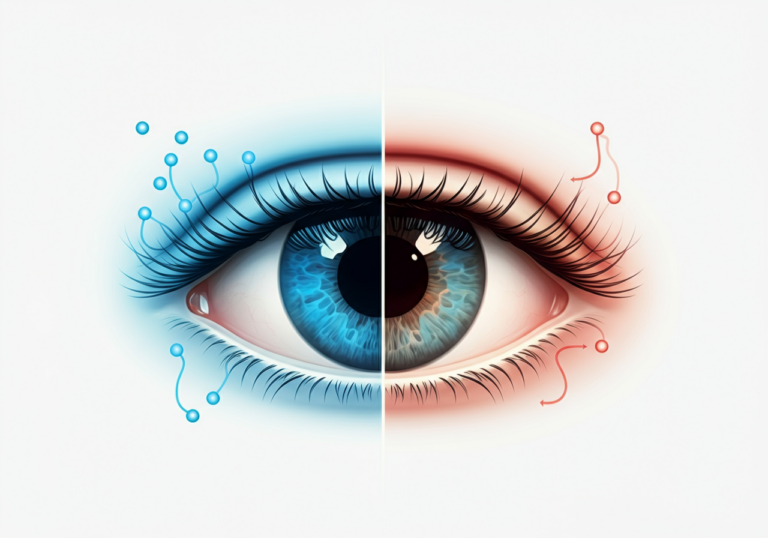
The science is straightforward. Your eyes contain specialized cells called intrinsically photosensitive retinal ganglion cells (ipRGCs) that regulate your circadian rhythm. These cells are most sensitive to blue light around 480 nanometers. They’re far less sensitive to longer wavelengths like red light.
When ipRGCs detect blue light, they signal your brain to suppress melatonin production. This response evolved to keep you alert during daylight hours. The problem is that modern screens and LED lighting expose you to blue light at night, triggering this alertness response when you should be winding down.
Red light sits at the opposite end of the visible spectrum. Its longer wavelengths don’t activate ipRGCs the same way. Research shows that red light exposure at night has minimal impact on melatonin production, allowing your body’s natural sleep preparation to proceed normally.
For the full story on how blue light affects your sleep, see our guide: Blue Light and Sleep.
The Science: Red Light and Melatonin
Multiple studies have examined how different light colors affect sleep and melatonin.
The Wavelength Sensitivity Research
Studies measuring ipRGC sensitivity show these cells respond most strongly to light around 480nm (blue) and barely respond to wavelengths above 600nm (orange to red). The difference isn’t subtle. ipRGCs are roughly 1,000 times more sensitive to blue light than to red light.
This means that even bright red light causes far less melatonin suppression than dim blue light.
The Sleep Quality Studies
Research on red light exposure before bed shows positive effects on sleep metrics. A study published in the Journal of Athletic Training examined red light therapy in female basketball players. After two weeks of red light exposure before bed:
- Sleep quality improved by approximately 50%
- Melatonin levels increased
- Endurance performance improved
While this study used red light therapy devices (more intense than ambient lighting), it demonstrates that red wavelengths don’t interfere with sleep and may actively support it.
The Color Comparison Research
Direct comparisons between light colors confirm what the ipRGC research predicts. A study in the Journal of Clinical Sleep Medicine found that exposure to blue light suppressed melatonin significantly while red light exposure showed no measurable melatonin suppression.
Red Light vs Blue Light: Sleep Impact Comparison
| Factor | Blue Light (450-480nm) | Red Light (620-750nm) |
|---|---|---|
| Melatonin suppression | High (50%+ reduction) | Minimal (near zero) |
| ipRGC activation | Strong | Very weak |
| Circadian rhythm shift | Yes (delays sleep timing) | No |
| Recommended for evening | No | Yes |
| Best use time | Morning/daytime | Evening/nighttime |
How to Use Red Light in Your Evening Routine
Switching to red light in the evening doesn’t require complicated equipment or major lifestyle changes. Here’s how to implement it effectively.
Step 1: Replace Bedroom Lighting
Start with your bedroom, where sleep-protective lighting matters most. Options include:
- Red LED bulbs: Standard bulb sockets, widely available, $5-15 each
- Red-filtered lamps: Table lamps with red shades or filters
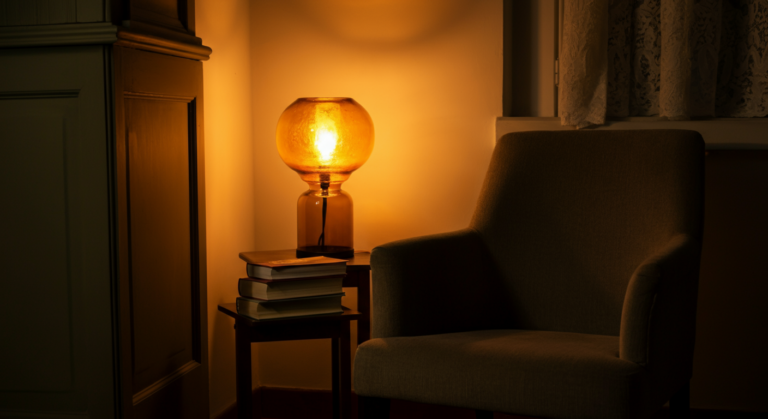
- Salt lamps: Emit warm amber/red tones (though dimmer than LED options)
- Smart bulbs: Can be programmed to shift toward red in the evening
For bedrooms, aim for low-intensity red lighting. You need enough light to see, not enough to read fine print.
Step 2: Address Nighttime Navigation
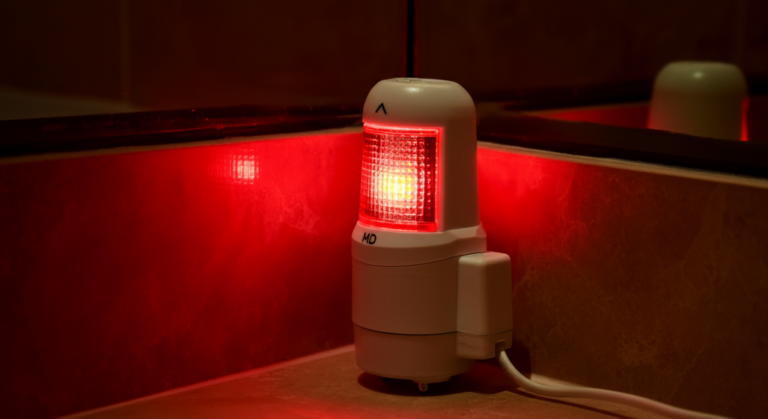
Nighttime bathroom visits often involve flipping on bright lights, which can make returning to sleep difficult. Red nightlights solve this problem.
Place dim red nightlights:
- In the bathroom
- Along hallways to the bathroom
- Near bedroom doorways
These provide enough visibility to navigate more safely without the melatonin-disrupting burst of white or blue light.
Step 3: Create an Evening Reading Setup
If you read before bed, a red or amber reading light preserves your melatonin while providing adequate visibility. The text may look slightly tinted, but your eyes adapt quickly.
Battery-powered options work well here, eliminating the EMFEMF stands for electromagnetic field (also called electromagnetic frequency or electromagnetic force). EMFs are invisible fields of energy produced by electrically charged objects. They exist on a spectrum ranging from... from electrical cords near your bed. As I note in Empowered, battery-powered lamps “don’t require any wiring, emit no electric fields from power cords, and can be positioned exactly where you need light.”
Step 4: Extend to Common Areas
For maximum benefit, extend red or warm lighting to rooms you use in the evening: living rooms, kitchens, and home offices. At minimum, dim the lights and avoid overhead fluorescents after sunset.
Red Light Therapy: Beyond Sleep
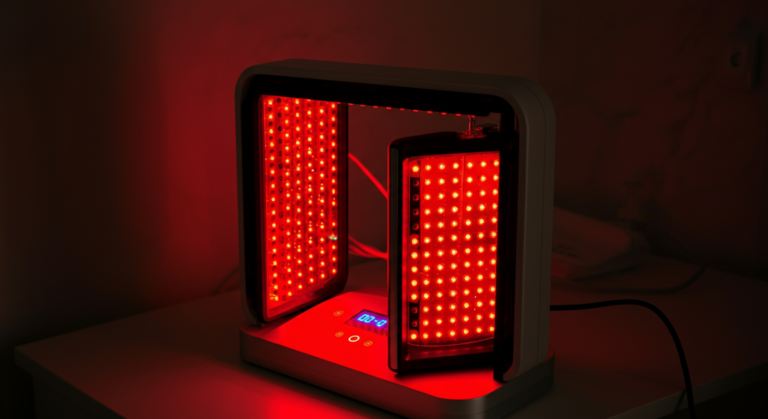
Red light for sleep is about ambient lighting that doesn’t disrupt melatonin. Red light therapy (RLT) is a related but distinct concept that uses concentrated red and near-infrared light for therapeutic purposes.
What Red Light Therapy Does
Red light therapy devices deliver specific wavelengths (typically 630-670nm red and 810-850nm near-infrared) at higher intensities than ambient lighting. Research shows this light penetrates tissue and may:
- Promote cellular energy production
- Reduce inflammation
- Support skin health and wound healing
- Ease joint pain
As I discuss in Empowered, “Red-light therapy, also known as photobiomodulation (PBM), is a non-invasive treatment that uses red and near-infrared light to stimulate healing processes in the body.”
RLT and Sleep
Some research suggests that red light therapy sessions during the day or early evening may improve sleep quality, possibly by supporting overall circadian health or reducing pain that interferes with sleep.
However, the primary mechanism we’re discussing here is simpler: red ambient light at night doesn’t suppress melatonin, making it the ideal choice for evening illumination.
Choosing Red Light Products
The market offers many options for red light products. Here’s what to consider.
For Ambient Sleep Lighting
| Product Type | Best For | Price Range | Notes |
|---|---|---|---|
| Red LED bulbs | Bedroom, bathroom | $5-15 | Standard socket, immediate solution |
| Red nightlights | Hallways, bathrooms | $8-20 | Automatic (light-sensitive or motion) |
| Smart bulbs | Whole-home evening mode | $15-50 | Programmable color and timing |
| Salt lamps | Bedroom ambiance | $20-50 | Warm glow, dimmer than LEDs |
For Red Light Therapy
| Product Type | Best For | Price Range | Notes |
|---|---|---|---|
| Portable panels | Face, targeted areas | $50-200 | Smaller treatment area |
| Large panels | Full body | $200-1000+ | Professional-grade intensity |
| Masks/targeted devices | Specific applications | $50-300 | Designed for particular uses |
For sleep purposes, simple red ambient lighting is sufficient. Red light therapy devices are worthwhile if you’re interested in the additional benefits, but they’re not necessary for protecting your sleep.
Explore our red light therapy collection for devices that support sleep and overall wellness.
Creating a Sleep-Friendly Light Environment
Beyond red light, consider your complete evening light environment.
The Evening Transition
As the sun sets, your lighting should shift with it:
- 2-3 hours before bed: Dim overhead lights, switch to lamps
- 1-2 hours before bed: Transition to warmer, redder light sources
- 30 minutes before bed: Keep only dim red lighting if needed
This gradual transition mimics the natural light changes your ancestors experienced and supports your circadian rhythm.
Combine with Blue Light Reduction
Red light at night works best when combined with reduced blue light exposure:
- Enable night mode on all devices
- Wear blue light blocking glasses during evening screen time
- Move screens out of the bedroom
- Choose warmer color temperature bulbs throughout your home (2700K or lower)
The Complete Approach
For the best sleep:
- Maximize bright light (including blue) in the morning
- Maintain adequate light during the day
- Begin dimming and shifting toward warm light after sunset
- Use only dim red light in the hour before bed
- Sleep in complete darkness
Creating an emf free bedroom environment alongside proper lighting helps optimize your sleep sanctuary from multiple angles.
Common Misconceptions
Misconception: Any red-colored light bulb works for sleep protection
Reality: Not all red-tinted bulbs filter blue wavelengths effectively. Some cheap red bulbs simply add a red coating over a standard LED that still emits blue light. Look for bulbs that specify wavelength output in the 620-750nm range rather than just a red-tinted appearance.
Misconception: Red light therapy devices and red ambient lighting do the same thing
Reality: Red light therapy (photobiomodulation) uses concentrated, high-intensity red and near-infrared wavelengths to stimulate cellular processes. Red ambient lighting simply avoids triggering melatonin suppression. The sleep benefit of ambient red light comes from what it does not do (disrupt melatonin) rather than any therapeutic effect on tissue.
Misconception: If you use red light at night, you can use screens right up until bedtime without consequences
Reality: Red ambient lighting helps, but screens emit blue light directly into your eyes at close range. Even with red room lighting, using a bright phone or laptop without blue-light filtering glasses or night mode still suppresses melatonin. Red lighting works best as part of a complete evening light strategy that also addresses screen emissions.
Next Steps
Implementing red light for sleep starts with simple changes:
- Put a red bulb in your bedroom lamp
- Add a dim red nightlight in your bathroom
- Set devices to warm/night mode automatically at sunset
These small adjustments support your natural melatonin production and help you sleep better without major lifestyle changes.
If you’re considering a complete lighting upgrade, our low blue light bulb comparison can help you choose the best options for every room in your home.
Looking for more ways to improve your sleep? Read our complete guide: What is Blue Light? or explore our sleep-supporting products.
Frequently Asked Questions
Red light has minimal impact on melatonin production compared to blue light, allowing your body's natural sleep preparation to proceed normally.
Using red light in the evening can improve sleep quality, help maintain melatonin levels, and support your circadian rhythm.
Recommended products include red LED bulbs, red nightlights, and smart bulbs that can be programmed for evening use.
ipRGCs are approximately 1,000 times more sensitive to blue light than to red light, making red light less disruptive to sleep.
Gradually dim lights and switch to warmer, redder light sources in the hours leading up to bedtime to support your circadian rhythm.