

Toasted skin syndrome (erythema ab igne) is caused by repeated heat exposure below burn thresholds. Laptops are now the leading cause, producing a distinctive mottled, reddish-brown pattern on thighs.
The condition is usually reversible if stopped early. However, laptops pose a double threat: beyond visible heat damage, they emit electromagnetic radiationElectromagnetic radiation (EMR) is energy that travels through space as waves of oscillating electric and magnetic fields. It includes everything from radio waves to visible light to gamma rays. All... during those same extended sessions.
This content is for informational purposes only and is not a substitute for professional medical advice.
Key Takeaways
- Toasted skin syndrome develops from prolonged heat exposure between 109-116°F (43-47°C), well below burn thresholds
- Laptops can reach surface temperatures of 125°F or higher during intensive tasks
- The distinctive mottled skin pattern typically appears after weeks or months of regular laptop-on-lap use
- Early-stage discoloration usually fades within weeks to months after removing the heat source
- Laptops emit both heat AND electromagnetic radiation, creating dual exposure when used directly on your body
What is Toasted Skin Syndrome?
Toasted skin syndrome is the informal name for erythema ab igne, a skin condition caused by repeated exposure to moderate heat. The heat isn’t intense enough to cause a traditional burn, but over time it damages the small blood vessels and pigment cells in your skin.
The result is a distinctive mottled pattern that looks somewhat like lace or fishnet. The discoloration ranges from pink or red in early stages to reddish-brown or even purplish in more advanced cases.
Historically, this condition affected people who sat too close to fireplaces or wood stoves for extended periods. Today, the most common cause is something much more familiar: laptop computers resting directly on the thighs.
The name “toasted skin” captures what’s happening beneath the surface. Your skin is essentially being slowly cooked by repeated heat exposure, similar to how bread becomes toast through sustained, moderate heat rather than flame.
How Laptops Cause Toasted Skin Syndrome
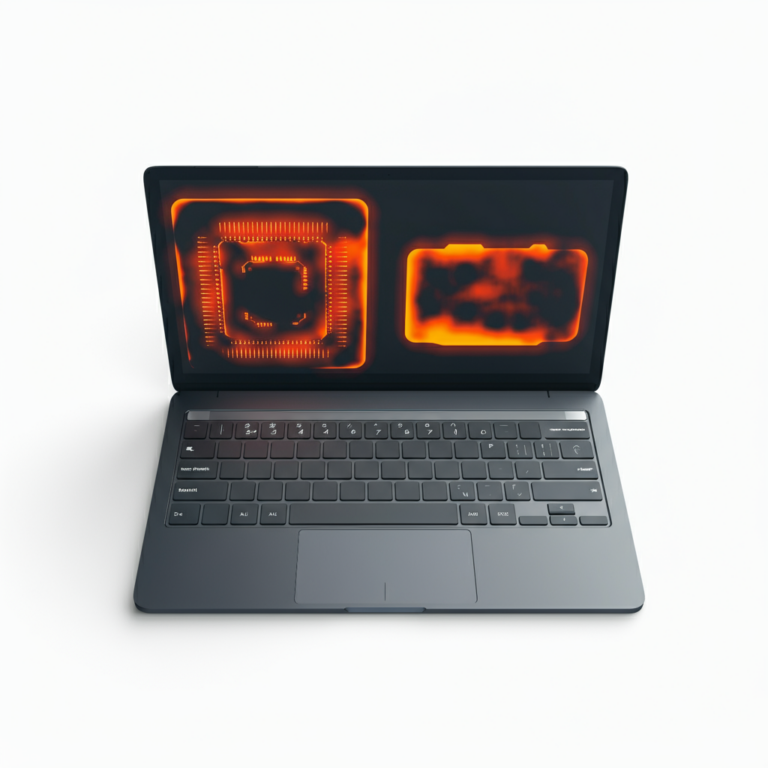
Modern laptops generate significant heat during operation. The processors, graphics cards, batteries, and other internal components all produce heat that must be dissipated through the laptop’s bottom surface and vents.
| Component | Heat Generation | Location |
|---|---|---|
| CPU (processor) | Primary heat source | Center/back of laptop |
| GPU (graphics) | High heat during gaming/video | Center area |
| Battery | Moderate heat, especially while charging | Front or back |
| Hard drive/SSD | Low to moderate heat | Varies |
| Power supply | Heat when plugged in | Near power port |
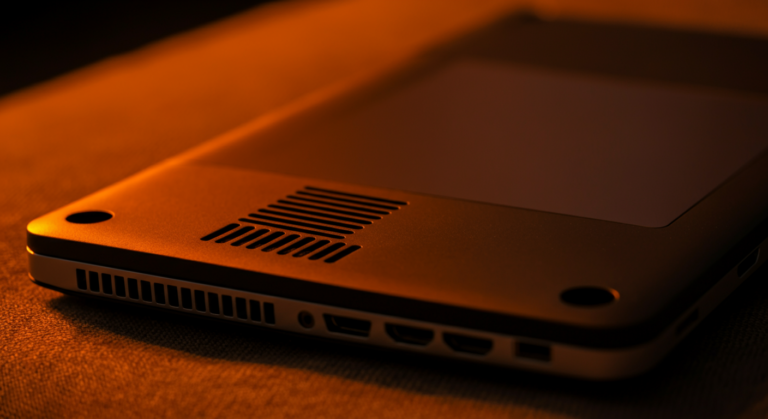
The bottom of your laptop is designed to release this heat. When you place that hot surface directly against your skin, your thighs absorb that thermal energy session after session.
Laptop surface temperatures commonly range from 95-115°F during normal use. During intensive tasks like video editing, gaming, or running multiple applications, temperatures can spike to 125°F or higher. These temperatures fall in the exact range that causes erythema ab igne: warm enough to damage tissue over time, but not hot enough to trigger your body’s immediate pain response that would make you move away.
The danger lies in the repetition. A single session probably won’t cause lasting damage. But if you regularly work with your laptop on your thighs for hours at a time, day after day, the cumulative heat exposure eventually manifests as visible skin changes.
Recognizing Toasted Skin Syndrome Symptoms
The symptoms of toasted skin syndrome develop gradually, which is why many people don’t notice until the condition has progressed.
Early Stage Signs
In the first weeks of excessive heat exposure, you might notice:
- Mild redness in areas where the laptop contacts your skin
- Slight warmth or tingling during laptop use
- Faint pink or red patches that fade when the laptop is removed
These early signs are easily dismissed as temporary irritation. Most people don’t connect them to their laptop habits.
Progressive Symptoms
With continued exposure over weeks to months:
- The reddish patches become more persistent and don’t fully fade between sessions
- A distinctive mottled or net-like pattern emerges
- The color deepens from pink to reddish-brown
- The affected area may feel slightly dry or sensitive
- Mild itching or burning sensations may occur
Advanced Stage
If heat exposure continues for months or years:
- The discoloration becomes dark brown or purplish
- The pattern becomes permanent and won’t fade
- The skin texture may change, becoming slightly thickened
- In rare cases, the affected area can develop precancerous changes
When to See a Doctor
Consult a dermatologist if:
- The discoloration doesn’t fade after several weeks of avoiding heat exposure
- The skin becomes scaly, ulcerated, or develops unusual textures
- You notice any lumps or growths in the affected area
- The mottled pattern appears without an obvious heat source
While toasted skin syndrome itself is not dangerous in most cases, a dermatologist can rule out other conditions and monitor for any concerning changes.
The Hidden Danger: Laptop Radiation Beyond Heat
Here’s what most discussions of toasted skin syndrome miss: the heat that causes visible skin damage is only part of the exposure equation. Laptops also emit electromagnetic radiation that penetrates your body during those same extended sessions.
When you use a laptop on your lap, you’re exposed to multiple types of EMFEMF stands for electromagnetic field (also called electromagnetic frequency or electromagnetic force). EMFs are invisible fields of energy produced by electrically charged objects. They exist on a spectrum ranging from...:
| EMF Type | Source | Penetration |
|---|---|---|
| ELF (Extremely Low FrequencyExtremely low frequency (ELF) refers to electromagnetic fields with frequencies between 3 Hz and 300 Hz. This range includes the 50/60 Hz fields produced by electrical power systems. ELF fields...) | Electrical components, processor, power supply | Penetrates several inches into body tissue |
| RF (Radio Frequency) | WiFi antenna, Bluetooth | Penetrates skin and underlying tissues |
| Heat (Infrared) | All components | Affects skin surface and subcutaneous layer |
The ELF radiation from laptops is particularly significant. Unlike your cell phone, which primarily emits RF radiation, laptops generate substantial ELF fields from their electrical components. These fields are even stronger when the laptop is plugged into AC power.
Research has examined laptop EMF exposure and male fertility, finding measurable effects from both heat and electromagnetic fields. When a laptop rests on your lap, your reproductive organs are in direct proximity to both exposure sources.
What makes this relevant to toasted skin syndrome is the overlap. The same usage pattern that causes visible skin damage (extended laptop-on-lap sessions) also delivers significant EMF exposure to your thighs, abdomen, and reproductive organs. The visible heat damage serves as a warning sign for the invisible EMF exposure occurring simultaneously.
Who’s Most at Risk?
Certain groups face elevated risk for toasted skin syndrome and the associated EMF exposure:
Remote Workers and Students
People who work or study from home often use laptops in informal settings: on the couch, in bed, or in chairs without desks. These environments encourage laptop-on-lap positioning for extended periods.
The rise of remote work has significantly increased average daily laptop exposure. Someone working 8 hours daily with a laptop on their thighs receives far more cumulative exposure than occasional users.
Gamers
Gaming sessions often involve intensive processor use that generates maximum heat. Gamers may spend hours in extended sessions without breaks, often in relaxed positions that put the laptop in direct contact with their bodies.
People in Cold Environments
In cold weather or poorly heated spaces, the warmth from a laptop can feel pleasant rather than problematic. This comfort masks the damage occurring beneath the surface and reduces the likelihood of repositioning the device.
Children and Adolescents
Young people often use laptops for homework, entertainment, and social connection. Their thinner skin may be more susceptible to heat damage, and they’re less likely to recognize early warning signs. The long-term implications of chronic EMF exposure during developmental years add another layer of concern.
How to Prevent Toasted Skin Syndrome
Prevention is straightforward once you understand the risk. The goal is to eliminate direct heat transfer from your laptop to your skin.
Step 1: Never Use Your Laptop Directly on Bare Skin
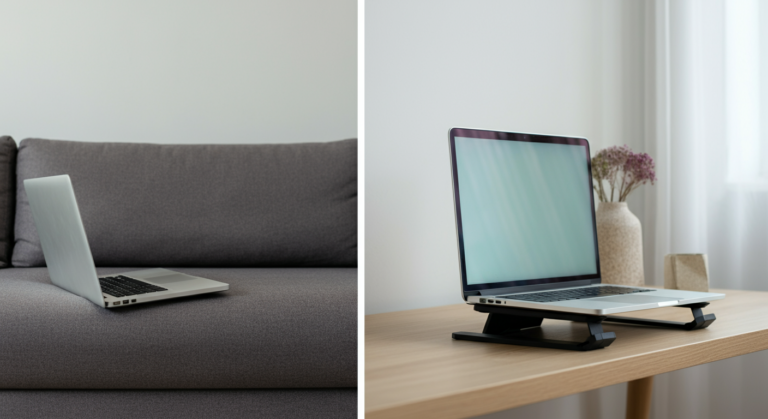
This is the most important change. Despite the name “laptop,” these devices were never designed for direct lap use during operation. Always place a barrier between the laptop and your body.
Step 2: Use a Desk or Table When Possible
The safest positioning keeps the laptop on a hard surface away from your body. This allows proper ventilation, keeps heat away from your skin, and maintains distance from EMF-emitting components.
Step 3: Use a Laptop Pad or Shield
When desk use isn’t practical, a laptop EMF protection pad creates a barrier that addresses both heat and radiation. Quality laptop pads block heat transfer while also shielding against the EMF emissions from the laptop’s underside.
Step 4: Take Regular Breaks
Even with protective measures, taking breaks allows any accumulated heat in your skin to dissipate. A 5-10 minute break every hour helps prevent the cumulative damage that causes toasted skin syndrome.
Step 5: Monitor Your Laptop’s Temperature
Pay attention to how hot your laptop gets during different tasks. If the bottom feels notably warm to the touch, it’s too hot for skin contact. Consider using monitoring software to track internal temperatures during intensive work.
Step 6: Optimize Laptop Cooling
Ensure your laptop’s vents aren’t blocked. Use the device on hard, flat surfaces that allow airflow. Consider a cooling pad with fans for demanding applications. Keeping internal temperatures lower reduces the heat transferred to external surfaces.
Treatment and Recovery
If you’ve already developed toasted skin syndrome, the primary treatment is removing the heat source. In most cases, this allows the skin to heal naturally.
Healing Timeline
| Stage | Expected Recovery |
|---|---|
| Early (mild redness) | Days to weeks |
| Moderate (visible pattern, fading color) | 2-6 months |
| Advanced (dark, persistent pattern) | May be permanent |
Medical Treatment Options
For persistent or advanced cases, dermatologists may recommend:
Topical retinoids: These vitamin A derivatives can help accelerate skin cell turnover and fade discoloration.
Lightening agents: Products containing hydroquinone or other depigmenting agents may help even skin tone.
Laser therapy: For stubborn discoloration that doesn’t respond to other treatments, laser procedures can help break up pigmentation.
Monitoring: In long-standing cases, doctors may recommend periodic skin checks to monitor for any precancerous changes.
The key factor in recovery is eliminating the heat exposure early. Once you notice any signs of toasted skin syndrome, changing your laptop habits immediately gives you the best chance of full recovery.
Laptop Protection Products That Help
While behavioral changes form the foundation of prevention, protective products can provide an additional safety margin, especially when laptop-on-lap use is unavoidable.
The SYB Laptop Pad is designed to address both concerns simultaneously. It creates a heat barrier between your laptop and your body while also blocking the EMF radiation emitted from the laptop’s underside. This dual-protection approach recognizes that heat and EMF exposure occur together during laptop use.
When evaluating any laptop protection product, consider:
- Does it block heat transfer effectively?
- Has it been tested for EMF shielding?
- Is it appropriately sized for your laptop?
- Does it allow adequate airflow to prevent laptop overheating?
The goal is reducing both visible and invisible exposures during the laptop use patterns that fit your life.
The Bottom Line
Toasted skin syndrome is your body’s visible warning sign that something isn’t right about how you’re using your laptop. The mottled skin pattern develops because laptop heat, session after session, damages the blood vessels and pigment cells in your skin.
But this visible damage represents only half the story. The same laptop sessions that cause toasted skin syndrome also deliver EMF radiation to your body. You can’t see or feel this exposure, but it occurs every time you place a running laptop against your body.
The solution doesn’t require giving up your laptop. Simple changes like using a desk, taking breaks, and using a protective pad can eliminate the direct heat exposure that causes skin damage while also reducing your EMF exposure. These adjustments require minimal effort but can make a significant difference in your cumulative exposure over time.
Your skin is telling you something important. The question is whether you’ll listen.
Common Misconceptions
Misconception: Toasted skin syndrome only happens to people who use laptops for many hours daily.
Reality: The condition can develop with moderate use over time. Cumulative exposure matters more than any single session. Even 2-3 hours of daily laptop-on-lap use can cause visible changes within months.
Misconception: If my laptop doesn’t feel uncomfortably hot, it’s safe for lap use.
Reality: Toasted skin syndrome occurs at temperatures that feel merely warm, not painful. The comfort of the warmth is part of what makes the condition insidious. Your body’s pain response doesn’t activate at the temperatures that cause gradual tissue damage.
Misconception: Putting a blanket or pillow between my laptop and my skin provides adequate protection.
Reality: Soft materials may trap heat rather than blocking it, potentially making the problem worse. They also provide no EMF shielding. Purpose-designed laptop pads offer more effective protection.
Misconception: Toasted skin syndrome is just a cosmetic issue.
Reality: While the visible discoloration is the most obvious concern, the condition indicates tissue damage. In rare cases of prolonged exposure, the affected skin can develop precancerous changes. The condition also signals significant EMF exposure occurring simultaneously.
Misconception: Once my skin returns to normal, I can go back to using my laptop on my lap.
Reality: Returning to the same usage patterns will likely cause the condition to return. The skin may also be more susceptible to damage after recovering from a previous episode.
Frequently Asked Questions
Toasted skin syndrome produces a distinctive mottled, net-like pattern on the skin. The discoloration typically appears reddish-brown or purplish and resembles a lace or fishnet pattern. The affected area corresponds to where the heat source (usually a laptop) made repeated contact with the skin.
The timeframe varies based on heat intensity and exposure duration. Mild discoloration can appear within weeks of regular laptop-on-lap use. More pronounced patterns typically develop over months of repeated exposure. Some people notice changes within 2-3 weeks of heavy use, while others may take several months to show visible signs.
In early stages, the discoloration typically fades within weeks to months after stopping the heat exposure. However, if exposure continues for extended periods (months to years), the discoloration can become permanent. Early intervention offers the best chance of complete recovery.
In very rare cases, long-standing erythema ab igne has been associated with the development of skin cancer at the affected site. This is uncommon and typically only occurs with severe, prolonged cases that go untreated for years. The association underscores the importance of addressing the condition early and monitoring any persistent changes.
Toasted skin syndrome develops from repeated exposure to temperatures between 109-116°F (43-47°C). Many laptops exceed this range during normal operation, with surface temperatures reaching 115-125°F during intensive tasks. Importantly, these temperatures feel warm rather than painfully hot, which is why the damage accumulates unnoticed.
Cooling pads that sit beneath the laptop can help reduce the device's operating temperature, which may reduce the heat transferred to your body. However, they don't create a barrier between the laptop and your skin. For direct protection, you need a pad that goes between your body and the laptop, not beneath the laptop itself.
The heat exposure that causes toasted skin syndrome also affects the reproductive organs when laptops are used on the lap. Studies have shown that laptop heat can raise scrotal temperature enough to potentially affect sperm quality. The visible skin damage serves as an indicator that internal tissues are also receiving significant heat exposure.