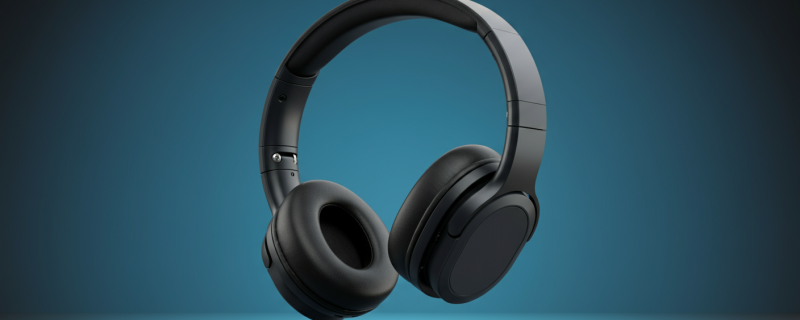

Bluetooth headphones emit RF radiation in close proximity to your brain. While levels are lower than cell phones, direct contact with your head raises concerns that current safety standards may not adequately address.
The precautionary principle suggests minimizing exposure when alternatives exist. Air tube headphones and wired options offer audio without the RF exposure.
Medical Disclaimer: This article is for informational purposes only. It is not, nor is it intended to be, a substitute for professional medical advice, diagnosis, or treatment and should never be relied upon for specific medical advice.
Key Takeaways
- Bluetooth headphones emit RF radiation at 2.4 GHz, the same frequency band as WiFi routers
- Exposure intensity increases dramatically at close range, and headphones sit directly against your head
- Current FCC safety standards are based on thermal effects and haven’t been updated since 1996
- Children’s thinner skulls allow greater RF penetration, making them potentially more vulnerable
- Safer alternatives include air tube headphones and wired headsets with anti-radiation technology
What Is Bluetooth Radiation?
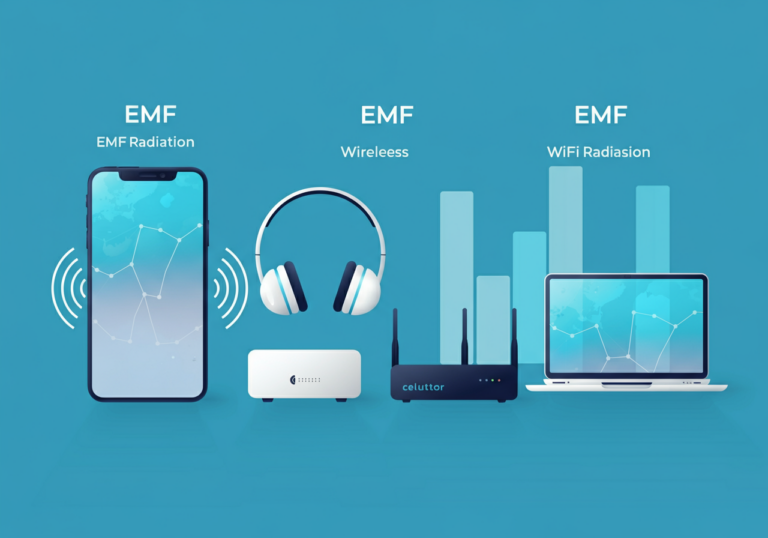
Bluetooth radiation is a form of radiofrequencyRadiofrequency (RF) refers to electromagnetic waves in the frequency range of approximately 3 kHz to 300 GHz. This portion of the electromagnetic spectrum is used for wireless communication. RF energy... (RF) electromagnetic radiationElectromagnetic radiation (EMR) is energy that travels through space as waves of oscillating electric and magnetic fields. It includes everything from radio waves to visible light to gamma rays. All... operating at 2.4 GHz. This non-ionizing radiationNon-ionizing radiation is electromagnetic energy that lacks sufficient power to remove electrons from atoms. This includes radio waves, microwaves, infrared, visible light, and lower-energy ultraviolet. The EMF from cell phones,... allows wireless devices to communicate over short distances by transmitting data through electromagnetic waves.
Every Bluetooth device, including headphones, contains a small radio transmitter that pulses RF signals to maintain connection with your phone or audio source. When you wear Bluetooth headphones, these transmitters sit millimeters from your brain, operating continuously while in use.
The key concern isn’t whether Bluetooth emits radiation. It does. The questions are: how much, and what are the biological effects of this exposure over time?
How Bluetooth Headphones Work
Bluetooth technology uses radio waves to transmit audio data wirelessly. Here’s what happens when you’re wearing Bluetooth headphones:
The transmission cycle:
1. Your phone encodes audio into digital signals
2. The phone’s Bluetooth transmitter converts these signals to 2.4 GHz radio waves
3. Your headphones receive these waves through their built-in antenna
4. The headphones decode the signals back into audio
5. This process repeats continuously, maintaining a constant RF connection
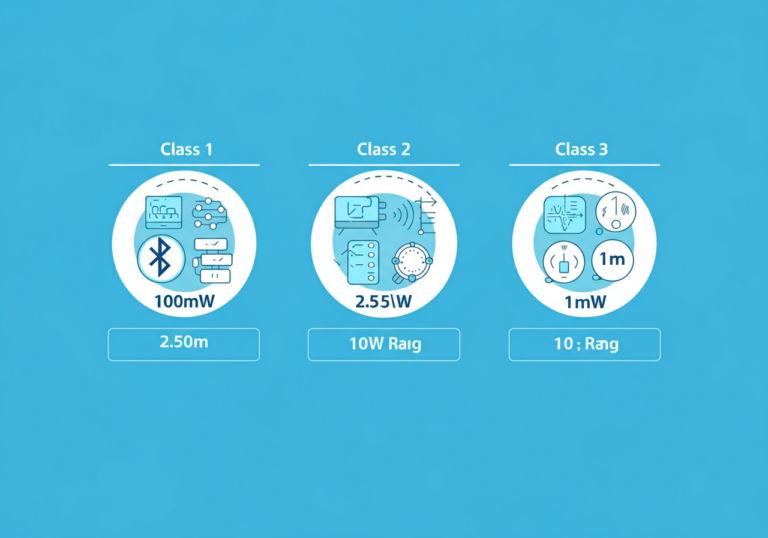
Power levels matter. Bluetooth devices are classified by transmission power:
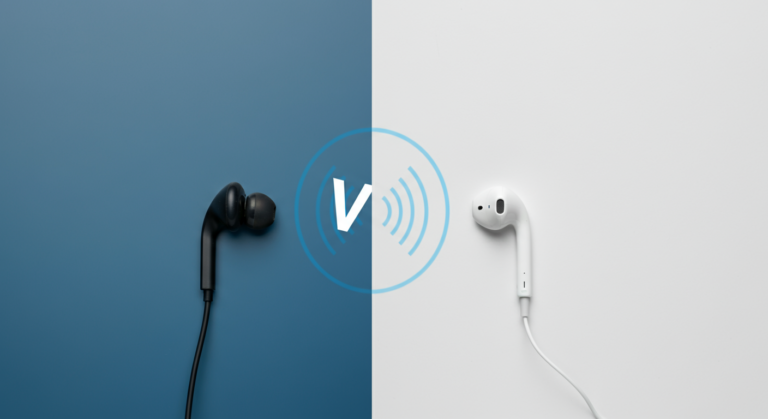
| Bluetooth Class | Maximum Power | Typical Range | Common Devices |
|---|---|---|---|
| Class 1 | 100 mW | Up to 100 meters | Some professional headphones, adapters |
| Class 2 | 2.5 mW | Up to 10 meters | Most consumer headphones, earbuds |
| Class 3 | 1 mW | Up to 1 meter | Rarely used in headphones |
Most Bluetooth headphones use Class 2 power levels. While 2.5 milliwatts sounds small, remember the inverse square law: radiation intensity increases exponentially as distance decreases. At contact distance, even low-power transmitters create significant localized exposure.
As I explain in my book Empowered, using Bluetooth headphones is “akin to placing mini WiFi routers directly next to your brain.”
The Science: What Research Shows
The research on Bluetooth radiation and health effects is still developing. Here’s what we know:
What Studies Indicate
RF radiation causes biological effects. Hundreds of peer-reviewed studies demonstrate that RF radiation at non-thermal levels can affect cells, DNA, and biological processes. The BioInitiative Report compiled over 3,800 studies showing effects at exposure levels below current safety standards.
Proximity amplifies exposure. The closer an RF source is to your body, the greater the absorption. Bluetooth headphones maintain constant contact with your head during use, unlike phones which you might hold away from your body.
Brain tissue may be particularly vulnerable. Research suggests that RF radiation can affect the blood-brain barrier, potentially allowing toxins to enter brain tissue. Studies on cell phone radiation have found increased glucose metabolism in brain regions closest to the antenna.
What Remains Unknown
Long-term cumulative effects. Bluetooth technology has only been widely used for about two decades. We don’t yet have data on lifetime exposure effects.
Individual variation. Some people report symptoms from EMFEMF stands for electromagnetic field (also called electromagnetic frequency or electromagnetic force). EMFs are invisible fields of energy produced by electrically charged objects. They exist on a spectrum ranging from... exposure (electromagnetic hypersensitivity), while others notice nothing. The reasons for this variation aren’t fully understood.
Combined exposures. Most people are exposed to multiple RF sources simultaneously. The effects of this combined exposure haven’t been adequately studied.
Comparing EMF Sources: Where Headphones Fit
Understanding how Bluetooth headphone radiation compares to other common sources helps put the risk in perspective:

| Device | Typical SAR* | Distance from Body | Duration of Use |
|---|---|---|---|
| Cell phone (calling) | 0.5-1.6 W/kg | Against head | Minutes/day |
| Bluetooth headphones | 0.001-0.01 W/kg | Against head | Hours/day |
| WiFi router | Variable | Meters away | Continuous |
| Laptop (WiFi on) | 0.1-0.5 W/kg | Lap/desk | Hours/day |
| Wired headphones | 0 W/kg | Against head | Hours/day |
*SAR = Specific Absorption Rate, measuring RF energy absorbed by body tissue
The numbers show Bluetooth headphones emit less radiation per moment than cell phones. But consider this: most people use their phones against their head for minutes at a time, while headphone users often wear them for hours daily. Total exposure depends on both intensity and duration.
Who Should Be Most Concerned?
While everyone benefits from reducing unnecessary EMF exposure, certain groups warrant extra caution:
Children and Adolescents
Children’s skulls are thinner, allowing greater RF penetration into brain tissue. Their brains are still developing, and they’ll accumulate more lifetime exposure than adults. The American Academy of Pediatrics has called for updated safety standards that account for children’s increased vulnerability.
Pregnant Women
The developing fetus may be more susceptible to environmental exposures. While no studies have conclusively linked Bluetooth use to developmental problems, the precautionary approach suggests minimizing RF exposure during pregnancy.

People with Electromagnetic Hypersensitivity (EHS)
Some individuals experience symptoms like headaches, fatigue, or difficulty concentrating when exposed to EMF. If you notice these symptoms correlating with Bluetooth use, consider switching to wired alternatives.
Heavy Users
If you wear Bluetooth headphones for several hours daily, your cumulative exposure is significantly higher than occasional users. The dose-response relationship in radiation exposure means more use equals more risk.
How to Reduce Your Bluetooth Headphone Exposure
Reducing your exposure doesn’t mean abandoning wireless technology entirely. Here are practical steps:
Step 1: Audit Your Usage
Track how many hours per day you use Bluetooth headphones. Many people underestimate their usage. Your phone’s screen time feature may help with this.
Step 2: Create Low-EMF Listening Zones
Use wired headphones or speakers when at home or your desk. Save Bluetooth for situations where wires are genuinely inconvenient.
Step 3: Choose Safer Alternatives
Air tube headphones use hollow tubes to carry sound to your ears, keeping electronic components away from your head. The speaker sits several inches from your ear, dramatically reducing RF exposure to your brain.
The H.A.R.D. (Headset Anti-Radiation Device) contains a dielectric gel that absorbs RF energy before it reaches your ear. This allows you to use your existing wired headphones with added protection.
Step 4: Use Speaker Mode When Possible
For calls, use your phone’s speaker or a traditional speakerphone setup instead of headphones. Distance is your friend when it comes to RF exposure.
Step 5: Turn Off When Not in Use
Don’t leave Bluetooth headphones powered on and connected when you’re not actively using them. This eliminates unnecessary background exposure.
Safer Headphone Alternatives
If you’re looking to reduce or eliminate RF exposure while listening to audio:
Air Tube Headphones
Air tube technology replaces the last portion of the cable with hollow tubes that carry sound acoustically rather than electronically. The speaker unit sits several inches from your ear, and no electrical components touch your head.
Pros: Zero RF emissions near your brain, good audio quality, work with any device
Cons: Hollow tubes can be fragile, slightly different sound signature than traditional headphones
Wired Headphones with H.A.R.D.
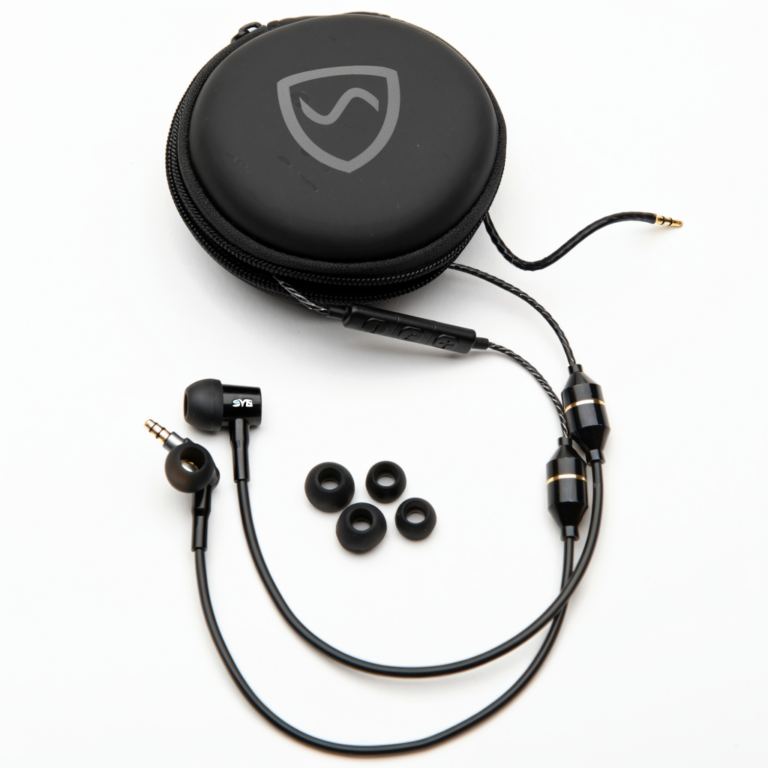
The Headset Anti-Radiation Device (H.A.R.D.) is an inline accessory that absorbs RF radiation conducted through headphone wires. Regular wired headphones can act as antennas, picking up RF from your phone and transmitting it toward your ear. The H.A.R.D. blocks this conducted radiation.
Pros: Works with any wired headphones, compact and portable
Cons: Adds an inline component, only addresses conducted radiation
Traditional Wired Headphones
Standard wired headphones eliminate Bluetooth radiation entirely but can still conduct RF from your phone. For maximum protection, combine wired headphones with the H.A.R.D. or use air tube technology.
Learn more about air tube headphone options
Common Misconceptions
Misconception: “Bluetooth is safe because it’s non-ionizing radiation.”
Reality: Non-ionizing radiation can still cause biological effects. Hundreds of studies show cellular changes, DNA damage, and other effects from non-ionizing RF radiation at levels below those that cause heating.
Misconception: “The FCC says Bluetooth is safe, so there’s nothing to worry about.”
Reality: FCC safety standards were established in 1996, based solely on thermal (heating) effects. These standards don’t account for the non-thermal biological effects documented in subsequent research, nor were they designed with all-day wearable devices in mind.
Misconception: “Bluetooth power levels are too low to matter.”
Reality: While Bluetooth transmits at lower power than cell phones, the direct contact with your head and extended duration of use create significant cumulative exposure. Distance matters enormously with RF radiation, and headphones eliminate that protective distance.
Misconception: “Wired headphones are always safe.”
Reality: Standard wired headphones can conduct RF radiation from your phone through the wire to your ear. For maximum protection, use air tube technology or add an anti-radiation device like the H.A.R.D.
Misconception: “If Bluetooth were dangerous, it would be banned.”
Reality: History shows that harmful products often remain on the market for decades before risks are officially acknowledged. Tobacco, asbestos, and leaded gasoline were all widely used long after evidence of harm emerged. Regulatory action typically lags behind scientific evidence.
The Bottom Line
Bluetooth headphones emit RF radiation directly next to your brain. While exposure levels are lower than cell phones, the proximity and duration of use create legitimate concerns that current safety standards don’t adequately address.
The science continues to develop, but you don’t have to wait for definitive proof of harm to take reasonable precautions. The good news is that safer alternatives exist. Air tube headphones, wired options with anti-radiation protection, and simple habit changes can dramatically reduce your exposure without giving up the convenience of personal audio.
The choice is yours. Now you have the information to make it wisely.
Frequently Asked Questions
No, Bluetooth headphones typically emit less radiation per unit of time than cell phones. However, people often use headphones for longer periods and at closer proximity to the brain, so total exposure can be significant.
AirPods and similar true wireless earbuds sit inside the ear canal, even closer to brain tissue than over-ear headphones. While all Bluetooth devices emit RF radiation, the proximity of earbuds may increase localized exposure. Learn more about AirPods safety
Yes, with an RF meter capable of measuring the 2.4 GHz frequency band. Place the meter where your ear would be while the headphones are connected and playing audio to get a reading.
Using one earbud reduces your exposure by roughly half and leaves one ear free. It's a reasonable harm-reduction strategy if you choose to continue using Bluetooth.
The noise-canceling feature itself doesn't increase Bluetooth radiation. However, noise-canceling headphones may have additional circuitry that produces its own EMF. The Bluetooth transmission remains the primary RF concern.
Wired headphones don't emit Bluetooth radiation, but they can conduct RF from your phone. Air tube headphones or wired headphones with anti-radiation devices like the H.A.R.D. offer the greatest protection. Read our comparison of wired vs wireless headphone safety
There's no established threshold for duration. The precautionary approach suggests minimizing use when alternatives are available. Consider reserving Bluetooth for situations where wired options are impractical.