

Cell phones emit RF radiation absorbed by your body, particularly your head during calls and reproductive organs when carried in pockets. Over 70% of independently funded studies find biological effects at levels below safety limits.
The key to reducing risk: minimize use, maximize distance, and use shielding when carrying devices close to your body.
Medical Disclaimer: This article is for informational purposes only. It is not, nor is it intended to be, a substitute for professional medical advice, diagnosis, or treatment and should never be relied upon for specific medical advice. (For a comprehensive overview, see our guide to Specific Absorption Rate (SAR).)
Key Takeaways
- Cell phones emit RF radiation whenever wireless features are active—not just during calls, but constantly when connected to cellular, WiFi, or Bluetooth
- The World Health Organization classified RF radiation as a “possible carcinogen” (Group 2B) in 2011, the same category as lead and DDT
- Studies funded by industry are twice as likely to find no harmful effects compared to independently funded research
- RF exposure drops dramatically with distance—even a few inches between your phone and body makes a significant difference
- Children absorb more radiation than adults due to thinner skulls and developing nervous systems
What is Cell Phone Radiation?
Cell phone radiation refers to the radiofrequencyRadiofrequency (RF) refers to electromagnetic waves in the frequency range of approximately 3 kHz to 300 GHz. This portion of the electromagnetic spectrum is used for wireless communication. RF energy... electromagnetic fields (RF-EMF) emitted by mobile devices when they transmit data to cell towers, WiFi routers, or other Bluetooth-enabled devices.
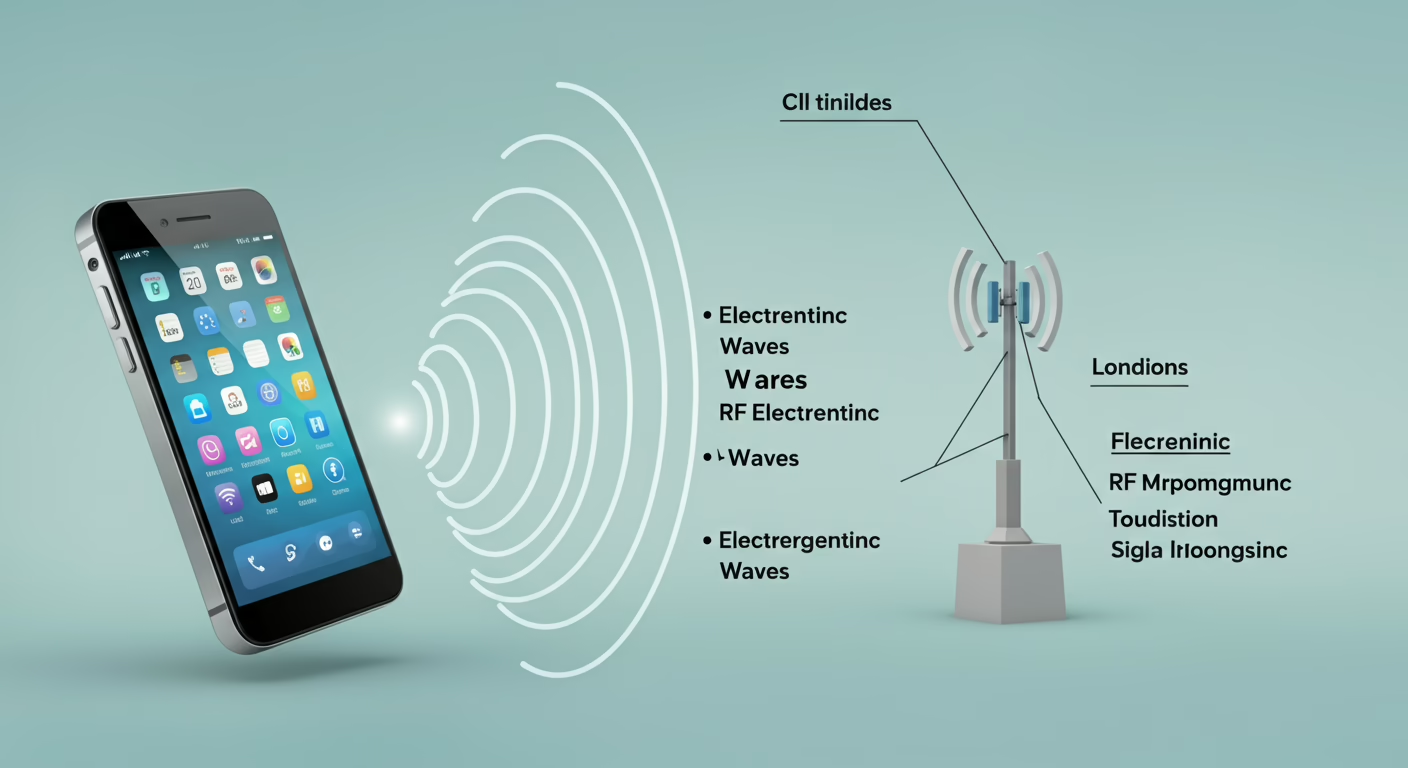
RF radiation sits on the electromagnetic spectrumThe electromagnetic spectrum is the complete range of electromagnetic radiation, organized by wavelength and frequency. It spans from radio waves (lowest frequency) through microwaves, infrared, visible light, ultraviolet, X-rays, to... between AM/FM radio waves and microwave radiation. It is classified as non-ionizing radiationNon-ionizing radiation is electromagnetic energy that lacks sufficient power to remove electrons from atoms. This includes radio waves, microwaves, infrared, visible light, and lower-energy ultraviolet. The EMF from cell phones,..., meaning it doesn’t have enough energy to directly break chemical bonds or remove electrons from atoms the way X-rays or gamma rays do.
However, non-ionizing does not mean biologically inactive. Thousands of peer-reviewed studies have documented biological effects from RF radiation at levels far below those that cause tissue heating.
Your phone emits RF radiation whenever:
- You make or receive calls
- You send or receive texts (including iMessage, WhatsApp, etc.)
- Apps sync data in the background
- Your phone searches for or maintains cellular signal
- WiFi or Bluetooth is enabled
- You stream video, music, or other content
The radiation is highest when your phone is actively transmitting data and when signal strength is weak (forcing the phone to work harder to reach a tower).
How Cell Phones Emit Radiation: The Science Behind EMF
Cell phones communicate using electromagnetic waves in the radiofrequency range, typically between 700 MHz and 2.5 GHz for cellular connections, and 2.4 GHz or 5 GHz for WiFi.
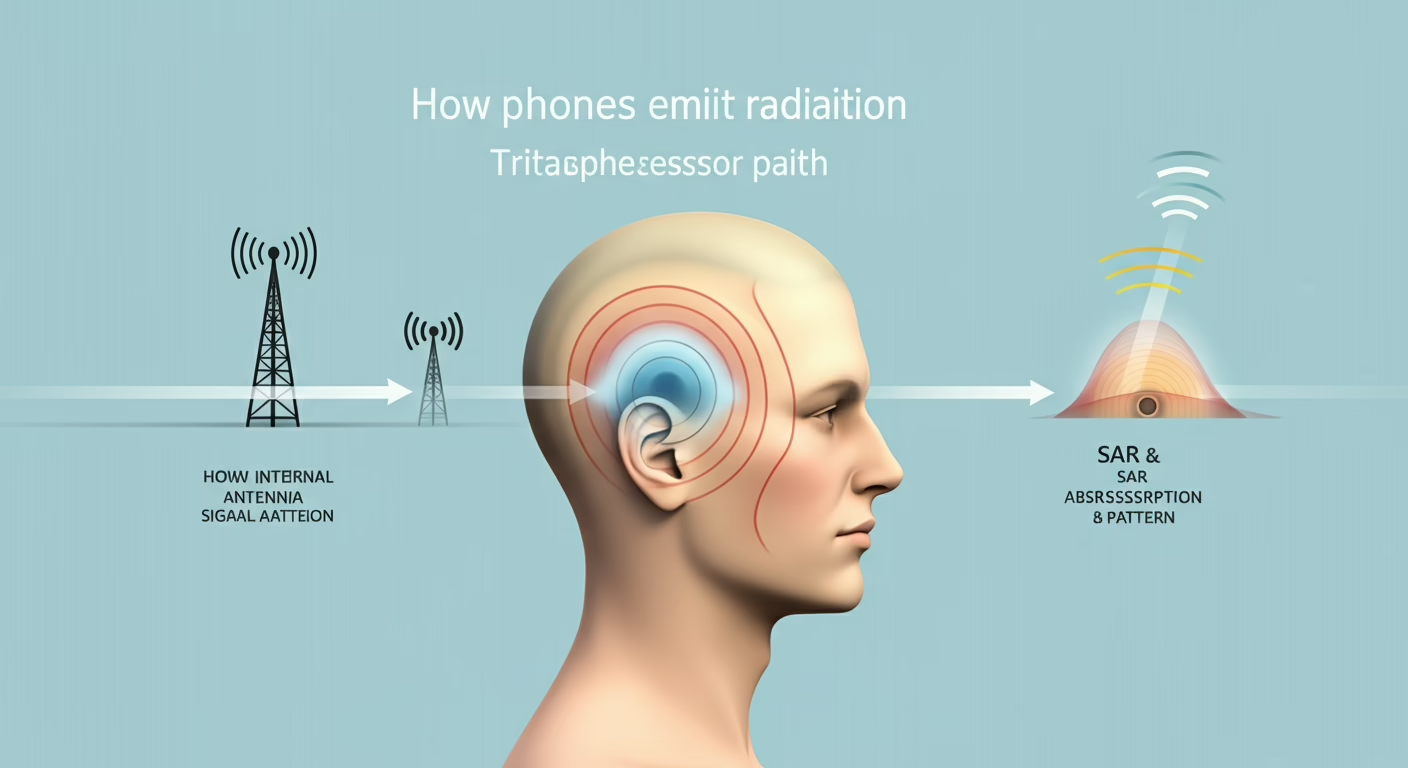
When you make a call or use data, your phone converts your voice or data into radio waves and transmits them to the nearest cell tower. The tower sends a response back, and your phone receives and decodes it. This two-way communication happens continuously while your phone is connected.
| Frequency Range | Technology | Typical Use |
|---|---|---|
| 700-900 MHz | 4G4G is the fourth generation of cellular network technology, providing mobile broadband internet access. The most common 4G standard is LTE (Long Term Evolution). 4G networks offer significantly faster data... LTE (low band) | Voice calls, rural coverage |
| 1700-2100 MHz | 4G LTE (mid band) | Data, urban coverage |
| 2.4 GHz | WiFi, Bluetooth | Local wireless connections |
| 2.5-3.7 GHz | 5G5G is the fifth generation of wireless cellular technology, offering faster data speeds, lower latency, and greater network capacity than 4G LTE. It began rolling out commercially in 2019. 5G... (mid band) | Faster data speeds |
| 24-47 GHz | 5G (mmWave) | Ultra-fast data, limited range |
The antenna in your phone is designed to radiate energy outward to communicate with towers. But because you hold the phone close to your body, some of that energy is absorbed by your tissues.
The amount of radiation you absorb depends on:
- Transmission power: Higher when signal is weak
- Distance: Drops rapidly as you move away from the phone
- Duration: Longer exposure means more total absorption
- Phone design: Antenna placement and efficiency vary
Your phone constantly adjusts its transmission power based on signal conditions. In a basement or elevator with weak signal, your phone may emit significantly more radiation than outdoors with full bars.
Current Research: What Studies Tell Us About Phone Radiation
The research on cell phone radiation spans thousands of studies conducted over several decades. What does this body of evidence actually show?
What the Research Demonstrates
Studies have documented biological effects from RF radiation including:
-
DNA damage: Research by Lai and Singh found DNA strand breaks in rat brain cells after RF exposure at levels below current safety standards. Their 1996 study, cited over 500 times, demonstrated that non-thermal RF radiation can damage genetic material.
-
Brain tumors: The INTERPHONE study, a multinational research project, found increased risk of glioma (a type of brain tumor) among the heaviest cell phone users. Those in the top 10% of cumulative call time had a 40% increased risk.
-
Sperm damage: Multiple studies show that RF radiation reduces sperm count, motility, and viability. One study found men who used cell phones 4+ hours daily had 40% lower sperm counts than non-users.
-
Sleep disruption: Research demonstrates that cell phone use before bed alters brain wave patterns during sleep, even after the exposure ends.
-
Oxidative stress: Over 90% of studies examining oxidative stress find that RF radiation increases free radical production and depletes antioxidant defenses.
The Funding Factor
A critical pattern emerges when you examine who paid for the research:
| Study Funding Source | Finding No Effect | Finding Effects |
|---|---|---|
| Industry-funded | 72% | 28% |
| Independently funded | 33% | 67% |
Studies funded by the telecommunications industry are more than twice as likely to find no harmful effects compared to independently funded research. This pattern mirrors what happened with tobacco, asbestos, and lead—industry-funded research has historically produced results more favorable to industry sponsors — a pattern documented in peer-reviewed analyses of publication bias.
What Health Organizations Say
The World Health Organization’s International Agency for Research on Cancer (IARC) classified RF radiation as a “possible carcinogen” (Group 2B) in 2011. This puts it in the same category as lead, DDT, and chloroform.
The classification was based on limited evidence linking cell phone use to glioma and acoustic neuroma (a tumor of the nerve connecting the ear to the brain).
Since 2011, additional research has strengthened the case. The U.S. National Toxicology Program’s $30 million study found “clear evidence” that cell phone radiation caused cancer in male rats, along with DNA damage in both rats and mice.
Regulatory Standards: SAR Ratings and Safety Guidelines
Cell phone radiation is regulated through SAR (Specific Absorption Rate) limits. SAR measures how much RF energy is absorbed by the body, expressed in watts per kilogram.
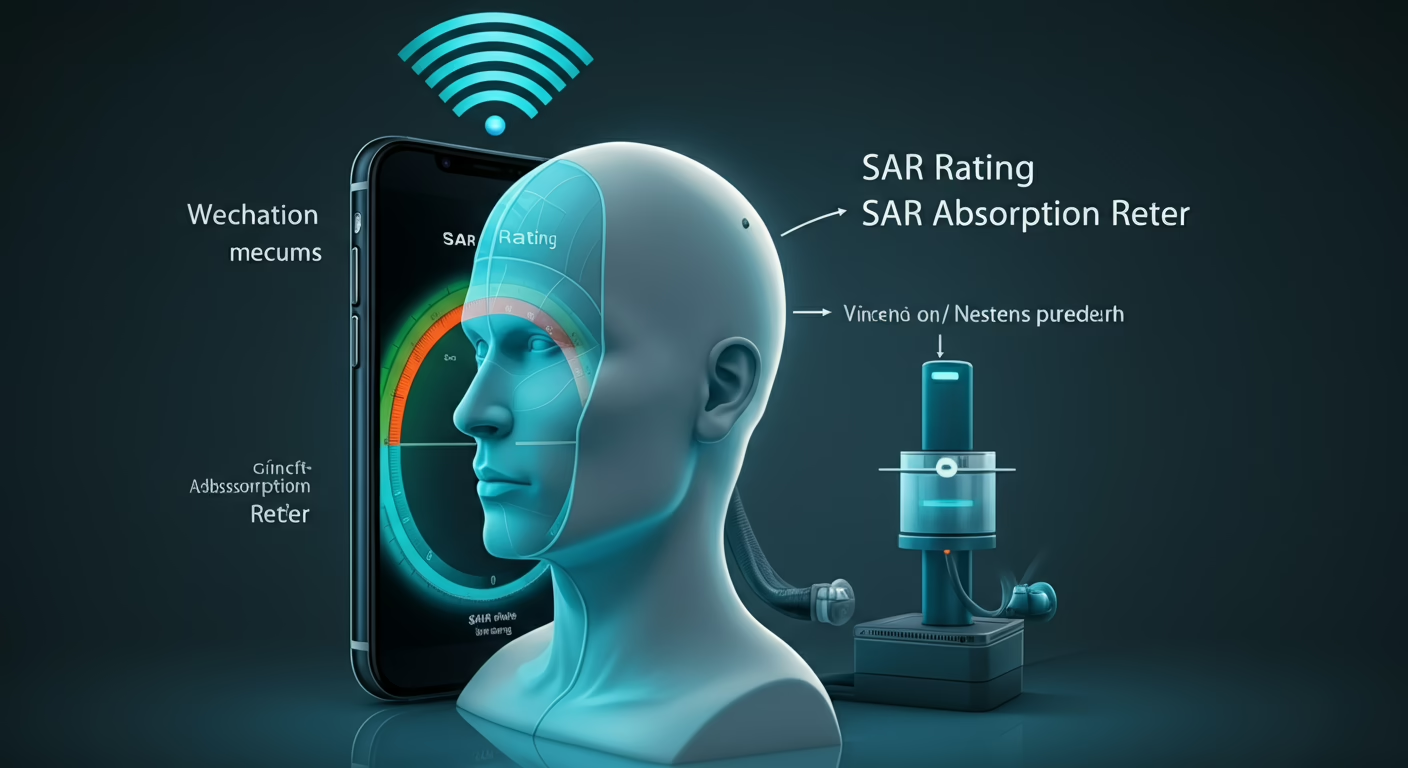
The U.S. limit is 1.6 W/kg averaged over 1 gram of tissue. International limits are typically 2.0 W/kg averaged over 10 grams.
These limits have significant problems:
-
They only prevent heating. SAR limits were designed to ensure your tissue doesn’t heat up. They provide no protection against the non-thermal biological effects documented in research.
-
Testing uses an oversized mannequin. SAR is measured using “SAM,” a model based on a 6’2″, 220-pound man—larger than 97% of the population. Most people absorb more radiation than test results suggest.
-
Manufacturers test their own products. There’s no independent verification. When France tested 379 phones, 89% exceeded their reported SAR values.
-
Standards haven’t changed since 1996. The FCC’s limits were set when average cell phone use was 17-23 minutes per week. Many people now use phones for hours daily.
For a deeper understanding of SAR and its limitations, see our complete SAR guide.
Factors That Affect Your Radiation Exposure
Your actual radiation exposure varies significantly based on how and where you use your phone.
Signal Strength Matters Most
When your phone shows fewer bars, it’s working harder to reach a cell tower—and emitting more radiation. Situations with weak signal include:
- Elevators and basements
- Moving vehicles (train, car, bus)
- Rural areas far from towers
- Inside buildings with thick walls
- Underground subway systems
If you must make a call in low-signal conditions, keep it brief or use WiFi calling if available.
Distance Is Your Best Protection
RF radiation intensity follows the inverse square law: double your distance, and exposure drops to one-quarter. This means:
| Scenario | Relative Exposure |
|---|---|
| Phone against head | Highest |
| Phone 1 inch away | Up to ~75% reduction |
| Phone 6 inches away (speakerphone) | Up to ~97% reduction |
| Phone across the room | Negligible |
Even small increases in distance make a significant difference.
Duration Adds Up
SAR regulations treat a 5-minute call and 5 hours of daily use as equivalent. They’re not. Cumulative exposure matters. If you spend hours with your phone against your body, your total exposure is far higher than someone who uses it briefly.
Multiple Devices Multiply Exposure
Your phone isn’t the only source. Your cumulative exposure includes:
- Cell phone (against head or in pocket)
- WiFi router (broadcasting 24/7)
- Bluetooth earbuds
- Smartwatch
- Tablet
- Laptop (especially WiFi and Bluetooth)
- Smart home devices
None of these are tested together. Your total exposure from multiple devices operating simultaneously is never measured.
Signs and Symptoms: What Some People Experience
Some individuals report symptoms they attribute to electromagnetic exposure. This condition is sometimes called electromagnetic hypersensitivity (EHS).
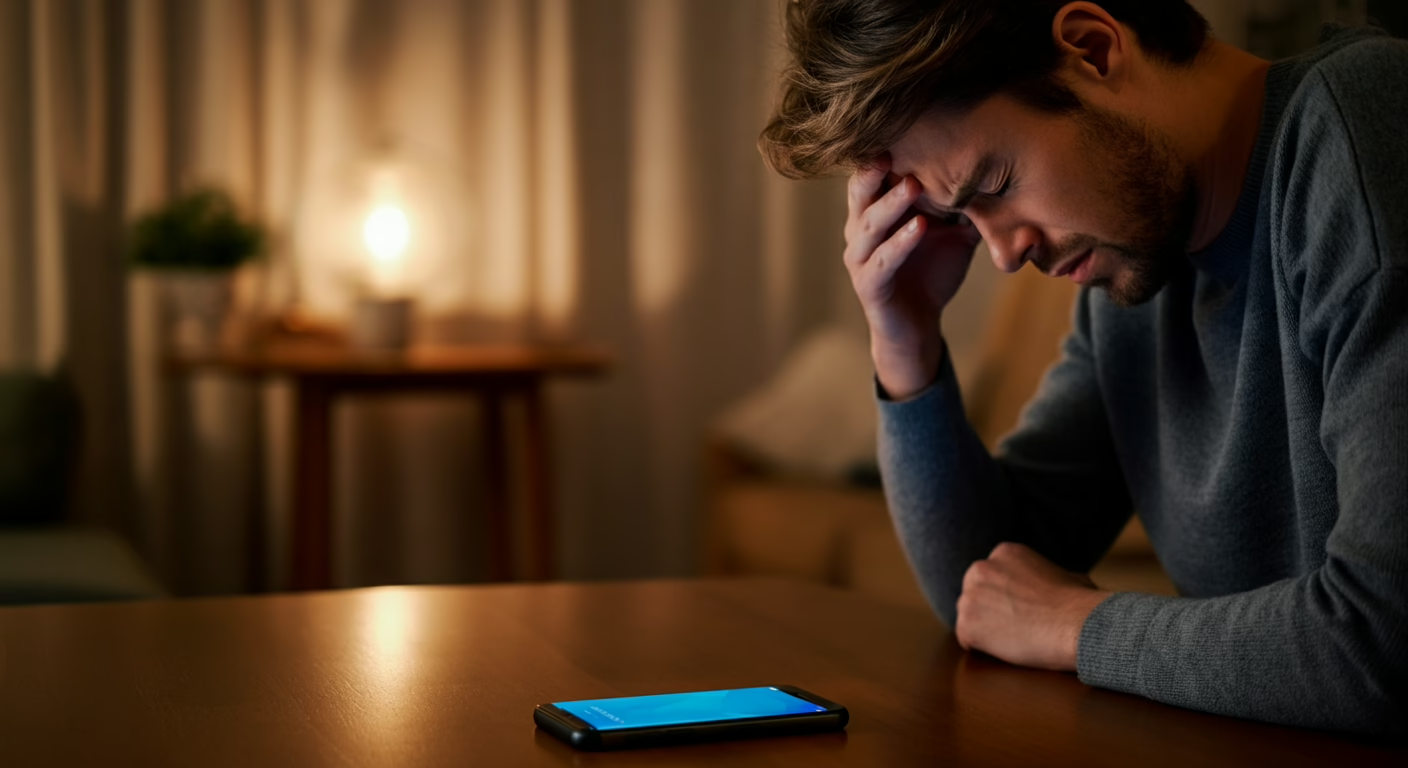
Reported symptoms include:
- Headaches
- Fatigue
- Difficulty concentrating
- Sleep disturbances
- Skin tingling or burning sensations
- Dizziness
The scientific community remains divided on whether these symptoms are directly caused by EMFEMF stands for electromagnetic field (also called electromagnetic frequency or electromagnetic force). EMFs are invisible fields of energy produced by electrically charged objects. They exist on a spectrum ranging from... exposure or result from other factors. However, the biological plausibility is supported by research showing RF effects on brain activity, sleep patterns, and cellular function.
What we know for certain: some people experience real symptoms that improve when they reduce their EMF exposure. Whether this represents a direct causal relationship or a sensitivity to other factors that correlate with EMF sources, reducing exposure can provide relief.
Evidence-Based Protection Strategies
You don’t have to give up your phone to reduce your radiation exposure. Focus on three principles: minimize, distance, and shield.
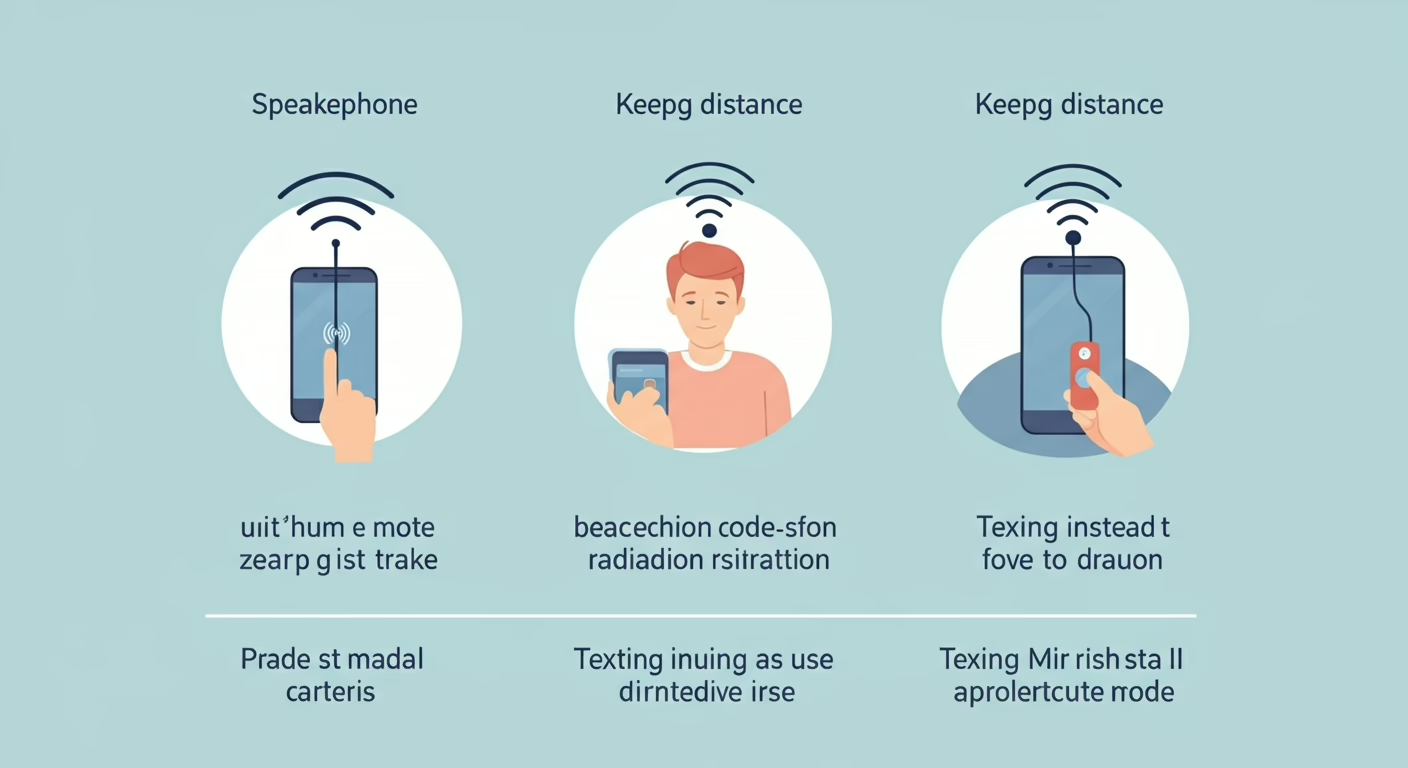
Principle 1: Minimize Use
Reduce the time your phone spends transmitting:
-
Text instead of call when practical. Texting requires brief transmission bursts rather than continuous connection.
-
Use WiFi calling over cellular when available. WiFi signals are generally lower power than cellular.
-
Download content before consuming. Download podcasts, music, and videos over WiFi, then enable airplane mode while listening or watching.
-
Turn off wireless features you’re not using. Disable Bluetooth when not connected to devices. Turn off WiFi when using cellular only.
-
Use airplane mode when carrying your phone but not using wireless features. This eliminates RF transmission while still allowing use of the camera, calculator, or downloaded content.
Principle 2: Maximize Distance
Create space between your body and your phone:
-
Use speakerphone or wired headphones for calls. Never hold the phone against your head.
-
Don’t carry your phone in your pocket. Use a bag, purse, or desk placement. When you must pocket your phone, enable airplane mode first.
-
Keep your phone away from your body while streaming or downloading. High data usage means high transmission.
-
Don’t sleep with your phone under your pillow or on the nightstand. Keep it across the room or in airplane mode overnight.
-
Use a stand to keep your phone at arm’s length while video chatting.
Principle 3: Use Shielding
When you must carry your phone close to your body:
-
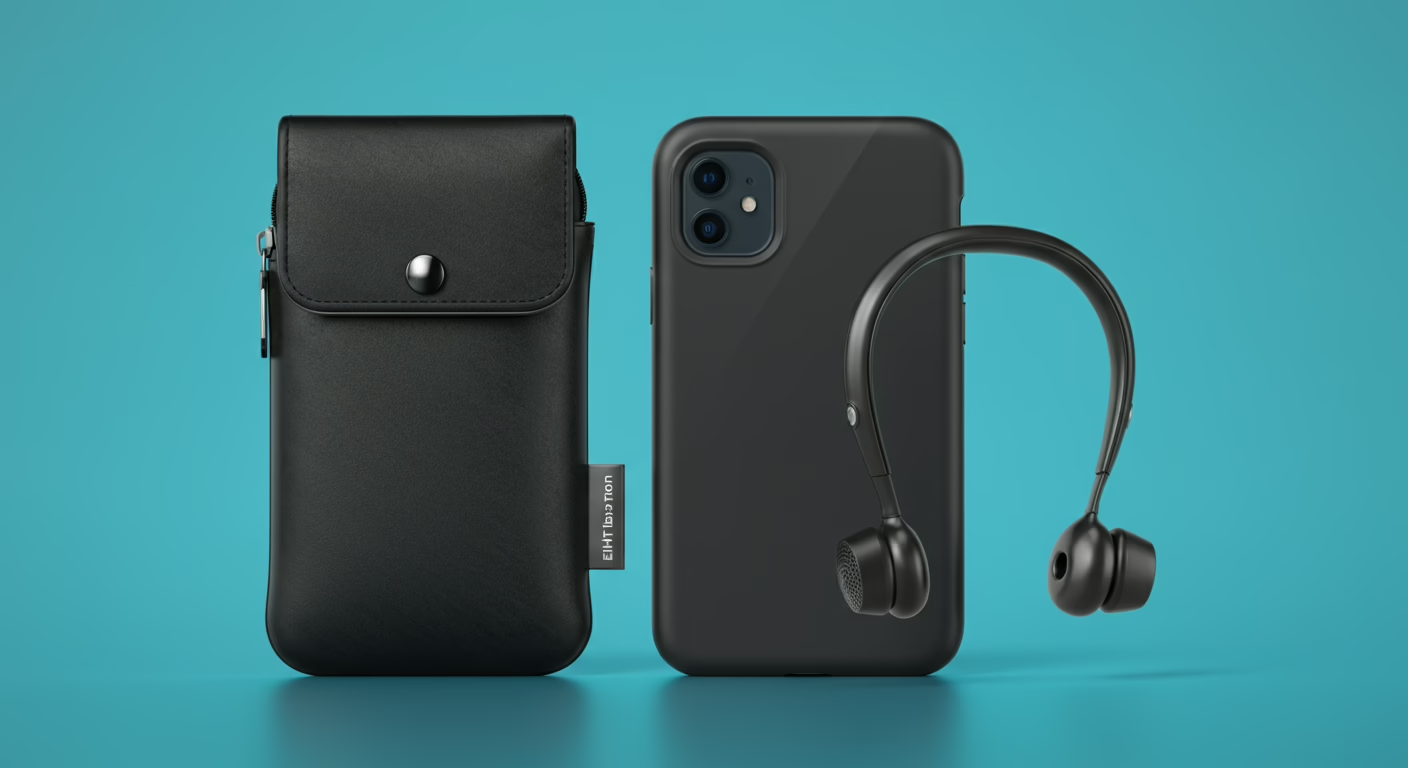
Use an EMF-shielding phone pouch. Look for products with lab-verified shielding effectiveness. The shielded side must face your body.
-
Consider an EMF phone case for everyday carry. When positioned correctly, these reduce the radiation reaching your body.
-
Position shielding correctly. The shielded material must be between you and the phone. Flipping a case backward or placing a pouch wrong side out can increase exposure.
For detailed guidance on phone cases and pouches, see our EMF phone case guide.
Best Practices for Daily Phone Use
Integrate these habits into your routine:
Morning:
- Don’t check your phone while it’s under your pillow or on your chest
- Take it off airplane mode after you’re out of bed
Commuting:
- Avoid calls in cars, trains, or subways (weak signal = higher radiation)
- Keep your phone in a bag rather than your pocket
At work:
- Keep your phone on your desk, not in your pocket
- Use speakerphone or a wired headset for calls
- Position your phone at arm’s length during video calls
At home:
- Create phone-free zones (bedroom, dining table)
- Turn off WiFi router at night
- Don’t carry your phone room to room—leave it in one spot
Before bed:
- Enable airplane mode at least 30 minutes before sleep
- Keep the phone across the room or outside the bedroom
- Use a traditional alarm clock instead of your phone
EMF Protection Products: What Actually Works
Not all EMF protection products are equal. Here’s what the evidence supports:

Products That Work
EMF-shielding phone pouches: Pouches with conductive fabric on one side can block up to 99% of RF radiation when positioned correctly. Look for third-party lab testing showing specific attenuation (measured in dB).
Shielding phone cases: Cases with shielding material in the front cover reduce radiation to your head during calls and to your body when carrying. The shielded side must always face you.
Wired headsets: Using wired earbuds or headphones keeps the phone away from your head. Some radiation may travel along the wire, but it’s far less than holding the phone to your ear.
Products That Don’t Work
Stickers and chips: Small stickers claiming to “neutralize” or “harmonize” radiation have no scientific basis. RF radiation is not affected by tiny stickers.
Pendants and bracelets: Wearable items claiming to protect your “biofield” lack any credible scientific evidence.
Phone cases with “radiation blocking” on all sides: If a case blocked radiation entirely, your phone couldn’t function. Legitimate shielding products shield one side only.
When evaluating products, look for:
- Third-party lab testing (not just manufacturer claims)
- Specific attenuation measurements in dB
- Clear instructions for proper use
- No claims of “neutralizing” or “harmonizing” radiation
If you want to verify shielding effectiveness yourself, our guide to the best EMF detectors covers what to look for in a quality meter. You can also explore our phone radiation blocker comparison to find the best product for your needs.
For a comprehensive guide to protecting yourself and your family from EMF — including practical, science-based strategies that go beyond phone use — see R Blank’s book Empowered.
Your Questions About Cell Phone Radiation, Answered
Is cell phone radiation dangerous?
The evidence is mixed but mounting. The World Health Organization’s International Agency for Research on Cancer (IARC) classifies RF radiation as a “possible carcinogen” (Group 2B). Over 70% of independently funded studies find biological effects at current exposure levels. The precautionary principle suggests reducing exposure where practical.
How far does cell phone radiation travel?
Cell phone radiation drops rapidly with distance. Moving your phone just a few inches from your body can reduce exposure by up to 75% or more. The relationship follows an inverse square law — doubling the distance cuts exposure to roughly one-quarter.
Do EMF phone cases and pouches actually work?
Lab-tested shielding products can reduce exposure by up to 99% on the shielded side. The key is proper use: the shielded side must face your body, and the product must have verified third-party test results, not manufacturer claims alone.
Are children more at risk from cell phone radiation?
Yes, by multiple measures. Children’s skulls are thinner, their brains contain more fluid, and their tissue is more conductive — all of which result in deeper RF penetration. Children who begin using phones early will also accumulate more lifetime exposure than adults who adopted the technology later.
What is SAR and does it protect me?
SAR (Specific Absorption Rate) measures how much RF energy tissue absorbs per kilogram. FCC SAR limits haven’t been updated since 1996, were based on a 6-foot 200-pound adult male, and were set using only 6 minutes of exposure. They were not designed to protect against long-term, low-level chronic exposure. Independent French testing found that 89% of phones exceeded their reported SAR values under real-world conditions.
What are the most effective ways to reduce cell phone radiation exposure?
The three most evidence-based strategies are: (1) minimize use — text instead of calling, use airplane mode when possible; (2) maximize distance — even a few inches matters significantly; (3) use shielding when carrying your phone close to your body. All three principles compound: the more you apply, the lower your cumulative exposure.
Common Misconceptions About Cell Phone Radiation
Misconception: Cell phone radiation is completely safe because it’s non-ionizing.
Reality: Non-ionizing means it doesn’t directly break molecular bonds. It doesn’t mean it has no biological effects. Thousands of studies document effects at non-thermal levels including DNA damage, oxidative stress, and changes in gene expression.
Misconception: If there were real dangers, the government would ban phones.
Reality: Regulatory action typically lags behind science by decades. Tobacco was sold for over 50 years after evidence of harm. Asbestos was used for decades after scientists documented its dangers. The telecommunications industry is one of the most powerful lobbying forces in the world.
Misconception: The research is mixed, so there’s probably no real effect.
Reality: When you separate studies by funding source, the picture changes dramatically. 67% of independently funded studies find effects. The “mixed results” narrative is largely created by industry-funded research designed to generate doubt.
Misconception: I’ve used my phone for years and I’m fine.
Reality: Many health effects have long latency periods. Brain tumors can take 20-30 years to develop. The first generation to use cell phones heavily from childhood is only now reaching adulthood. We won’t know the full effects for decades.
Misconception: 5G is especially dangerous because it’s new.
Reality: 5G uses different frequencies but isn’t categorically more dangerous than 4G. The concern is that 5G requires more antennas closer together, potentially increasing cumulative exposure. But the same protection principles apply: distance and duration matter.
The 2008 study below examined the direct effects of cell phone radiation on cell physiology, complementing the blood-brain barrier research cited earlier in this article. Together, these findings illustrate why researchers have called for updated safety standards.
Frequently Asked Questions
Cell phones emit RF radiation absorbed by your body, particularly affecting the head during calls and reproductive organs when carried in pockets.
To reduce risk, minimize use of your phone, maximize distance between you and the device, and consider using shielding when carrying devices close to your body.
Over 70% of independently funded studies find biological effects at levels below safety limits, indicating potential risks beyond current regulatory thresholds.
Children absorb more radiation than adults due to thinner skulls and developing nervous systems, making them potentially more vulnerable to RF exposure.
The World Health Organization classified RF radiation as a 'possible carcinogen' (Group 2B) in 2011, placing it in the same category as lead and DDT.