

Yes, blue light blocking glasses work, but for specific purposes. Research shows they can reduce digital eye strain symptoms and improve sleep quality when worn in the evening hours.
However, they will not prevent permanent eye damage from screens because there is no evidence screens cause such damage in the first place.
The effectiveness depends on what you’re trying to achieve. For reducing eye fatigue during long computer sessions, even clear lenses with light blue filtering help. For improving sleep, you need amber or orange-tinted lenses that block higher percentages of blue light, worn consistently for 2-3 hours before bed.
Key Takeaways
- Amber-tinted glasses improved sleep quality by 58% in a University of Houston study when worn for 3 hours before bed
- Clear blue light lenses block 20-40% of blue light, suitable for daytime computer work but not sufficient for sleep protection
- Orange or amber lenses block 70-90% of blue light, providing the protection needed to preserve melatonin production
- Eye strain benefits vary by individual: Some people notice significant improvement, others minimal change
- No evidence supports permanent eye damage claims: Blue light glasses protect sleep, not your retinas from screen damage
The Short Answer: It Depends on Your Goal
Blue light blocking glasses have become a $30 billion industry built on two separate claims: they reduce eye strain and they protect your eyes from damage. The science supports one of these claims much more strongly than the other.
If you’re struggling with sleep disruption from screens, blue light glasses can genuinely help. Multiple studies show that wearing amber-tinted glasses in the evening preserves melatonin production and improves sleep quality.
If you’re hoping to prevent long-term eye damage from screens, the evidence is much weaker. While screens can cause temporary discomfort, research hasn’t established that they cause permanent harm to the human eye.
Understanding this distinction helps you set realistic expectations and choose the right product for your needs. For a fuller understanding of what is blue light and how it affects your body, see our complete guide: What is Blue Light?
What Blue Light Glasses Actually Do
Blue light glasses work by filtering specific wavelengths of light before they reach your eyes. The filtering mechanism varies by lens type.
Clear Lenses (Light Filtering)
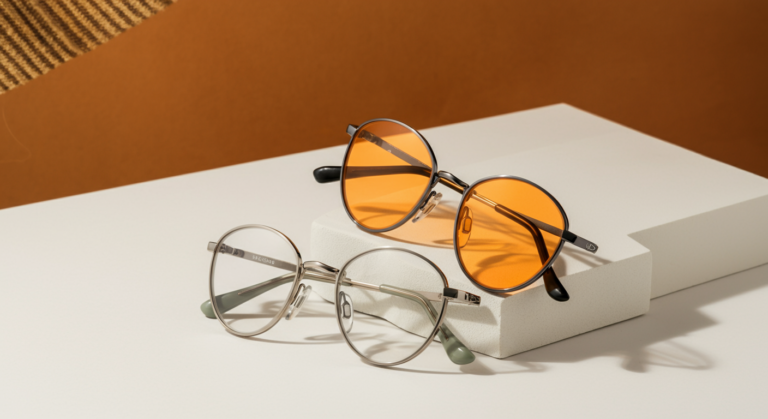
Clear or nearly clear blue light lenses contain coatings or materials that selectively absorb blue wavelengths while allowing other colors to pass through. They typically block 20-40% of blue light in the 400-450nm range.

These lenses work well for:
- Reducing glare from screens
- Slight decrease in eye fatigue during long work sessions
- Maintaining natural color perception for designers and video editors
They’re less effective for:
- Evening melatonin protection
- Significant sleep improvement
Amber/Orange Lenses (Strong Filtering)
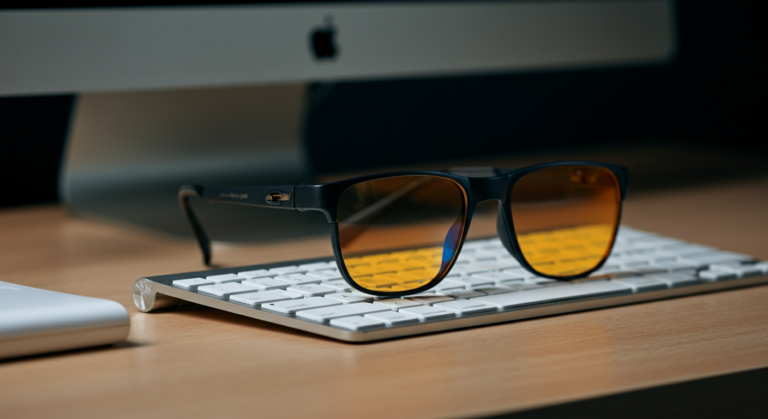
Amber and orange lenses block a much higher percentage of blue light, typically 70-90%. The tint is visible, which is why many people prefer to wear them only in the evening.
These lenses work well for:
- Preserving melatonin production at night
- Improving sleep onset and quality
- Evening screen use when sleep is a priority
The tradeoff is altered color perception, making them impractical for color-sensitive work.
The Science: What Research Actually Shows
Let’s look at what peer-reviewed studies have found about blue light glasses, separating sleep benefits from eye strain claims.
Sleep Quality Studies
A 2017 study at the University of Houston had participants wear amber blue light blocking glasses for 3 hours before bed. After two weeks, participants showed a 58% increase in their nighttime melatonin levels. They also reported better sleep quality and falling asleep faster.
Research published in the Journal of Psychiatric Research found that blue light blocking glasses worn for 2 hours before bed significantly improved sleep in people with insomnia. The effect was comparable to other behavioral sleep interventions.
A study in Chronobiology International demonstrated that teenagers who wore orange-tinted glasses for a week showed earlier melatonin onset and reported feeling sleepier at bedtime.
The pattern across studies is consistent: amber or orange lenses worn in the evening protect melatonin production and improve sleep metrics.
Eye Strain Studies
The evidence for eye strain reduction is more mixed. Some studies show benefits, others show little effect.
A Cochrane systematic review examined whether blue light filtering lenses reduce eye strain from computer use. The conclusion: the current evidence doesn’t strongly support or refute the claim. Some users report improvement, others don’t notice a difference.
What the research does support is that taking regular breaks, adjusting screen brightness, and reducing glare all help with eye strain. Blue light glasses may provide additional benefit for some people, but they’re not a guaranteed solution for everyone.
Eye Damage Prevention
Here’s where many marketing claims diverge from science. Despite concerns about blue light causing permanent retinal damage, research on humans hasn’t demonstrated this effect.
The studies showing retinal cell damage from blue light were conducted in laboratory conditions using much higher intensities than screens produce, often directly exposing isolated cells rather than whole eyes with natural defenses.
The American Academy of Ophthalmology has stated there’s no scientific evidence that blue light from digital devices causes eye damage. The main concern remains sleep disruption, not physical eye harm.
Blue Light Glasses Effectiveness Comparison
| Lens Type | Blue Light Blocked | Sleep Benefit | Eye Strain Benefit | Color Accuracy |
|---|---|---|---|---|
| Clear with coating | 20-40% | Minimal | Moderate | Excellent |
| Light yellow tint | 40-60% | Moderate | Moderate | Good |
| Amber tint | 70-85% | Strong | Moderate | Fair |
| Orange/red tint | 85-95% | Very strong | Moderate | Poor |
When Blue Light Glasses Work Best
Scenario 1: Evening Screen Use
If you need to use screens within 2-3 hours of bedtime, amber-tinted glasses provide real protection for your sleep. This is their strongest use case, supported by multiple studies.
Scenario 2: Long Computer Work Days
For 8+ hour computer sessions, clear or lightly tinted blue light glasses may help reduce eye fatigue. The benefit varies by individual. If you try them and notice improvement, they’re working for you. If not, other interventions like the 20-20-20 rule (every 20 minutes, look at something 20 feet away for 20 seconds) may help more.
Scenario 3: Sensitive to Light
Some people are naturally more sensitive to bright light and glare. For these individuals, blue light glasses often provide noticeable relief during screen use at any time of day.
Scenario 4: After Sunset Indoor Time
Even if you’re not using screens, LED room lighting contains significant blue light. Wearing amber glasses in the evening blocks this ambient blue light and supports your natural melatonin rhythm.
How to Choose Effective Blue Light Glasses
Not all blue light glasses deliver equal protection. Here’s what to look for.
Step 1: Define Your Goal
If your priority is sleep, choose amber or orange lenses rated to block 70%+ of blue light. Accept the color distortion as a tradeoff.
If you want daytime computer comfort with normal color vision, choose clear lenses with blue light filtering coatings.
Step 2: Check the Specifications
Quality glasses specify exactly what percentage of blue light they block and at which wavelengths. Vague claims like “blocks harmful blue light” without numbers are a red flag.
Look for filtering in the 400-500nm range, with special attention to 450-480nm where melatonin suppression is strongest.
Step 3: Consider Fit and Comfort
You’ll only benefit from glasses you actually wear. Choose frames that fit comfortably for extended periods. Consider weight, nose pad style, and temple pressure.
Step 4: Match Lens Tint to Use Case
As I note in Empowered, Ocushield offers both clear lenses for all-day wear and amber lenses for evening use. “You can wear the clear glasses all day while you work, then the stronger, amber-tinted glasses as you approach bedtime.”
Best Blue Light Blocking Glasses: What to Look For
If you’ve decided to try blue light glasses, the next question is which ones actually work. Not all blue light glasses are created equal — the quality of the lenses, the percentage of blue light they filter, and even the comfort of the frame all matter.
Lens Quality and Filtering Percentage
The most important factor is how much blue light the lenses actually block. Many cheap blue light glasses on the market filter only 10-20% of blue light — not enough to make a meaningful difference. Look for lenses that filter a significant portion of the blue light spectrum, particularly in the 415-455 nm range, which research identifies as the most disruptive to melatonin production and circadian rhythm.
Higher-quality lenses use advanced filtering technology that targets harmful blue light wavelengths while allowing beneficial light through. This selective filtering means you get protection without the heavy amber or orange tint that makes everything look distorted.
Frame Comfort for Extended Wear
Since blue light glasses are most effective when worn consistently — especially during long screen sessions — frame comfort is more than a nice-to-have. Lightweight frames that don’t pinch behind the ears or slide down the nose make the difference between glasses you actually wear and glasses that sit in a drawer.
Our Recommendation
At SYB, we partnered with Ocushield — a company founded by an optometrist whose blue light filtering technology is backed by peer-reviewed research — to offer blue light glasses that combine high-percentage filtering with comfortable, stylish frames. Browse our blue light glasses collection to find the right fit for your needs.
For device-level protection, see our guide on blue light screen protectors — a complementary approach that filters blue light at the source, whether you’re wearing glasses or not.
Common Misconceptions
Misconception: Blue light glasses protect your eyes from permanent screen damage
Reality: Research has not established that screens cause permanent eye damage. The American Academy of Ophthalmology states there is no scientific evidence that blue light from digital devices harms your eyes. Blue light glasses primarily protect your sleep by preserving melatonin production, not your retinas from screen damage.
Misconception: All blue light glasses provide the same level of protection
Reality: Blue light filtering ranges from 20% to over 90% depending on lens type. Clear lenses block only 20-40% of blue light and are inadequate for evening melatonin protection. Amber or orange lenses blocking 70-90% are needed for meaningful sleep benefits.
Misconception: You only need blue light glasses when using screens
Reality: LED room lighting also contains significant blue light that suppresses melatonin. Even without screen use, indoor LED and fluorescent lighting after sunset can disrupt your circadian rhythm. Wearing amber glasses in the evening blocks this ambient blue light as well.
The Bottom Line
Blue light glasses work for what the science actually supports: reducing eye strain for some users and, most importantly, protecting your sleep when worn in the evening.
They don’t prevent eye damage from screens because screens don’t appear to cause permanent eye damage in the first place. Marketing claims about “protecting your eyes” often oversell what these products can do.
For the best results:
- Use amber-tinted glasses for 2-3 hours before bed
- Consider clear lenses for daytime computer work if you notice eye fatigue
- Combine glasses with other healthy screen habits like using a low blue light bulb in your evening environment
Ready to find the right glasses for your needs? Browse our blue light glasses collection, featuring options for both daytime and evening use.
Frequently Asked Questions
Yes — research shows blue light filter glasses can reduce digital eye strain and improve sleep quality. A meta-analysis of clinical studies found that blue light filtering lenses reduced eye strain symptoms in people who spend extended time on screens. The sleep benefits are strongest when glasses are worn in the evening, since blocking blue light helps your body produce melatonin on its natural schedule.
Amber or orange-tinted lenses block the most blue light and are the most effective for improving sleep. They filter a broader range of the blue light spectrum (up to 98% in the 400-500 nm range), which has the greatest impact on melatonin suppression. Clear or slightly yellow lenses are better for daytime use when you want some blue light filtering without significant color distortion.
For people who spend multiple hours daily on screens — especially in the evening — blue light glasses are a simple, non-invasive way to reduce eye strain and support better sleep. They are most worth it if you experience symptoms like eye fatigue, headaches after screen time, or difficulty falling asleep. The investment is modest compared to the potential benefits for sleep quality and visual comfort.
Many users report fewer headaches after using blue light glasses during extended screen time. Research suggests that blue light can contribute to headaches and migraines by overstimulating photosensitive cells in the retina. By filtering this wavelength, blue light glasses may reduce one trigger for screen-related headaches — though headaches can have multiple causes, so results vary from person to person.
You don't need to wear blue light glasses all day. Daytime blue light exposure from the sun is natural and beneficial for maintaining your circadian rhythm. Blue light glasses are most useful during extended screen sessions and in the evening hours when artificial blue light can interfere with melatonin production. If you work on screens for most of the day, wearing them during work hours and in the evening provides a good balance.