

EMFEMF stands for electromagnetic field (also called electromagnetic frequency or electromagnetic force). EMFs are invisible fields of energy produced by electrically charged objects. They exist on a spectrum ranging from... protection involves reducing your exposure to electromagnetic fields through three approaches: minimizing use, maximizing distance, and using shielding products.
The most effective strategy combines behavioral changes (turning off WiFi at night, using speakerphone) with distance (keeping devices away from your body) and, where needed, shielding products that block radiation between you and the source.
Medical Disclaimer: This article is for informational purposes only. It is not, nor is it intended to be, a substitute for professional medical advice, diagnosis, or treatment and should never be relied upon for specific medical advice.
Key Takeaways
- The two fundamental principles are minimize use and maximize distance—these cost nothing and are immediately effective
- Distance is powerful: Doubling your distance from an EMF source reduces exposure by approximately 75%
- Start with your bedroom: Reducing nighttime exposure allows your body maximum recovery time during sleep
- Shielding products work by physics: Conductive materials (silver, copper, aluminum) block EMF—products without these materials cannot provide real protection
- Measure to verify: An EMF meter confirms whether your changes are actually reducing exposure
What is EMF Protection?
EMF protection refers to any method of reducing your exposure to electromagnetic fields from wireless devices, electrical wiring, and other sources. Effective protection is based on three principles:
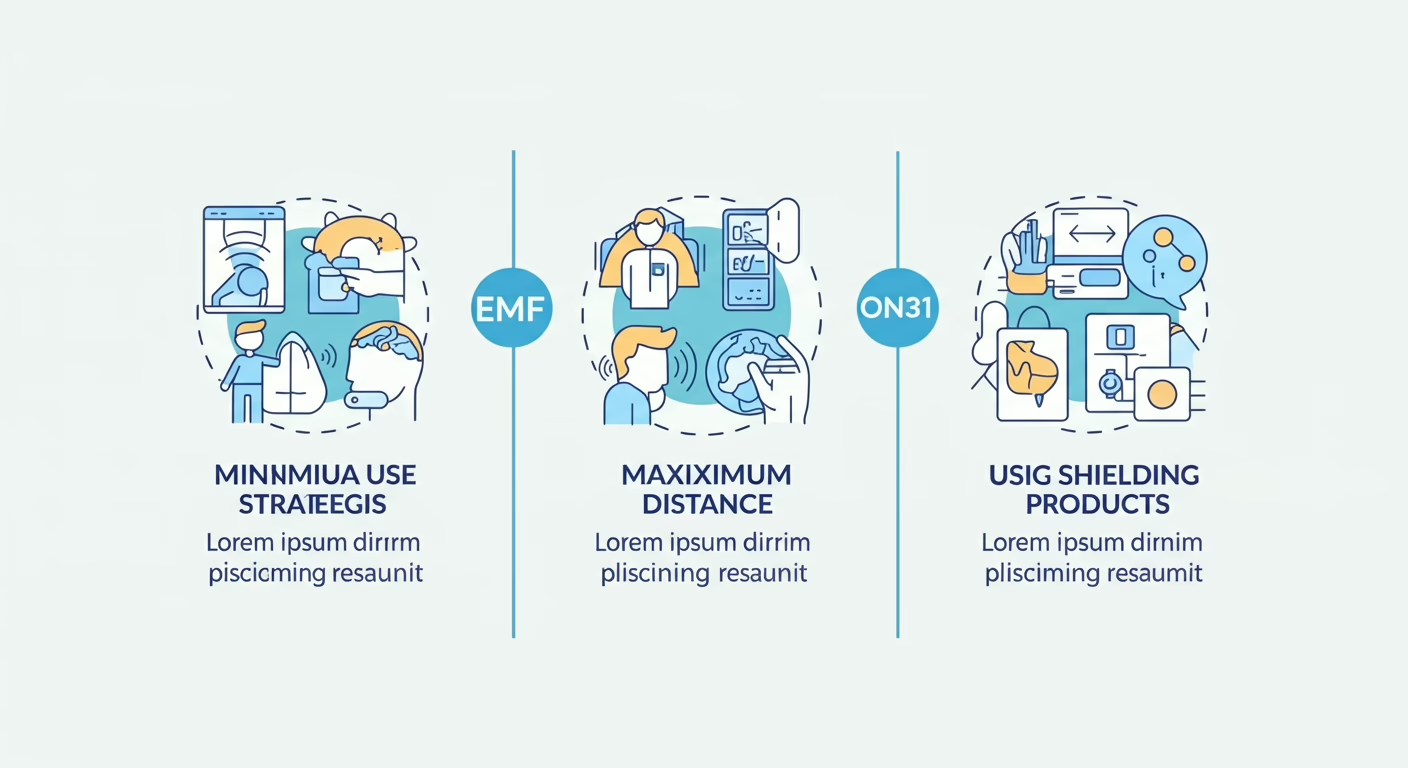
- Minimize: Reduce how much EMF you create and encounter
- Distance: Increase space between yourself and EMF sources
- Shield: Block EMF using conductive materials
For people experiencing electromagnetic hypersensitivity, protection strategies may need to be more comprehensive. For others, simple behavioral changes may be sufficient.
| Protection Level | Who It’s For | Typical Approaches |
|---|---|---|
| Basic | General wellness, precautionary | Behavioral changes, distance |
| Moderate | Elevated exposure, mild symptoms | Basic + targeted shielding |
| Comprehensive | EMF sensitivity, high exposure environments | All approaches, professional assessment |
Strategy 1: Minimize Use
The simplest form of protection is using EMF-emitting devices less and turning them off when not needed.
Quick Wins
| Change | Impact | Effort |
|---|---|---|
| Turn off WiFi at night | Eliminates 6-8 hours of RF exposure | Low |
| Use airplane mode when sleeping | Stops phone RF emissions | Low |
| Unplug devices not in use | Reduces ELF fields | Low |
| Disable Bluetooth when not needed | Eliminates close-range RF | Low |
Device-Specific Tips
Smartphones:
- Use airplane mode when carrying in pocket
- Text instead of call when possible
- Download content rather than streaming
- Turn off when sleeping
Computers:
- Use wired ethernet instead of WiFi when practical
- Disable WiFi and Bluetooth when using ethernet
- Turn off computer at night rather than sleep mode
Smart Home Devices:
- Evaluate which are truly necessary
- Consider wired alternatives (wired security cameras, etc.)
- Group smart devices away from living/sleeping areas
Strategy 2: Maximize Distance
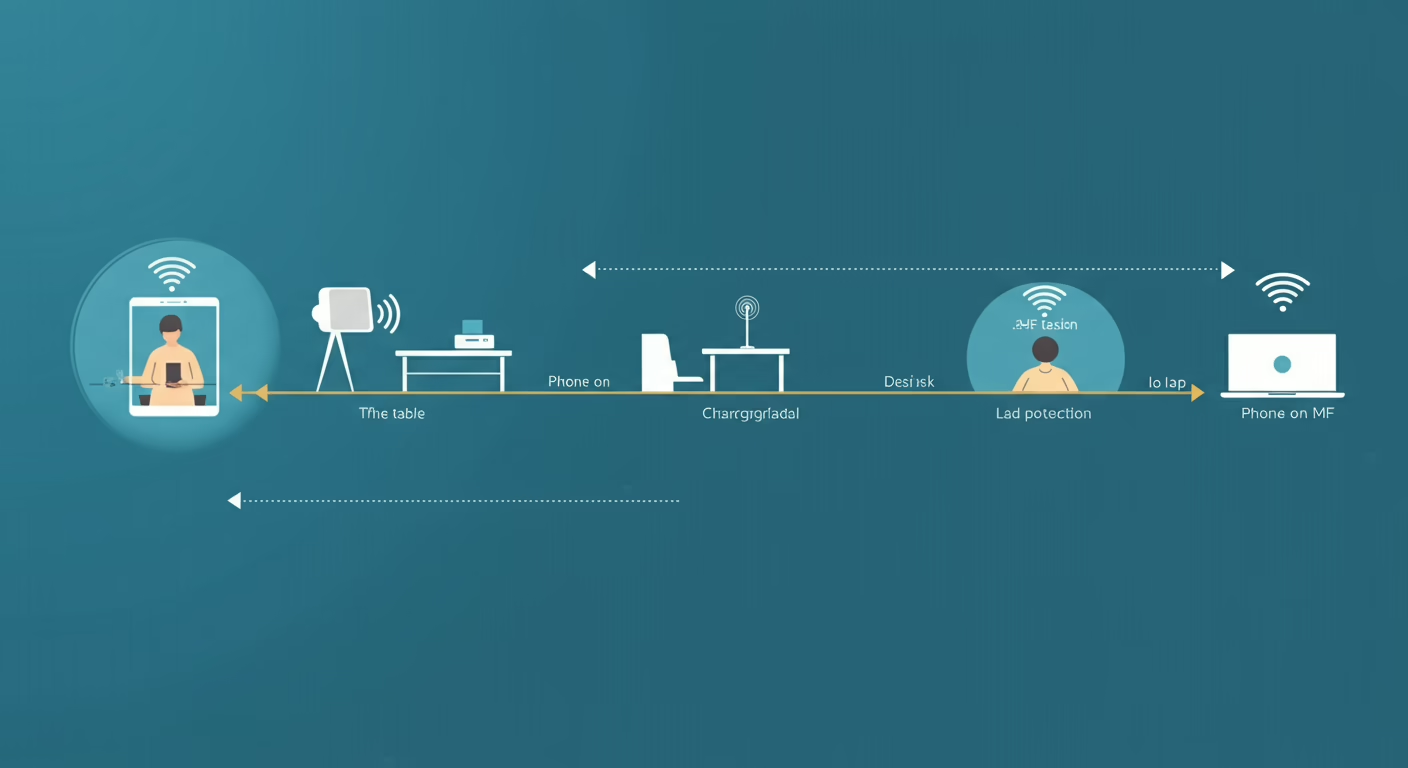
Because EMF exposure follows the inverse-square law, small increases in distance create large decreases in exposure.
The Distance Effect
| Source | Contact | 6 inches | 12 inches | 24 inches |
|---|---|---|---|---|
| Cell phone (calling) | 100% | ~25% | ~6% | ~1.5% |
| Laptop | 100% | ~25% | ~6% | ~1.5% |
| WiFi router | — | High | Moderate | Lower |
Practical Distance Strategies
Cell Phones:
- Use speakerphone for calls
- Use air tube headphones (regular wired headphones still conduct some RF)
- Never carry phone directly against body
- Place phone across the room while sleeping
Laptops:
- Use on a desk, not your lap
- Consider a laptop pad for additional protection when desk use isn’t possible
- Use external keyboard to increase distance from screen/body
WiFi Routers:
- Position away from areas where you spend the most time
- Place in a central location for coverage, not in bedroom or office
- Consider a timer to automatically turn off at night
Smart Meters:
- Identify location on your home
- Avoid placing beds or desks against walls near smart meters
- Request opt-out if available in your area
Strategy 3: Create a Sleep Sanctuary
Your bedroom deserves special attention because:
- You spend 6-8 hours there daily (one-third of your life)
- Sleep is when your body performs repair and recovery
- Nighttime is when you have the most control over your environment
Bedroom EMF Reduction Checklist
RF Radiation:
- WiFi router turned off or in another room
- Cell phone on airplane mode OR across the room OR out of bedroom
- No cordless phone base station in bedroom
- No baby monitors near head (if needed, maximize distance)
- No smart speakers or smart home hubs in bedroom
Magnetic Fields:
- Alarm clock moved away from head (or battery-powered)
- No charging devices near bed
- Electric blanket unplugged when sleeping (not just off)
- Bed not against wall with electrical panel on other side
For specific guidance on magnetic fields from electrical infrastructure, see our guide on breaker panels and other point sources of magnetic fields.
Electric Fields:
- Lamp and devices unplugged at night
- Consider power strip with on/off switch for easy shutdown
For severe EMF sensitivity, a shielded bed canopy creates a protected sleeping environment similar to a Faraday cage.
Strategy 4: Use Shielding Products
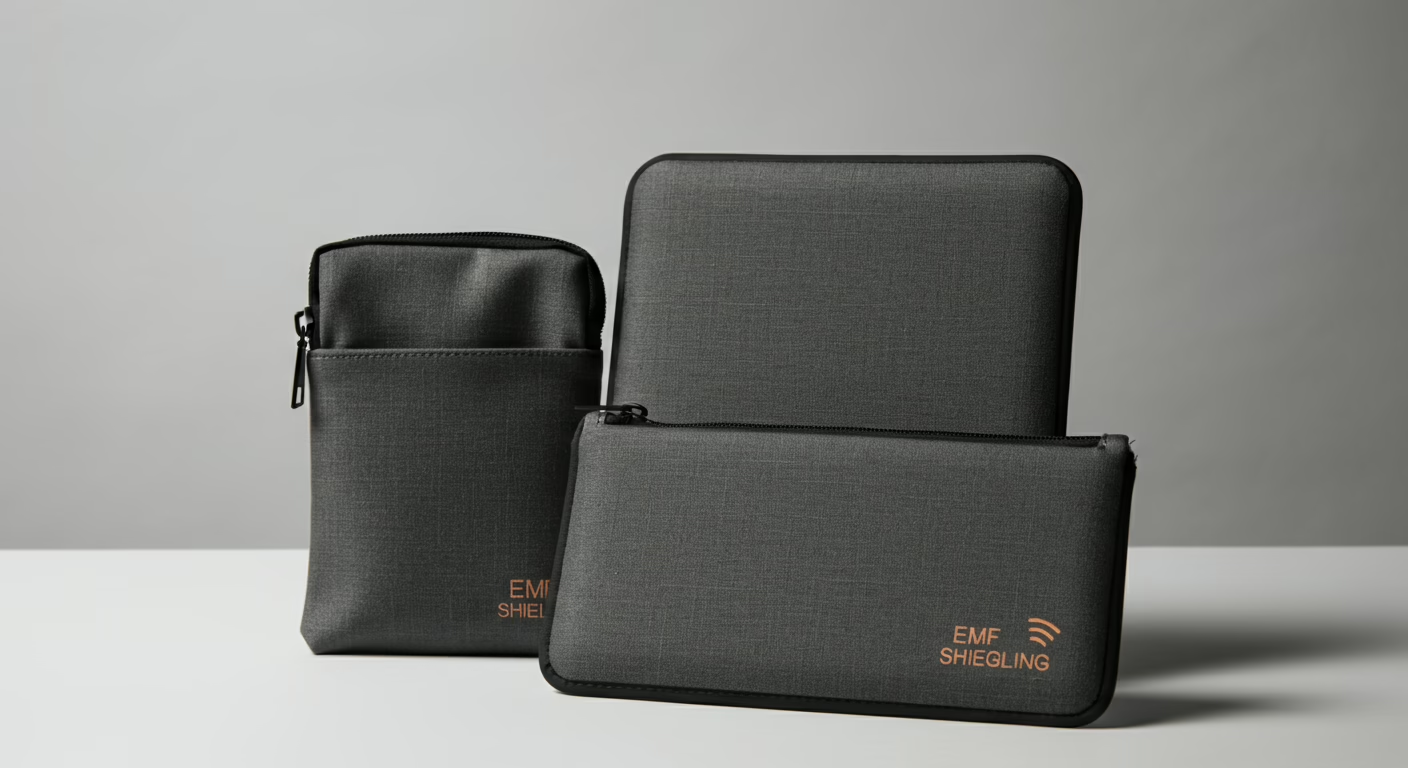
When behavioral changes and distance aren’t enough, shielding products can block EMF between you and the source.
How EMF Shielding Works
EMF shielding uses conductive materials to reflect or absorb electromagnetic radiationElectromagnetic radiation (EMR) is energy that travels through space as waves of oscillating electric and magnetic fields. It includes everything from radio waves to visible light to gamma rays. All.... Effective shielding materials include:
| Material | RF Shielding | ELF Shielding | Common Uses |
|---|---|---|---|
| Silver fabric | Excellent | Minimal | Phone pouches, clothing, canopies |
| Copper mesh | Excellent | Good | Faraday cages, window film |
| Aluminum | Good | Minimal | Foil, paint additives |
| Mu-metal | Minimal | Excellent | Magnetic field shielding |
Key principle: The shielding material must be between you and the EMF source to be effective.
Shielding Products by Use Case
Phone Protection:
When you carry your phone on your body, it becomes a primary exposure source. A phone pouch with shielding fabric blocks radiation toward your body while still allowing the phone to function.
For help choosing the right product, check out our phone radiation blocker comparison.
Laptop Protection:
Laptops emit both RF (WiFi, Bluetooth) and ELF (from electronics and power supply) radiation. Using one directly on your lap exposes reproductive organs to significant EMF.
Sleep Protection:
For comprehensive bedroom protection, a shielded bed canopy blocks RF from all directions while you sleep.
Complete Signal Blocking:
When you need to completely block all signals (privacy, storage, or total isolation), Faraday bags prevent any RF from entering or leaving.
View our full Faraday bag collection.
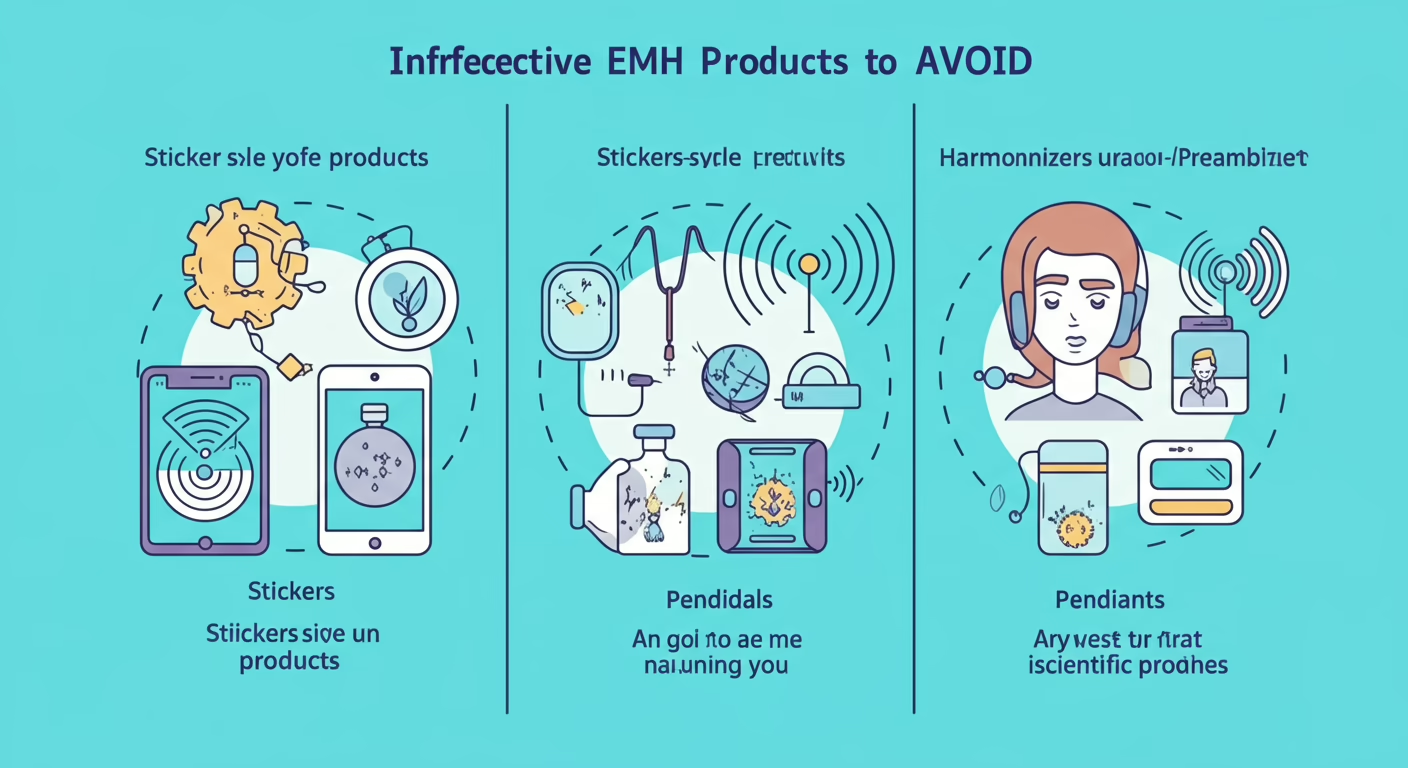
What to Avoid: Ineffective “Protection” Products
Not all products marketed as EMF protection actually work. Be skeptical of products that:
Red Flags
| Claim | Why It’s Suspicious |
|---|---|
| “Neutralizes” or “harmonizes” EMF | EMF is physics—it’s blocked or it isn’t |
| Stickers, pendants, or chips | Too small to shield anything |
| “Scalar energy” or “quantum” technology | Pseudoscientific terminology |
| No testing data or vague claims | Legitimate products provide attenuation specs |
| Works without blocking signal | If your phone still works normally with full signal, radiation is still reaching your body |
Questions to Ask
Before purchasing any EMF protection product:
- What material provides the shielding? (Should be conductive: silver, copper, aluminum, etc.)
- What frequencies does it block? (Should specify range, e.g., 30 MHz – 20 GHz)
- What is the attenuation level? (Should provide dB or percentage reduction)
- Is there independent testing? (Reputable products have lab test results)
- How is it used? (Must be positioned between you and source)
How SYB Products Are Tested
SYB shielding products use SaferBody fabric, independently tested by accredited laboratories:
| Metric | Result |
|---|---|
| RF attenuation (single layer) | 85%+ average, up to 99% at some frequencies |
| Frequency range tested | 30 MHz – 20 GHz |
| Testing labs | SIMT (Shanghai), Ordos Technologies (Israel) |
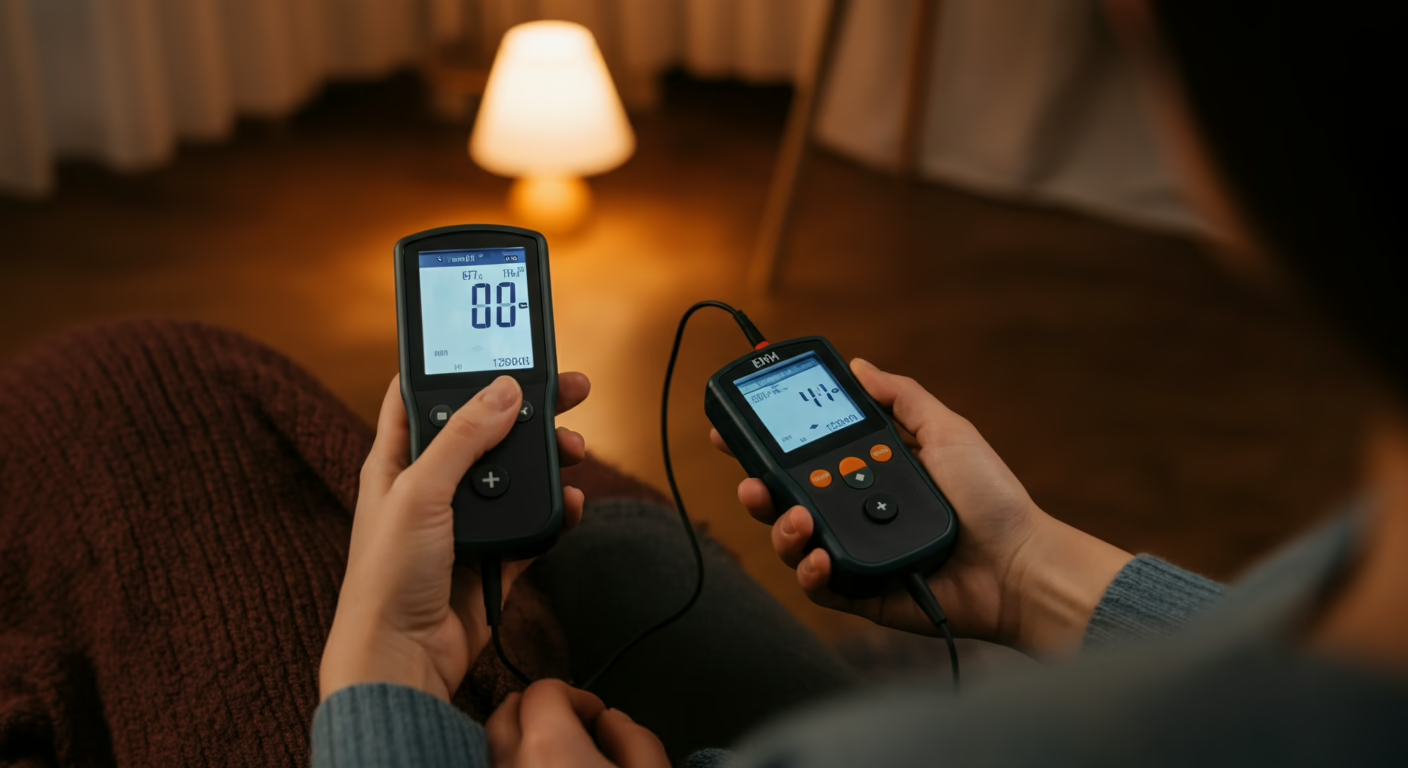
You can verify shielding effectiveness yourself using an EMF meter: measure with and without the shield in place.
Room-by-Room Protection Guide
Bedroom (Highest Priority)
Goals:
- RF below 0.1 μW/cm²
- Magnetic fields below 1 mG
- Minimal devices, maximum recovery
Actions:
1. Remove or disable WiFi/Bluetooth devices
2. Phone on airplane mode or out of room
3. Unplug unnecessary electronics
4. Move bed away from electrical panel walls
5. Consider shielded canopy if symptoms persist
Home Office
Goals:
- Reduce exposure during long work hours
- Maintain productivity and connectivity
Actions:
1. Use wired ethernet when possible
2. Position router away from desk
3. Use external keyboard/mouse (increases screen distance)
4. Laptop pad if working on lap
5. Take breaks from high-EMF environment
Living Areas
Goals:
- Balance exposure reduction with normal life
- Identify and address highest sources
Actions:
1. Position WiFi router away from seating areas
2. Use speakerphone or headphones for calls
3. Create low-EMF zones (reading chair, meditation space)
4. Limit smart home devices in high-use areas
Children’s Rooms
Goals:
- Extra precaution for developing bodies
- Especially important for sleep environment
Actions:
1. No WiFi devices in children’s bedrooms
2. No tablets/phones as sleep aids
3. Wired baby monitors preferred (or maximize distance)
4. Wired gaming setups when practical
Measuring Your Progress
An EMF meter lets you verify that your protection strategies are working.
Before and After Measurements
| Location | Before Changes | Target | After Changes |
|---|---|---|---|
| Bedroom (RF) | ? μW/cm² | < 0.1 | ? μW/cm² |
| Bedroom (magnetic) | ? mG | < 1 | ? mG |
| Desk (RF) | ? μW/cm² | < 1 | ? μW/cm² |
| Common areas | ? μW/cm² | < 10 | ? μW/cm² |
For meter recommendations, see our EMF meter collection.
What Good Readings Look Like
Based on Building Biology guidelines:
RF Radiation:
- Below 0.1 μW/cm² = No concern
- 0.1 – 10 μW/cm² = Slight to severe concern
- Above 10 μW/cm² = Extreme concern
Magnetic Fields:
- Below 0.2 mG = No concern
- 0.2 – 5 mG = Slight to severe concern
- Above 5 mG = Extreme concern
For detailed information on target levels, see our guide to recommended EMF levels.
Building Your Protection Plan
Step 1: Assess Your Current Situation
- What are your main EMF sources?
- Where do you spend the most time?
- Are you experiencing symptoms? (See EMF sensitivity symptoms)
- Can you measure your current exposure levels?
Step 2: Start with Free Changes
- Turn off WiFi at night
- Use speakerphone
- Increase distance from devices
- Move phone out of bedroom
Step 3: Address Highest Exposures
Measure or estimate which sources contribute most to your exposure, then address those first:
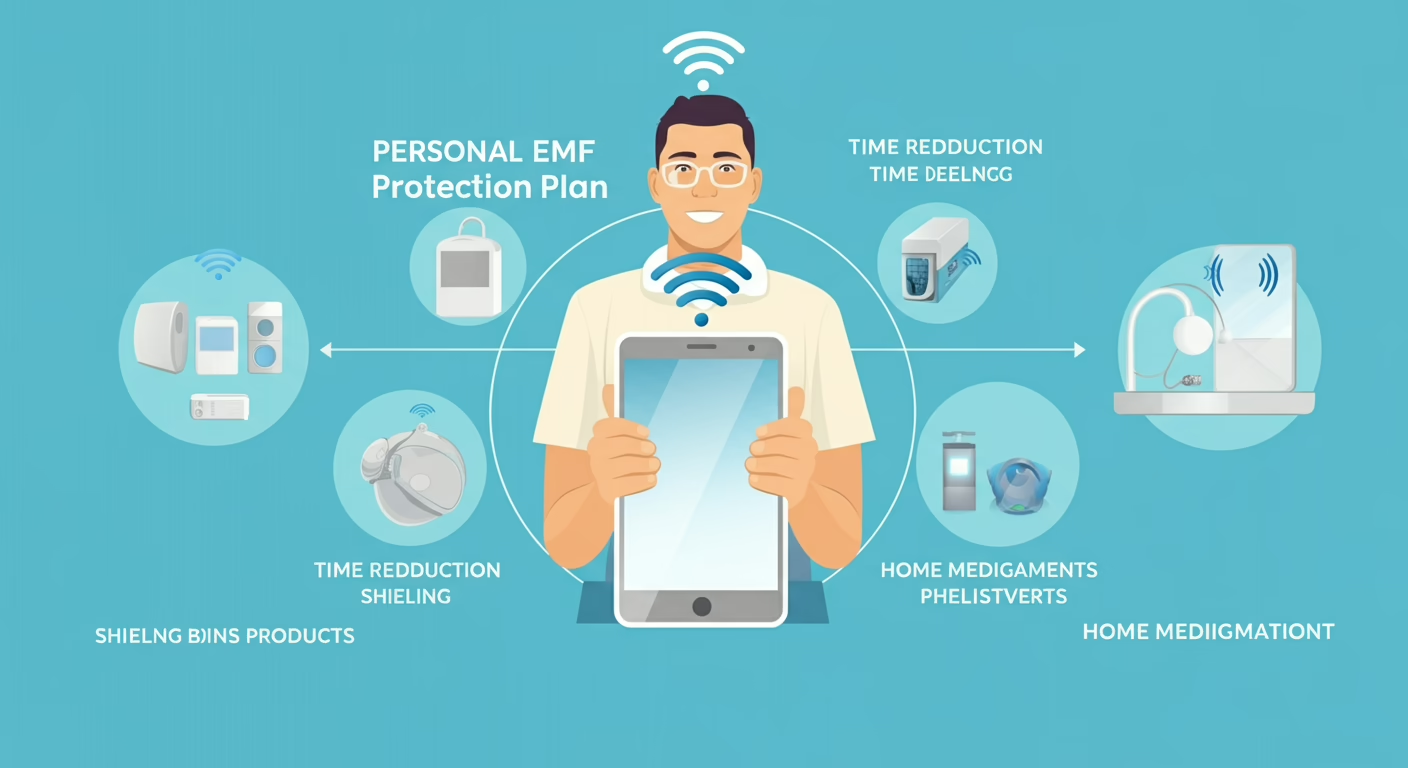
- Phones against body → phone pouch
- Laptop on lap → laptop pad
- WiFi in bedroom → move router or turn off at night
- Smart meter on bedroom wall → move bed or add shielding
Step 4: Create Your Sleep Sanctuary
Prioritize the bedroom:
- Remove/disable wireless devices
- Check for magnetic field sources
- Consider shielding if needed
Step 5: Measure and Adjust
Use an EMF meter to verify changes are working. Adjust based on actual readings rather than assumptions.
Common Misconceptions
Misconception: EMF protection means giving up technology.
Reality: Protection is about using technology more wisely, not abandoning it. Simple changes like distance and timing can dramatically reduce exposure while maintaining full functionality.
Misconception: Shielding products are scams.
Reality: Products using legitimate shielding materials (silver, copper, aluminum) with independent testing can measurably reduce EMF exposure. The key is understanding what a product actually does and verifying claims with specifications and testing data. Be skeptical of products without conductive shielding materials.
Misconception: If I shield one side, radiation just goes around.
Reality: Shielding between you and the source does reduce your exposure to that source, even if it doesn’t create complete 360° protection. A phone pouch blocks radiation toward your body. A bed canopy blocks radiation from surrounding sources. Partial shielding still provides partial protection.
Misconception: I need to eliminate all EMF to be protected.
Reality: The goal is reduction to levels your body can tolerate, not elimination. Natural EMF exists everywhere. Most people feel significant improvement by reducing exposure during sleep and reducing direct body contact with high-output devices.
This post is part of the EMF Sensitivity & Health pillar on Shield Your Body. For related content, see:
- Electromagnetic Hypersensitivity: Complete EHS Guide (Pillar)
- EMF Radiation: What It Is & Potential Health Effects
- EMF Sensitivity Symptoms: Signs You May Be Affected
- Safe EMF Levels: What Research Says About Exposure Limits
Frequently Asked Questions
The most effective protection combines three approaches: minimize use (turn off devices when not needed), maximize distance (never carry phone against body, use speakerphone), and shield where necessary (phone pouches, laptop pads, bed canopies). Start with free behavioral changes, then add shielding products for situations where distance isn't practical.
Products using legitimate shielding materials (silver fabric, copper mesh, aluminum) do block EMF—this is physics. However, products claiming to "neutralize" or "harmonize" EMF through stickers, pendants, or chips without any shielding material do not work. Look for products with specified shielding materials, frequency ranges, and independent testing data.
Turn off WiFi at night, put your phone on airplane mode or in another room, unplug unnecessary electronics, move your bed away from walls with electrical panels, and remove cordless phone base stations. For additional protection, consider a shielded bed canopy. Measure before and after to verify improvement.
Airplane mode stops your phone from emitting RF radiation for cellular, WiFi, and Bluetooth communication, making it a highly effective protection measure. However, some phones may still emit low levels of EMF even in airplane mode. For maximum protection during sleep, combine airplane mode with distance (across the room) or place the phone outside the bedroom entirely.
For calls: use speakerphone or air tube headphones. For carrying: use a shielding phone pouch that blocks radiation toward your body, or carry the phone in a bag away from your body rather than in a pocket. Never carry an active phone directly against your body without shielding.
The most reliable way is to measure with an EMF meter before and after implementing protection measures. You should see a measurable reduction in the readings. For shielding products specifically, measure on both sides of the shield—you should see significantly lower readings on the shielded side.