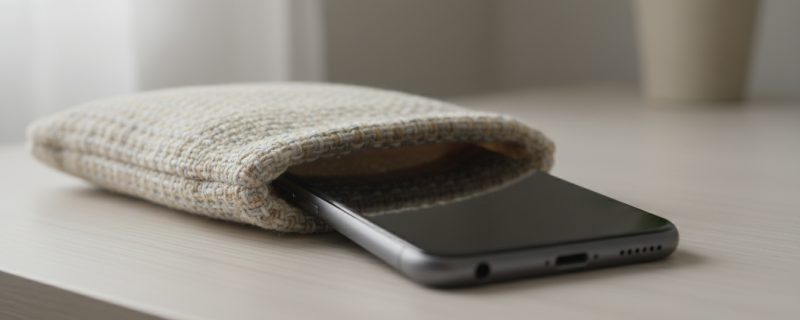

Answer Summary
The best EMFEMF stands for electromagnetic field (also called electromagnetic frequency or electromagnetic force). EMFs are invisible fields of energy produced by electrically charged objects. They exist on a spectrum ranging from... blocking phone cases use conductive shielding (silver, copper, or nickel mesh) to reduce RF exposure by up to 99% on the shielded side, when independent lab data confirms attenuation in decibels across the frequencies your phone actually uses.
No lab test, no protection guarantee. Look for FCC-certified third-party reports, not marketing claims or “harmonizer” promises.
Key Takeaways
- Conductive shielding materials (silver, copper, nickel mesh) reduce RF radiation by reflecting it, with up to 99% reduction when positioned correctly
- Only one side of a shielding case is conductive; the shielded side must face your body to lower exposure
- The only credible proof an EMF phone case works is an independent lab report with attenuation measured in decibels (dB) across the frequencies your phone actually emits
- Products that claim to “neutralize” or “harmonize” radiation without conductive materials have no peer-reviewed or independent lab evidence
- How you carry your phone matters as much as which case you use; pocket carry, calling, and bedside use each need a slightly different approach
Why EMF Exposure From Your Phone Matters
Before choosing an EMF phone case, it helps to understand why reducing phone radiation exposure is worth thinking about in the first place.
Your Phone Emits RF Radiation Constantly
Every cell phone emits radiofrequencyRadiofrequency (RF) refers to electromagnetic waves in the frequency range of approximately 3 kHz to 300 GHz. This portion of the electromagnetic spectrum is used for wireless communication. RF energy... (RF) radiation to communicate with cell towers, WiFi networks, and Bluetooth devices. The closer the phone is to your body, the more radiation your tissues absorb. A 1994 SAR modeling study found that mobile phones produced Specific Absorption Rate (SAR) values of 2.1–4.7 W/kg in brain tissue during normal use, with absorption concentrated in the brain regions closest to the phone: typically your ear and the side of your head.
That’s during calls. But your phone doesn’t stop transmitting between calls. Background app refresh, location services, push notifications, and constant signaling to nearby towers mean your phone is emitting RF nearly all the time it’s powered on.
The Body Proximity Problem
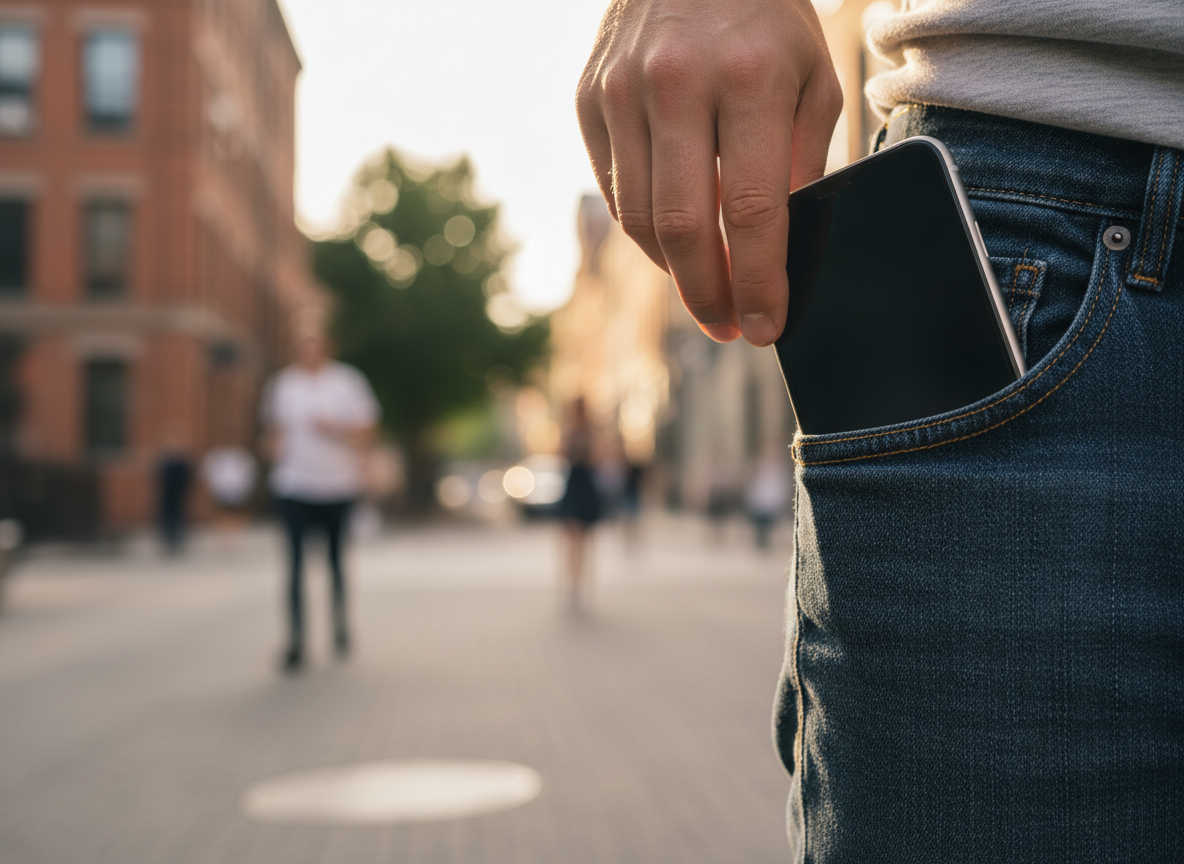
Carrying your phone in a front pocket, a chest pocket, a bra, or against your hip turns your body into the closest absorbing object. Phone manufacturers know this: read the legal fine print in your phone’s user manual and you’ll typically find a distance recommendation: keep the phone 5 mm to 15 mm away from your body during use. Most people don’t, because pockets are convenient and that fine print is buried.
A phone case with conductive shielding is one way to address this gap between manufacturer recommendations and everyday behavior. It doesn’t change your habits: it changes what reaches your body when you fall back on the convenient option.
Biological Effects Occur Below Heating Thresholds
Current safety standards (1.6 W/kg in the US, as defined in the FCC’s RF exposure guidelines) are based on preventing tissue heating. But research consistently shows biological effects at far lower levels: oxidative stress, sleep disruption, changes in calcium signaling. The research base is substantial enough that the World Health Organization’s IARC classified RF radiation as a Group 2B “possibly carcinogenic to humans” in 2011, and the US National Toxicology Program’s $30M animal study reported clear evidence of tumor development in rats chronically exposed to cell phone RF. That body of evidence is precisely the reason a precautionary tool like an EMF blocking phone case exists.
How EMF Shielding Phone Cases Work
The physics of EMF shielding is well-established and dates back over a century. Understanding it cuts through most of the marketing noise.
The Physics of Shielding
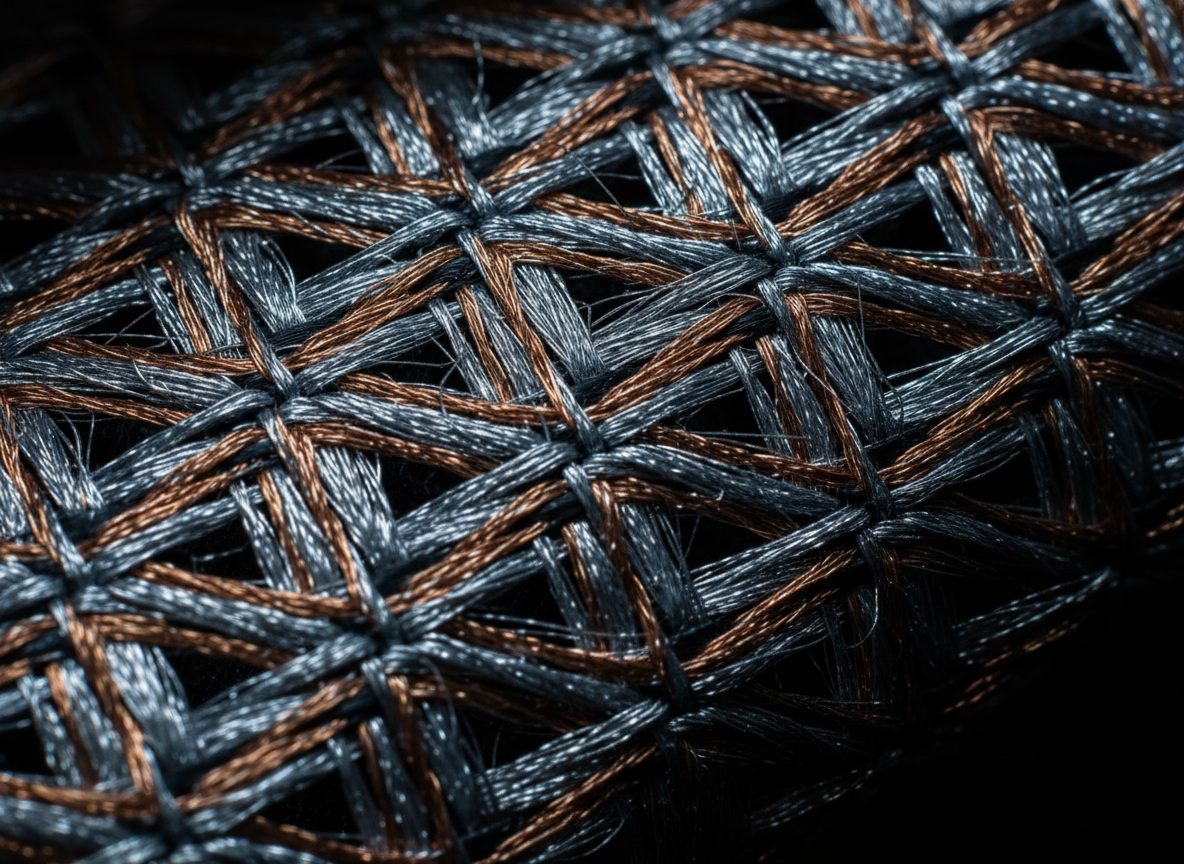
Radiofrequency radiationRadiofrequency radiation (RFR) is electromagnetic energy in the frequency range of 3 kHz to 300 GHz. This type of non-ionizing radiation is emitted by wireless devices and communication infrastructure. Cell... travels as electromagnetic waves. When those waves encounter a conductive material: a metal or metal-impregnated fabric: they induce currents on the surface of the conductor. Those induced currents radiate their own electromagnetic field that opposes the incoming wave. The net effect: the wave is reflected away from whatever sits behind the conductor. This is the same principle that lets you look through a microwave oven’s door window without harm (the wire mesh embedded in the glass reflects 2.4 GHz back into the oven cavity).
For phone cases, the conductive layer is typically a thin metallic fabric, sometimes a mesh, or in some cases a coated polymer. The exact composition determines two things: how much attenuation the material achieves (measured in decibels), and across what frequency range it stays effective.
Why Only One Side Is Shielded
A well-designed EMF phone case shields only one side of the phone. Here’s why: your phone needs to communicate with cell towers. If you fully enclosed the phone in a conductive layer, the antenna would lose its connection to the network. To compensate, the phone would ramp up its transmit power to the maximum allowed: and you’d end up with more RF radiation, not less.
Single-sided shielding solves the problem elegantly. The shielded side faces your body and reflects RF away from you. The unshielded side faces away from your body and allows the phone’s antenna to maintain a normal connection at normal transmit power. Your body is protected; your call quality isn’t.
This is why correct positioning is non-negotiable. A shielded flip-cover case only protects you when the cover is closed. A shielded pouch only protects you when the shielded panel is between the phone and your body.
What to Look For in an EMF Phone Case
This is where most buyer’s guides go vague. Here are the specific things to look for: and to ask the manufacturer about: before you spend money.
Lab Testing: The Only Standard That Counts
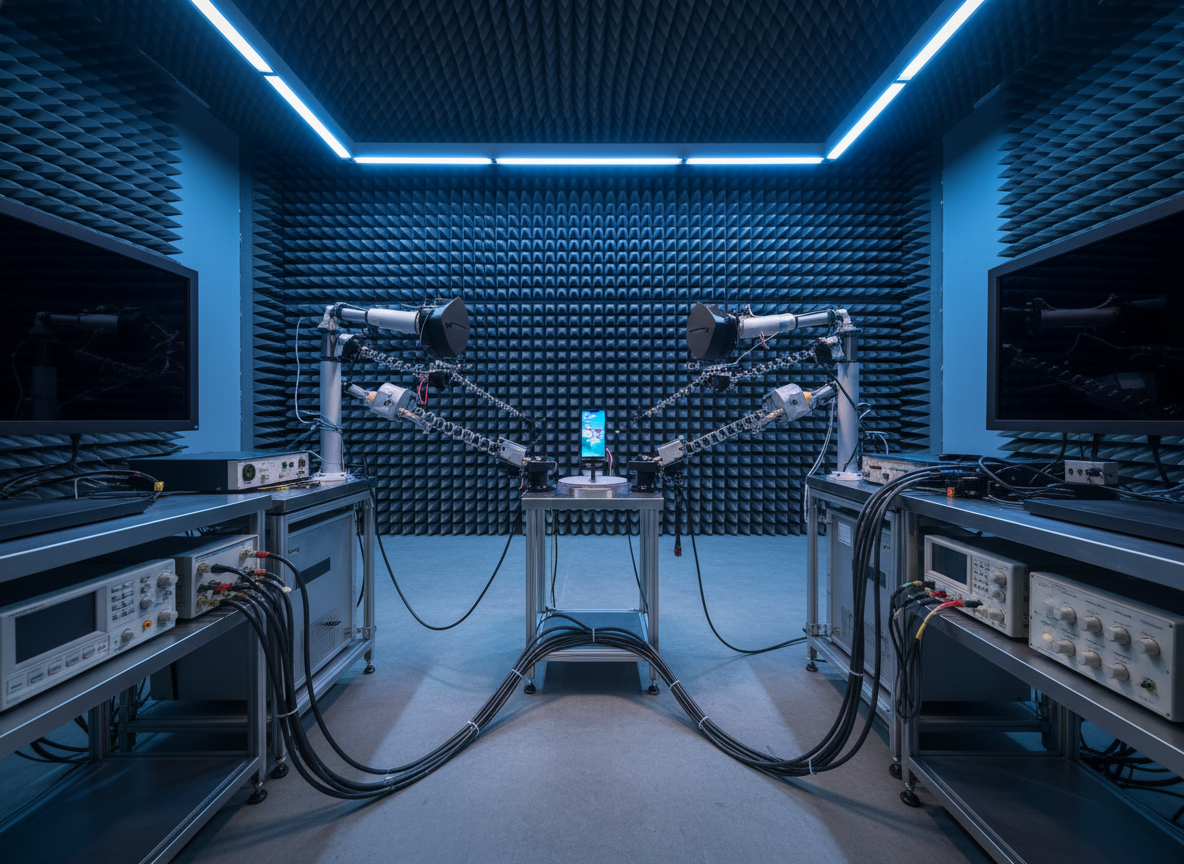
If a phone case claims to block RF radiation, the manufacturer should be able to produce a third-party lab report. Not an in-house test. Not a video of a “demo.” An actual document from an independent laboratory: ideally an FCC-accredited facility: that lists:
- The specific material tested
- The frequency range tested (your phone uses LTE bands from roughly 600 MHz to 2.6 GHz, plus 5G5G is the fifth generation of wireless cellular technology, offering faster data speeds, lower latency, and greater network capacity than 4G LTE. It began rolling out commercially in 2019. 5G... bands that can reach 6 GHz on sub-6 deployments and much higher on millimeter-wave)
- The attenuation measured at each frequency, in decibels (dB)
A 30 dB attenuation means up to 99.9% reduction. 20 dB means up to 99%. 10 dB means up to 90%. The relationship is logarithmic, which is why decibels matter more than the marketing-friendly percentage.
If a manufacturer can’t or won’t produce this report: or sends you a vague single-page summary without measured values: that’s your answer.
Materials That Actually Shield
Effective shielding fabrics are typically silver, copper, or nickel: often woven into a fabric matrix or applied as a fine mesh. Silver is the most conductive of the three; copper is nearly as good and less expensive; nickel mesh is durable and broad-spectrum. Some manufacturers blend multiple metals for performance across a wider frequency band.
What doesn’t shield: shungite stickers, “scalar wave” pendants, “harmonizer” chips, holograms, crystals, or anything sold with a story about “frequencies” but no measured attenuation. These have not shown measurable RF reduction in any peer-reviewed or independent laboratory test.
How to Read Attenuation Numbers
Attenuation is the technical measure of how much a material reduces signal strength. It’s expressed in decibels (dB), and the conversion to a percentage is non-linear:
| Attenuation | RF Reduction |
|---|---|
| 10 dB | Up to 90% |
| 20 dB | Up to 99% |
| 30 dB | Up to 99.9% |
| 40 dB | Up to 99.99% |
Higher numbers are better, but the diminishing returns are real: moving from 20 dB to 30 dB takes the remaining exposure from a tenth to a hundredth of the unshielded level. What matters more than chasing a marginal extra decibel is verifying that the case maintains its attenuation across the frequency bands your phone actually uses. A material that performs at 1 GHz but drops off at 3 GHz will fail at 5G.
What “FCC Lab-Tested” Means (and Doesn’t Mean)
“FCC lab-tested” or “FCC-accredited lab” means the laboratory follows FCC measurement standards and is recognized to perform compliance testing. It does not mean the FCC endorses the product. The FTC has separately warned consumers about EMF protection products that make unsubstantiated claims: so the credibility you should look for is in the lab report itself, with measured attenuation values, not in a logo or a regulator’s name.
Red Flags to Avoid
Most EMF protection products on the market do not work. Recognizing the patterns saves time and money.
“Neutralizing” or “Harmonizing” Stickers
Small adhesive stickers applied to the back of a phone, claiming to “neutralize,” “harmonize,” or “balance” radiation. These contain no conductive material. There is no measurable change in RF emission with the sticker applied. The FTC has specifically warned against such products in formal advisories.
Unverified Attenuation Claims
A product claims to “block up to 99%” but the manufacturer cannot produce a third-party lab report when asked. Or the “lab report” is a one-paragraph statement on the manufacturer’s website with no measured values, no frequency range, and no lab name. Treat unverified claims as marketing copy, not specification data.
Full-Surround Cases
A case that fully encloses the phone in shielding material on all six sides. This will block signal entirely, your phone will ramp transmit power to maximum, and the result is more total RF exposure: concentrated near you because the case becomes a resonant cavity.
Ultra-Low-Cost Options
A conductive shielding fabric costs real money to manufacture and lab-test. A $4 case with a printed “EMF blocking” label is either using a non-conductive material with marketing flair, or skipping any kind of independent verification. The price floor for a genuinely tested shielding case sits in the $20–$80 range, depending on form factor.
Top EMF Phone Case Options: How They Compare
The market has consolidated around three categories of EMF phone protection. Each one solves a slightly different version of the problem.
The SYB Phone Pouch: Carry-Style Protection

The SYB Phone Pouch takes a different approach from a traditional case. Instead of attaching to your phone, it’s a shielded pouch you wear on your belt or carry in a pocket. One side contains SaferBody™ fabric: a layer interwoven with conductive metallic threads. When you wear the pouch correctly, this shielded side sits between your phone and your body.
Lab-tested in FCC-accredited facilities for 5G frequencies up to 20 GHz, the Phone Pouch is verified to block up to 99% of wireless EMF radiation across that range. Because it doesn’t attach to your phone, it works with any device: iPhone, Android, any size, any model: and your phone case underneath. If you upgrade phones, the pouch still works.
Best for: people who primarily want body-proximity protection during pocket carry, and who don’t want to commit to a single phone model.
SafeSleeve: Flip Case for Calls
SafeSleeve makes a wallet-style flip case with integrated shielding in the cover. When closed, the cover shields the front of the phone: useful during calls when you hold the phone to your head. The case is model-specific, so it requires picking the case that matches your exact phone model.
Best for: people whose main concern is RF exposure to the head during calls, and who want an all-in-one wallet/case form factor.
DefenderShield: Multi-Layer Coverage
DefenderShield builds cases around a proprietary multi-layer shielding stack. The cases are model-specific and built around similar principles to SafeSleeve: a flip cover with shielding integrated into the front panel.
Best for: people who want the broadest available frequency coverage in a flip-case form factor.
What to Choose Based on How You Carry Your Phone
The right product depends less on which brand is “best” in the abstract and more on how you actually use your phone.
- Pocket carry, all day: a pouch (SYB) is more reliable than a case because the shielding orientation never depends on whether the cover is open or closed.
- Long phone calls: a flip case with shielded cover (SafeSleeve, DefenderShield) shields your head during calls.
- Mixed use: many people use a pouch for body carry and rely on speakerphone or a wired headset for calls, which is a separate (and very effective) exposure-reduction strategy on its own.
For a deeper side-by-side on two of these specifically, see our SYB Phone Pouch vs SafeSleeve comparison.
How to Use an EMF Phone Case Correctly
Even the best lab-tested case does nothing if it’s used incorrectly. Position matters as much as material.
During Calls
If you have a flip case with a shielded front cover: keep the cover between your head and the phone during the call. Some people open the cover to read caller ID and forget to flip it back: at that point you’re holding an unshielded phone to your ear. For pouch users: take the phone out of the pouch and use speakerphone or a wired headset rather than holding the phone against your head.
While Carrying in a Pocket
Position the shielded side toward your body. With a pouch, this means the shielded panel faces in. With a flip case, the shielded cover should face your body (i.e., the case is in your pocket cover-side in). This is the moment a pouch shines: there’s no orientation to forget, because the pouch is worn rather than slipped into a pocket loose.
While Texting or Browsing
When you’re holding the phone in your hand and looking at the screen, the phone is typically far enough from your torso that the case design doesn’t dominate the exposure picture. The bigger factor here is distance. Holding the phone closer to your face increases head and eye exposure; holding it farther away: even a few inches: reduces it meaningfully.
While Sleeping

The single biggest, easiest reduction in lifetime RF exposure is to stop sleeping with your phone next to you. Put it in another room, or on the far side of the bedroom in airplane mode. No case in the world beats distance.
Medical Disclaimer: The information on this page is provided for educational purposes only and does not constitute medical advice. EMF shielding products are not intended to diagnose, treat, cure, or prevent any disease or health condition. Consult a qualified healthcare provider with any questions you may have regarding a medical condition.
Medical Disclaimer: The information on this page is provided for educational purposes only and does not constitute medical advice. EMF shielding products are not intended to diagnose, treat, cure, or prevent any disease or health condition. Consult a qualified healthcare provider with any questions you may have regarding a medical condition.
Common Misconceptions
A few persistent ideas about EMF phone cases that are worth correcting.
“If it blocks up to 99%, my phone won’t work.” Single-sided shielding doesn’t affect signal because the antenna side stays unshielded. Lab-tested cases are designed for this. The phones connect normally.
“Any case with metal in it will shield me.” Decorative metallic accents: a metal logo, a metallic-painted shell: are not the same as a conductive shielding fabric or mesh tested across phone frequencies. The amount and arrangement of metal matters.
“5G needs special shielding.” 5G adds higher frequencies (sub-6 GHz on most current deployments, with mmWave in some urban areas). A case with verified attenuation across the relevant range (typically up to 20 GHz for current devices) handles 5G the same way it handles 4G4G is the fourth generation of cellular network technology, providing mobile broadband internet access. The most common 4G standard is LTE (Long Term Evolution). 4G networks offer significantly faster data...: by reflecting it. The principles don’t change.
“More shielding is always better.” True up to a point. Beyond about 30 dB of attenuation, the marginal reduction is tiny, and pushing for more can mean a heavier or bulkier case. The practical question is whether the case maintains its rated attenuation across the frequencies your phone uses, every day.
The Phone Protection System: All-in-One Option
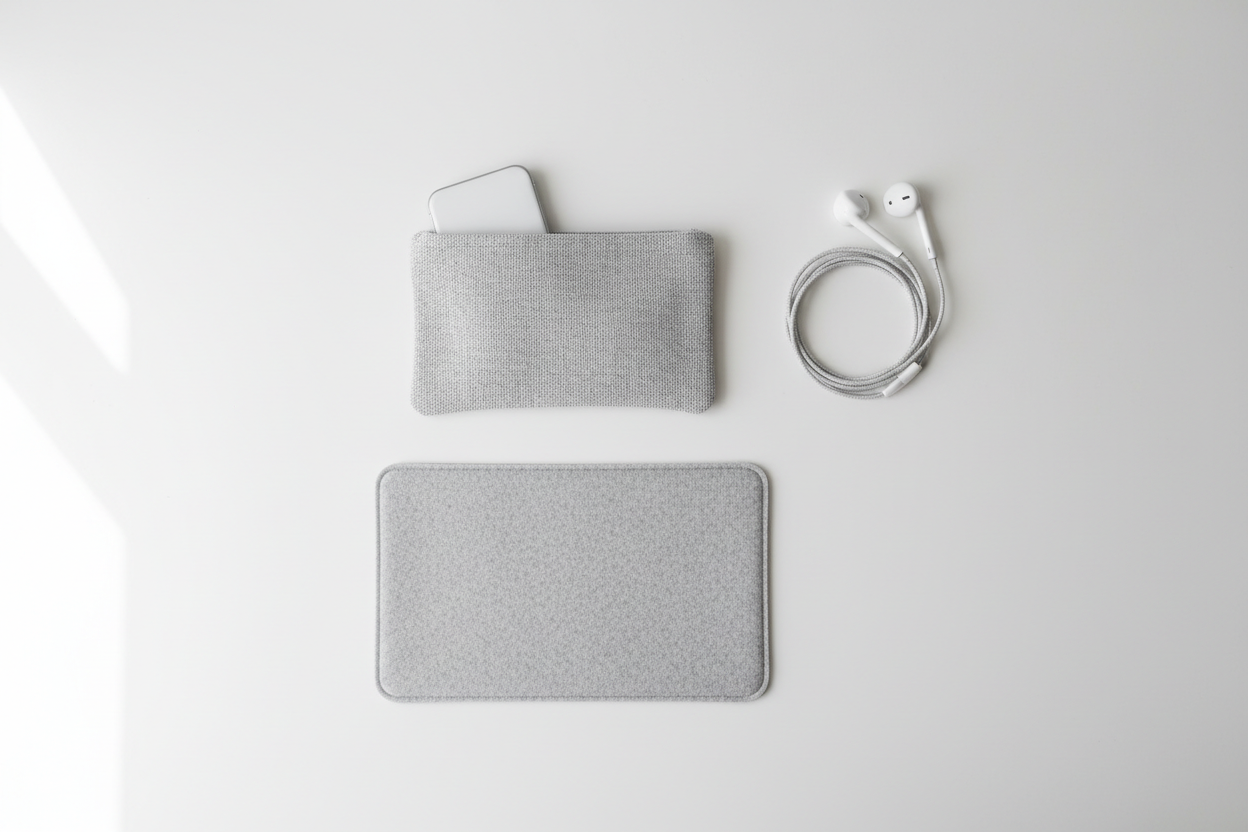
Ready to reduce your daily exposure without piecing together products one at a time?
The SYB EMF Phone Protection System brings together the most-used phone protection tools in a single kit. Lab-tested to reduce RF exposure across the frequencies your phone actually uses, everything is designed to work together: whether you’re on a call, carrying your phone in a pocket, or charging at your nightstand.
Shop the EMF Phone Protection System →
If you’re newer to EMF mitigation and want to verify the changes you’re making, an EMF meter is the next tool to consider: it lets you measure exposure before and after, so you can see the difference for yourself rather than taking anyone’s word for it.
Frequently Asked Questions
Yes, when built with conductive shielding materials (silver, copper, or nickel mesh) and verified by independent lab testing. Look for an attenuation report from a third-party accredited lab showing measured dB reduction across the frequencies your phone uses. Products without lab reports should not be trusted.
The best EMF phone case for most people is one that provides lab-tested shielding on the side facing your body, fits your phone model or works across models, and has an independent attenuation report. The SYB Phone Pouch works across phone models and pouches the phone in a shielded carry case. SafeSleeve and DefenderShield offer flip-style cases for those who prioritize call-time shielding.
Yes, if the case is tested across the relevant frequency range. Current 5G deployments in the US primarily use sub-6 GHz frequencies, which the same conductive shielding materials handle effectively. Look for attenuation data that extends to at least 6 GHz.
A properly designed single-sided case should not affect signal or battery life, because only the body-facing side is shielded and the antenna side remains open. A full-surround case would block signal, forcing the phone to increase transmit power and drain battery faster — which is why full-surround cases are a red flag, not a feature.
For pouch-style cases: insert the phone with the shielded side facing your body. For flip-style cases: keep the shielded cover closed when the phone is near your head or body. For maximum benefit, combine a shielding case with distance and duration reduction habits.
No. Sticker-style products claiming to neutralize, harmonize, or balance radiation contain no conductive material and produce no measurable change in RF emission. The FTC has specifically warned against such products. Legitimate EMF protection requires conductive materials tested and measured in a laboratory.