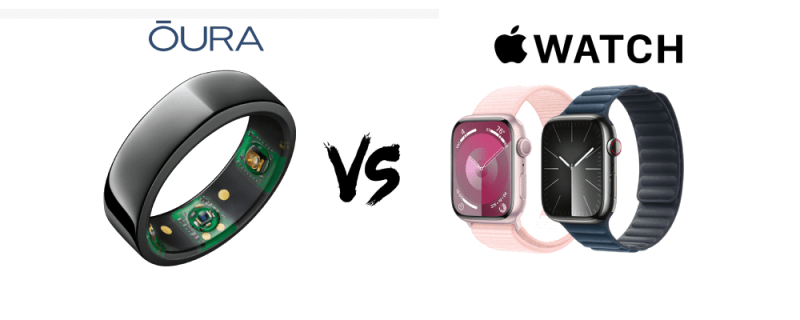

The Oura Ring is significantly safer than the Apple Watch for EMFEMF stands for electromagnetic field (also called electromagnetic frequency or electromagnetic force). EMFs are invisible fields of energy produced by electrically charged objects. They exist on a spectrum ranging from... exposure. With SAR of 0.0003 W/kg versus the Apple Watch’s 1.15 W/kg, it emits nearly 4,000 times less radiation.
For health-conscious consumers wanting wearable technology without constant EMF exposure, the Oura Ring offers the best balance of functionality and safety.
Key Takeaways
- The Oura Ring has a SAR of 0.0003 W/kg vs Apple Watch Cellular at 1.15 W/kg
- Oura Ring stores data locally, only syncs when you choose, and retains full functionality in Airplane Mode
- Apple Watch maintains constant Bluetooth/WiFi/cellular connections
- Titanium rings are more resistant to bacterial growth than silicone/rubber watch bands
- The SYB Wrist Band can reduce Apple Watch EMF exposure if you already own one
The Evolving Debate: Features vs Safety
In the ever-evolving landscape of health tech, the Oura Ring vs Apple Watch debate takes on a dimension that most reviews ignore: EMF safety.

As leaders in the health tracking market, both devices offer innovative features to enhance your wellness journey. The Apple Watch boasts an extensive app ecosystem, FDA-cleared ECG, and the convenience of a second screen on your wrist. The Oura Ring counters with superior sleep tracking, discreet design, and impressive battery life.
Yet the question that matters most for long-term health rarely gets asked: Which one exposes you to more electromagnetic radiationElectromagnetic radiation (EMR) is energy that travels through space as waves of oscillating electric and magnetic fields. It includes everything from radio waves to visible light to gamma rays. All...?
If you’re concerned about EMF from wearables generally, I recommend reading my comprehensive guide on Apple Watch radiation and cancer research first. This comparison will help you understand how the two devices stack up specifically.
Oura Ring vs Apple Watch: Feature Overview
Before diving into safety, let’s establish what each device offers.
Oura Ring Strengths
The Oura Ring excels in sleep tracking and provides detailed insights into sleep quality, heart rate variability, and recovery. It emphasizes accuracy in monitoring overall wellness, particularly in:
- Sleep stage analysis (light, deep, REM)
- Heart rate variability (HRV) tracking
- Body temperature monitoring
- Recovery and readiness scores
- Menstrual cycle prediction (via temperature)
Prized for its discreet and comfortable design, it’s ideal for 24/7 wear, including situations where a watch might feel intrusive.
Apple Watch Strengths
The Apple Watch shines with versatility and comprehensive health monitoring features:
- FDA-cleared ECG with AFib detection
- Blood oxygen monitoring
- Fall detection with emergency calling
- Workout tracking with GPS
- Extensive third-party app ecosystem
- Notifications, calls, and messaging
Integration with Apple Health consolidates data from multiple sources for a complete wellness picture.
Head-to-Head Comparison
| Feature | Oura Ring Gen 3 | Apple Watch Series 10 |
| Sleep Tracking | Industry-leading sleep stage, HRV, and temperature monitoring | Comprehensive sleep tracking with respiratory rate |
| Exercise Tracking | Basic activity and workout detection | Extensive workout modes with GPS |
| Health Sensors | PPG for heart rate, temperature, SpO2 | ECG, PPG, temperature, SpO2, depth gauge |
| Battery Life | 4-7 days | 18-36 hours |
| Display | None | Always-on Retina |
| Notifications | None (phone required) | Full notification support |
| Price Range | $299-$549 + $5.99/mo membership | $399-$799 (cellular adds ~$10/mo) |
| EMF Emissions | Minimal (Bluetooth sync only) | Constant (BT + WiFi + LTE) |
The EMF Safety Question
Here’s the question most tech reviews won’t touch: What about the electromagnetic radiation these devices emit?
Both the Oura Ring and Apple Watch use wireless technology to function. But the way they use it differs dramatically, and that difference has real implications for your exposure.
What is EMF and Why Does It Matter?
EMF stands for electromagnetic fields. These are invisible areas of energy produced by anything electrical or that uses wireless communication.
There are two types:
Non-ionizing EMF: This comes from everyday devices like WiFi routers, cell phones, and wearables. It doesn’t have enough energy to directly damage DNA, but research shows it can still cause biological effects.
Ionizing EMF: This includes X-rays and gamma rays, strong enough to cause immediate cellular damage at high doses.
Your wearables emit non-ionizing EMF. The concern isn’t immediate damage but cumulative exposure over years of constant skin contact.
Research studies indicate that prolonged exposure to non-ionizing EMF can affect everything from sleep quality to cellular function. You can explore the full body of evidence in my EMF radiation health effects resource.
SAR Comparison: The Numbers That Matter

SAR (Specific Absorption Rate) measures how much EMF radiation your body absorbs from a device. It’s the closest thing we have to a standard safety metric, though it has significant limitations.
2026 SAR Values
| Device | SAR (Body) | Difference from Oura Ring |
| Oura Ring Gen 3 | 0.0003 W/kg | Baseline |
| Apple Watch Series 10 (GPS) | 0.99 W/kg | 3,300x higher |
| Apple Watch Series 10 (Cellular) | 0.99 W/kg | 3,300x higher |
| Apple Watch Series 9 (GPS) | 0.31 W/kg | 1,033x higher |
| Apple Watch Series 9 (Cellular) | 1.15 W/kg | 3,833x higher |
| Apple Watch Ultra 2 | 1.06 W/kg | 3,533x higher |
| Samsung Galaxy Watch 6 | 0.58 W/kg | 1,933x higher |
| Fitbit Charge 6 | 0.13 W/kg | 433x higher |
| Whoop 4.0 | 0.08 W/kg | 267x higher |
The U.S. FCC limit is 1.6 W/kg. All these devices technically pass. But passing a regulatory threshold and being equally safe are not the same thing.
Why the Massive Difference?
The Oura Ring’s dramatically lower SAR comes from a fundamental design difference:
Oura Ring: Stores health data locally on the ring itself. It only transmits via Bluetooth when you open the app and initiate a sync. Most of the time, it’s not emitting wireless signals at all.
Apple Watch: Maintains constant connections. Bluetooth links to your iPhone continuously. WiFi stays active for network tasks. Cellular models communicate with cell towers. The watch is essentially always transmitting.
This isn’t a minor distinction. It’s the difference between occasional, brief exposures and constant exposure against your skin for 16+ hours daily.
Airplane Mode: A Critical Difference
Both devices offer Airplane Mode, which disables wireless communications. But they handle it very differently.
Oura Ring with Airplane Mode
- Continues tracking all health metrics normally
- Stores data locally until you choose to sync
- Retains 100% of its core functionality
- Can stay in Airplane Mode indefinitely
Apple Watch with Airplane Mode
- Loses notifications and messaging
- Loses phone call capability
- Loses app functionality that requires internet
- Loses real-time weather, maps, and Siri
- Retains only basic fitness tracking and time display
Put simply: The Oura Ring was designed to work without constant connectivity. The Apple Watch was designed around it.
If you want to reduce EMF exposure while wearing a wearable, the Oura Ring makes that easy. The Apple Watch makes it a significant compromise.
Why the Oura Ring is Safer

In this comparison, the Oura Ring takes a clear lead as the safer health tracker for several reasons:
1. Dramatically Lower EMF Emissions
A SAR of 0.0003 W/kg vs 1.15 W/kg isn’t a minor difference. The Apple Watch’s SAR is comparable to a smartphone, yet you don’t hold your phone against your skin for 16 hours daily.
2. Design Philosophy
The Oura Ring was built to function independently, syncing data on your schedule. This “local-first” approach means radiation exposure is the exception, not the rule.
3. Full Functionality Without Wireless
You sacrifice nothing by keeping the Oura Ring in Airplane Mode. You sacrifice the majority of Apple Watch features.
4. Material Safety
The Oura Ring is made from titanium, a material highly resistant to bacterial growth. A 2023 study found that 95% of smartwatch bands made from plastic or rubber were contaminated with potentially harmful bacteria, including Staphylococcus and E. coli.
Titanium doesn’t harbor bacteria the way silicone and rubber bands do. This is particularly relevant for devices worn 24/7, often during exercise and sleep.
If You Already Own an Apple Watch
Perhaps you’ve already invested in an Apple Watch and aren’t looking to switch. Here’s how to reduce your exposure:
1. Use Airplane Mode Strategically
Enable Airplane Mode during:
- Sleep (if you must wear it to bed)
- Focused work periods
- Times when you don’t need notifications
2. Take Regular Breaks
Remove your watch for several hours daily. Give your wrist time without direct EMF contact.
3. Choose GPS-Only Models
If you’re buying new, GPS-only Apple Watch models have significantly lower SAR than cellular versions (0.31 W/kg vs 1.15 W/kg for Series 9).
4. Consider the SYB Wrist Band
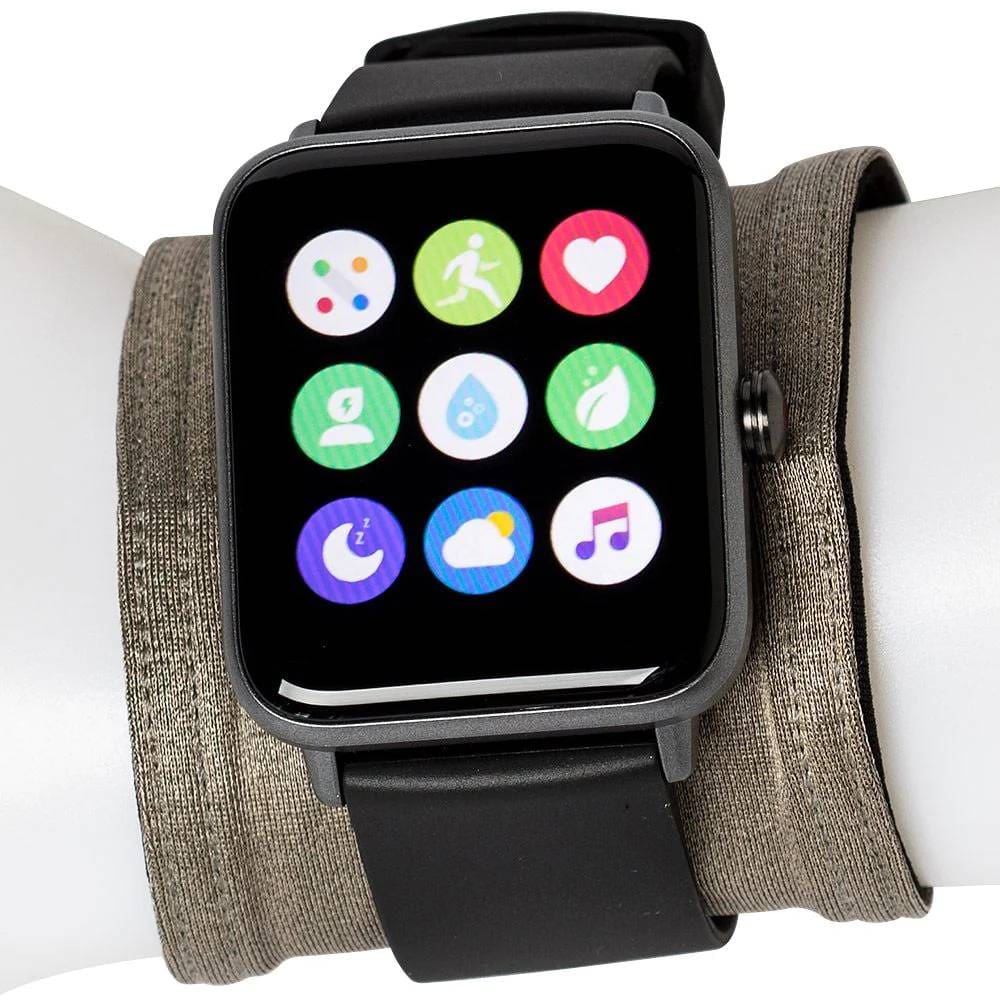
The SYB Wrist Band shields your body from smartwatch EMF emissions. Made from 90% silver fiber and 10% spandex, it’s designed to be worn directly under your watch.
Key features:
- Lab-tested to block up to 99% of EMF radiation up to 40 GHz
- Comfortable for daily wear
- Machine washable
- Available in two sizes
Important note: The SYB Wrist Band will block biometric sensors (heart rate, blood oxygen, skin temperature). You’ll need to decide whether EMF protection or these features matter more to you.
Other Low-EMF Wearable Options
If neither the Oura Ring nor Apple Watch fits your needs, consider these alternatives:
Non-Smart Fitness Trackers
Simple step counters and activity trackers that don’t maintain constant wireless connections. They sync periodically and store data locally, similar to the Oura Ring approach.
The Whoop 4.0
At 0.08 W/kg SAR, the Whoop offers a middle ground. It’s significantly lower than the Apple Watch but higher than the Oura Ring. It focuses on recovery and strain tracking for athletes.
Going Watch-Free
Your smartphone already tracks steps and basic activity. For sleep tracking, standalone devices placed near (not on) your body offer EMF-free monitoring.
Common Misconceptions
- The Oura Ring emits no EMF at all: While its SAR is extremely low (0.0003 W/kg), the Oura Ring does use Bluetooth for syncing. The key difference is that it can function fully in Airplane Mode, unlike the Apple Watch.
- Apple Watch radiation is dangerous at any distance: EMF exposure follows the inverse square law, meaning it drops dramatically with distance. The concern is specifically about prolonged skin contact on the wrist, not proximity in general.
- You have to choose between health tracking and low EMF: The Oura Ring demonstrates that comprehensive health tracking (sleep, HRV, temperature, activity) is possible with minimal EMF output. You do not have to sacrifice functionality for lower exposure.
Final Thoughts
In the evolving world of health technology, choosing between the Oura Ring and Apple Watch isn’t just about features. It’s about making a smart choice in a world where our health is invisibly impacted by the devices we wear.
The data is clear: If EMF exposure concerns you, the Oura Ring is the safer choice by a significant margin. Its local-first design philosophy means you get comprehensive health tracking without constant radiation against your skin.
The Apple Watch offers more features and integration. But that versatility comes with constant wireless emissions that you’ll absorb hour after hour, day after day.
The debate on Oura Ring vs Apple Watch highlights the importance of looking beyond marketing to understand what these devices actually do to our bodies. Your wearable should help your health, not potentially compromise it.
If you’re concerned about nighttime EMF exposure and considering removing all devices from your sleeping area, check out my complete EMF free bedroom guide for creating a truly restorative sleep environment.
This content is for informational purposes only and is not a substitute for professional medical advice.
Related Reading:
- Apple Watch and Cancer: What the Science Actually Says
- Are AirPods Bad For You? The Hidden Truth
- EMF Health Effects: What the Research Shows
Frequently Asked Questions
The Oura Ring emits nearly 4,000 times less radiation than the Apple Watch with a SAR of 0.0003 W/kg compared to the Apple Watch’s 1.15 W/kg.
The Oura Ring is significantly safer for EMF exposure, emitting up to 99.99% less radiation than the Apple Watch due to its lower SAR value.
Unlike the Apple Watch, which maintains constant Bluetooth/WiFi/cellular connections, the Oura Ring stores data locally and only syncs when you choose, offering more control over EMF exposure.
The Oura Ring offers superior sleep tracking, a discreet design, and impressive battery life, making it a safer option for those concerned about constant EMF exposure from wearables.
Yes, using the SYB Wrist Band can help reduce your Apple Watch’s EMF exposure while retaining its functionality.