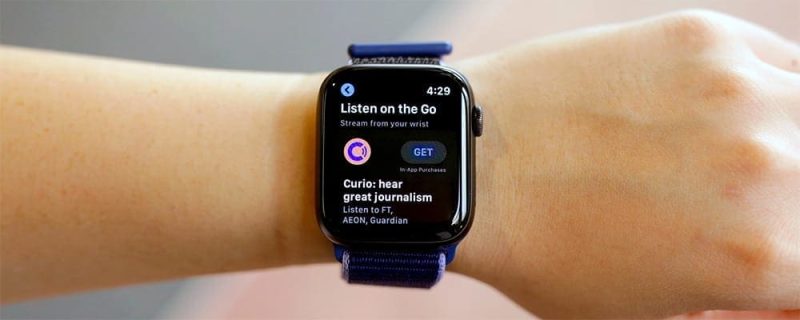

Yes, Apple Watch emits EMFEMF stands for electromagnetic field (also called electromagnetic frequency or electromagnetic force). EMFs are invisible fields of energy produced by electrically charged objects. They exist on a spectrum ranging from... radiation through Bluetooth, WiFi, and cellular signals that expose your wrist to constant emissions. Some watch bands also contain chemicals associated with health concerns.
This content is for informational purposes only and is not a substitute for professional medical advice.
The science suggests caution for prolonged skin contact. This guide covers what you need to make an informed decision.
Key Takeaways
- Apple Watch emits non-ionizing EMF radiation through Bluetooth, WiFi, and cellular connections
- The Apple Watch Series 9 GPS + Cellular has a SAR value of 1.15 W/kg, comparable to a smartphone
- 63% of peer-reviewed studies on EMF and cancer find evidence of biological effects
- Some watch bands contain PFAS chemicals that can be absorbed through skin contact
- Using Airplane Mode, taking regular breaks, or switching to lower-EMF alternatives like the Oura Ring can significantly reduce your exposure
Understanding the Apple Watch Cancer Question
When you search “Apple Watch and cancer,” you’ll find wildly different answers. Some sources dismiss any concern outright. Others sound alarm bells. The truth requires looking at the actual science.
The Apple Watch is essentially a miniature smartphone strapped to your wrist. It communicates constantly with your iPhone, fitness servers, and cellular networks. This communication happens through electromagnetic radiationElectromagnetic radiation (EMR) is energy that travels through space as waves of oscillating electric and magnetic fields. It includes everything from radio waves to visible light to gamma rays. All..., the same type emitted by cell phones, WiFi routers, and other wireless devices.
What makes the Apple Watch different from your phone? Two things: proximity and duration. Your watch sits directly against your skin, often for 16+ hours daily. There’s no distance, the most effective way to reduce EMF exposure.
The question isn’t whether Apple Watch emits radiation. It does. The question is whether that radiation, at those levels, for that duration, poses health risks.
EMF Radiation from Apple Watch: SAR Values and What They Mean
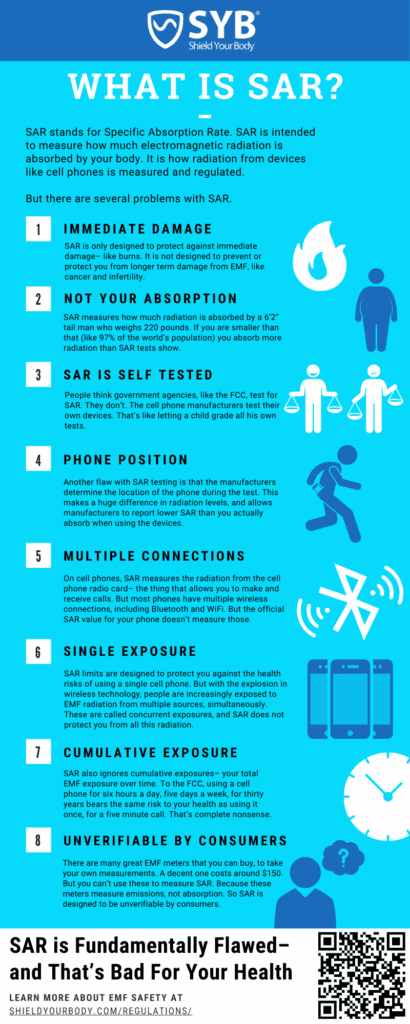
Every wireless device must undergo SAR (Specific Absorption Rate) testing before sale. SAR measures how much electromagnetic energy your body absorbs from a device, expressed in watts per kilogram (W/kg).

Understanding how your Apple Watch emits radiation is the first step toward reducing your exposure.
Apple Watch SAR Values by Model
| Model | SAR (Body) | SAR (Head) | Connectivity |
|---|---|---|---|
| Apple Watch Series 10 (GPS + Cellular) | 0.99 W/kg | 0.19 W/kg | BT, WiFi, LTE |
| Apple Watch Series 9 (GPS + Cellular) | 1.15 W/kg | 0.24 W/kg | BT, WiFi, LTE |
| Apple Watch Ultra 2 | 1.06 W/kg | 0.18 W/kg | BT, WiFi, LTE |
| Apple Watch SE (2nd Gen, Cellular) | 0.98 W/kg | 0.22 W/kg | BT, WiFi, LTE |
| Apple Watch Series 9 (GPS only) | 0.31 W/kg | N/A | BT, WiFi |
| Oura Ring Gen 3 | 0.0003 W/kg | N/A | BT only |
The U.S. FCC limit is 1.6 W/kg. All Apple Watch models fall below this threshold, which allows Apple to legally sell the devices. But here’s what the SAR number doesn’t tell you.
The Problems with SAR as a Safety Standard
SAR testing has fundamental limitations that undermine its usefulness as a real-world safety metric:
1. SAR only measures thermal effects. The test determines whether radiation heats your tissue. It ignores non-thermal biological effects, which are precisely what thousands of studies have documented at levels far below the thermal threshold.
2. SAR testing uses a standardized mannequin. The test dummy represents a 6’2″, 220-pound adult male. Children, smaller adults, and women aren’t represented. Their tissues may absorb radiation differently.
3. SAR doesn’t account for cumulative exposure. The test simulates brief use. It doesn’t model what happens when you wear a device against your skin for years.
4. SAR values are self-reported by manufacturers. There’s an inherent conflict of interest when companies test their own products.
5. SAR ignores multiple simultaneous exposures. You’re not just exposed to your Apple Watch. You have a phone in your pocket, WiFi throughout your home, and Bluetooth devices everywhere. SAR considers each device in isolation.
As I explain in my book Empowered, SAR is like rating a car’s safety by testing whether its airbags deploy, but never checking if the brakes work. It answers a narrow question while ignoring the broader picture.
What Does Research Actually Show About EMF and Cancer?
This is where things get uncomfortable for those who want simple answers.
The International Agency for Research on Cancer (IARC), part of the World Health Organization, classified radiofrequencyRadiofrequency (RF) refers to electromagnetic waves in the frequency range of approximately 3 kHz to 300 GHz. This portion of the electromagnetic spectrum is used for wireless communication. RF energy... electromagnetic fields as “possibly carcinogenic to humans” (Group 2B) in 2011. This puts EMF in the same category as lead and DDT.
But classification doesn’t tell the whole story. Let’s look at what peer-reviewed research actually demonstrates.
The Body of Evidence
The BioInitiative Report compiled research from over 3,500 peer-reviewed studies on EMF health effects. Here’s what the data shows:
On cancer and tumors specifically:
- 293 studies examined EMF and cancer
- 63.5% found evidence of biological effects
- Effects include increased tumor rates, DNA damage, and disrupted cellular repair mechanisms
Key studies worth noting:
A 1997 study published in Radiation Research exposed cancer-prone mice to 900 MHz radiation (similar to cellular signals) for 30 minutes twice daily. The exposed mice developed lymphoma at 2.4 times the rate of unexposed mice.
Research by Lai and Singh found that just two hours of exposure to 2450 MHz radiation (similar to WiFi frequencies) caused DNA single-strand and double-strand breaks in rat brain cells. This damage appeared at SAR levels of 1.2 W/kg, below the current safety limit.
A 2009 study in Fertility and Sterility exposed human sperm to 1.8 GHz radiation (cell phone frequency) and found decreased motility, viability, and increased DNA damage at higher exposure levels.
What This Means for Apple Watch Users
Your Apple Watch operates at lower power than a cell phone. The GPS-only models emit significantly less than cellular models. But the device sits against your skin continuously, unlike a phone that goes in your pocket between calls.
The research doesn’t prove your Apple Watch will cause cancer. Science rarely provides that level of certainty for complex, long-term exposures. What the research does show is that EMF exposure at levels similar to what devices emit can cause measurable biological effects, and some of those effects are associated with cancer development.
The Hidden Risk: Chemical Exposure from Watch Bands
EMF isn’t the only concern. Recent research has identified another potential hazard: the chemicals in watch bands.
PFAS in Watch Bands
A 2023 study by researchers at Notre Dame tested 22 smartwatch and fitness tracker bands for PFAS (per- and polyfluoroalkyl substances), sometimes called “forever chemicals.” The results:
- High levels of PFAS were detected in most bands tested
- Fluorine concentrations ranged from 120 to over 19,000 ppm
- PFAS can leach from bands and be absorbed through skin
PFAS have been linked to cancer, thyroid disease, immune system dysfunction, and reproductive issues. Unlike EMF exposure that stops when you remove the device, PFAS accumulate in your body over time.
Material Concerns
Beyond PFAS, watch bands can contain:
- Nickel: A common allergen that causes contact dermatitis in 10-20% of people
- Plasticizers: Used to make bands flexible, some are endocrine disruptors
- Adhesives: Used in band construction, may contain formaldehyde
Apple’s own bands have generally performed better than third-party options in independent testing, but the company doesn’t disclose the full chemical composition of its products.
Expert Medical Opinions on Wearable Device Safety
The medical and scientific community is divided on this issue, though that division often falls along predictable lines.
Organizations funded by industry tend to emphasize that devices meet regulatory standards and that no “conclusive proof” of harm exists.
Independent researchers are often more cautious. Dr. Henry Lai, whose research on EMF and DNA damage has been cited over 500 times, has stated that the current safety standards are inadequate for protecting against non-thermal effects.
The BioInitiative Working Group, comprised of independent scientists and researchers from multiple countries, concluded that current safety limits “are inadequate to protect public health” and called for biologically-based exposure standards.
In 2015, New York Times technology columnist Nick Bilton wrote about the Apple Watch: “I’ll still buy the Apple Watch, but I won’t let it go anywhere near my head. And I definitely won’t let any children I know play with it for extended periods of time.”
His comparison was telling. He drew parallels to the tobacco industry, noting that doctors once appeared in cigarette advertisements. We now know better. The question is whether we’re in a similar period of uncertainty with wireless technology.
Apple Watch EMF Comparison: How It Stacks Up
Not all wearables are created equal when it comes to EMF exposure.
Wearable EMF Comparison
| Device | SAR (Body) | Wireless Tech | Continuous EMF? |
|---|---|---|---|
| Apple Watch Ultra 2 (Cellular) | 1.06 W/kg | BT + WiFi + LTE | Yes |
| Apple Watch Series 9 (Cellular) | 1.15 W/kg | BT + WiFi + LTE | Yes |
| Apple Watch Series 9 (GPS) | 0.31 W/kg | BT + WiFi | Yes |
| Samsung Galaxy Watch 6 | 0.58 W/kg | BT + WiFi + LTE | Yes |
| Fitbit Charge 6 | 0.13 W/kg | BT + WiFi | Yes |
| Oura Ring Gen 3 | 0.0003 W/kg | BT only | No (stores locally) |
| Whoop 4.0 | 0.08 W/kg | BT | Yes |
The Oura Ring stands out with a SAR value nearly 4,000 times lower than cellular Apple Watch models. This is because the Oura Ring stores data locally and only syncs via Bluetooth when you initiate it. It doesn’t maintain constant wireless connections.
I discuss the Oura Ring in detail in my book Empowered as an example of how product design can dramatically reduce EMF exposure without sacrificing functionality.
Practical EMF Reduction Strategies for Apple Watch Users
You don’t have to abandon your Apple Watch to reduce your risk. Here are evidence-based strategies that can significantly lower your exposure.

1. Use Airplane Mode When Possible
Airplane Mode disables all wireless transmissions, reducing EMF emissions to near zero. Your watch will continue to:
- Track steps and movement
- Monitor heart rate (sensors are passive)
- Record workout data
- Display the time
You can sync your data later by briefly disabling Airplane Mode.
How to enable: On your Apple Watch, swipe up to access Control Center, then tap the airplane icon.
2. Remove Your Watch at Night
Sleep tracking is a popular Apple Watch feature, but it means additional hours of exposure during your body’s repair and recovery period. Consider:
- Using your watch’s Bedtime feature to remind you to remove it
- Placing the watch on a nightstand at least 3 feet from your head
- If you want sleep tracking, the Oura Ring offers this with minimal EMF
3. Take Regular Breaks
Give your wrist periodic breaks from the watch:
- Remove it during focused work sessions
- Take it off when you’re at home and don’t need notifications
- Consider wearing it only when actively using fitness features
4. Choose GPS-Only Models
If you’re purchasing a new Apple Watch, the GPS-only models emit significantly less radiation than cellular versions. You’ll still have full functionality when your iPhone is nearby.
5. Be Selective About Notifications
Every notification that lights up your watch involves wireless transmission. Reduce unnecessary notifications to minimize active EMF emissions.
6. Consider Your Watch Band Material
Choose bands made from natural materials or those certified free of PFAS and harmful chemicals. Apple’s Solo Loop and Braided Solo Loop bands are made from silicone and recycled yarn respectively, which may have lower chemical concerns than some third-party options.
EMF Shielding Solutions for Apple Watch
For those who want to continue using their Apple Watch while reducing skin exposure, EMF shielding products offer a practical solution.
The SYB Wrist Band
The SYB Wrist Band is designed specifically for smartwatch users. Made from 90% silver fiber and 10% spandex, it creates a barrier between your skin and the watch’s EMF emissions.
Key features:
- Lab-tested to block up to 99% of EMF radiation up to 40 GHz
- Worn directly under your smartwatch
- Machine washable
- Available in two sizes (Regular: 6.7″ and Small: 6.3″ circumference)
Important limitation: The SYB Wrist Band blocks radiation from reaching your skin, but it also prevents biometric sensors from functioning. Heart rate monitoring, blood oxygen detection, and skin temperature sensing will not work while wearing the band. You’ll need to choose between protection and these features based on your priorities.
This is a tradeoff, but for users concerned about daily EMF exposure, it allows continued use of other Apple Watch features (notifications, apps, fitness tracking via motion sensors) while significantly reducing radiation absorption.
Safer Usage Guidelines: Balancing Benefits and Exposure
The goal isn’t to fear your technology. It’s to use it intelligently. Here’s a framework for Apple Watch use that balances benefits with reasonable precautions.
For General Users
- Wear your watch when you need its features; remove it when you don’t
- Enable Airplane Mode during focused work and sleep
- Choose GPS-only models unless you specifically need cellular
- Remove the watch for at least 4-6 hours daily
For Vulnerable Populations
Children: I recommend against smartwatches for children. Their developing bodies are more susceptible to environmental exposures, and children tend to wear devices constantly without breaks. The long-term implications of childhood EMF exposure are not well understood.
Pregnant women: Research shows higher miscarriage rates in women with greater EMF exposure. If you’re pregnant or trying to conceive, consider minimizing smartwatch use or using the SYB Wrist Band for protection.
People with autoimmune conditions: EMF exposure has been associated with immune system disruption. If you have autoimmune issues, discuss wearable use with your healthcare provider.
Those with electromagnetic hypersensitivity: Some individuals report symptoms from EMF exposure. If you experience headaches, fatigue, or skin sensations when wearing your Apple Watch, these may be worth taking seriously.
The Bottom Line
Your Apple Watch provides genuine value. Fitness tracking, health monitoring, and connectivity can improve your quality of life. The question is whether that value justifies continuous EMF exposure against your skin.
For most users, implementing the precautionary measures outlined above provides a reasonable balance. You can enjoy your device’s benefits while significantly reducing your exposure profile.
The Future of Wearable Safety
The wearable technology industry is evolving. Some trends offer hope for safer devices.
Lower-power communication protocols are being developed that reduce EMF while maintaining functionality. The Oura Ring’s approach of local storage with periodic syncing shows this is possible today.
Better materials are entering the market as consumers demand transparency about chemicals in products worn against skin.
Increased awareness is driving some manufacturers to prioritize safety alongside features.
Until these improvements become standard, the responsibility falls on you to make informed choices about your exposure.
Common Misconceptions
Misconception: Apple Watch is safer because it meets FCC SAR limits
Reality: SAR testing only measures thermal (heating) effects using a mannequin modeled on a large adult male. It does not account for non-thermal biological effects, cumulative exposure from wearing the device 16+ hours daily, or the sensitivity of children and smaller adults.
Misconception: GPS-only Apple Watch models emit no radiation
Reality: GPS-only models still emit EMF through Bluetooth and WiFi connections. Their SAR values are lower than cellular models (0.31 vs 1.15 W/kg for Series 9), but they are not radiation-free.
Misconception: The amount of radiation from a smartwatch is too small to matter
Reality: While individual exposure from an Apple Watch is lower than a phone call, the watch sits directly against your skin for extended periods. Research by Lai and Singh found DNA damage at SAR levels of 1.2 W/kg, which is close to the SAR of cellular Apple Watch models.
Final Thoughts
The Apple Watch is remarkable technology. It can track your fitness, monitor your heart rhythm, detect falls, and keep you connected. These are real benefits.
But remarkable technology deserves informed users. The fact that a device meets regulatory standards doesn’t mean it’s without risk. Regulations often lag behind scientific understanding, and the standards governing EMF exposure haven’t been meaningfully updated in decades.
What we know: Your Apple Watch emits electromagnetic radiation. Research shows EMF exposure can cause biological effects. The long-term implications of constant, skin-contact exposure are still being studied.
What you can do: Use Airplane Mode strategically. Remove your watch regularly. Choose lower-EMF models and alternatives when possible. Consider shielding if you want to keep using the device with reduced exposure.
The choice is yours. Now you have the information to make it wisely.
Related Reading:
- Oura Ring vs Apple Watch: Which is Safer?
- SAR Values Explained: Understanding Cell Phone Radiation Ratings
- EMF Radiation: What It Is & Potential Health Effects
Frequently Asked Questions
Yes, the Apple Watch emits non-ionizing EMF radiation through Bluetooth, WiFi, and cellular connections, exposing your wrist to constant emissions.
The Apple Watch Series 9 GPS + Cellular has a SAR value of 1.15 W/kg, comparable to a smartphone.
Some watch bands contain PFAS chemicals associated with health concerns, which can potentially be absorbed through skin contact.
63% of peer-reviewed studies on EMF and cancer find evidence of biological effects, suggesting caution for prolonged skin contact.
Using Airplane Mode, taking regular breaks, or switching to lower-EMF alternatives like the Oura Ring can significantly reduce your exposure.