

Current regulatory EMFEMF stands for electromagnetic field (also called electromagnetic frequency or electromagnetic force). EMFs are invisible fields of energy produced by electrically charged objects. They exist on a spectrum ranging from... limits in most countries are based solely on preventing tissue heating and have not been updated to reflect decades of research showing biological effects at much lower levels.
While the FCC allows exposures up to 1,000 μW/cm² for radiofrequency radiationRadiofrequency radiation (RFR) is electromagnetic energy in the frequency range of 3 kHz to 300 GHz. This type of non-ionizing radiation is emitted by wireless devices and communication infrastructure. Cell..., independent scientific bodies recommend limits 100 to 10,000 times lower based on documented non-thermal effects.
Medical Disclaimer: This article is for informational purposes only. It is not, nor is it intended to be, a substitute for professional medical advice, diagnosis, or treatment and should never be relied upon for specific medical advice. (For a comprehensive overview, see our guide to electromagnetic hypersensitivity.)
Key Takeaways
- Regulatory limits focus only on heating: The FCC standard of 1,000 μW/cm² prevents tissue heating but ignores non-thermal biological effects documented in thousands of studies
- Research-based recommendations are far stricter: The BioInitiative Report Report recommends 0.1 μW/cm² for RF radiation—10,000 times lower than FCC limits
- For ELF magnetic fields: Regulatory limits allow 833 mG (milligauss), while research links effects to levels as low as 2-4 mG
- The Building Biology standard provides practical guidelines: Below 0.1 μW/cm² for RF is considered “no concern,” while above 10 μW/cm² is “extreme concern”
- Distance dramatically reduces exposure: Moving away from sources is often the most effective way to achieve safer levels
The Gap Between Regulations and Research
When people ask “what EMF level is safe?”, they usually expect a simple answer based on government standards. The reality is more complex: a significant gap exists between what regulations permit and what scientific research suggests may affect human biology.

For a comprehensive understanding of how EMF affects health, see our guide to electromagnetic hypersensitivity.
Why Current Standards May Not Protect You
Current EMF safety standards in most countries share three fundamental limitations:
-
They only prevent heating: Standards assume EMF cannot cause harm unless it heats tissue. This “thermal-only”. approach ignores thousands of studies documenting biological effects at non-thermal levels.
-
They are decades outdated: The FCC last updated its EMF standards in 1996. before WiFi was widespread, before smartphones existed, and before most of the research on non-thermal effects was published.
-
They do not account for cumulative exposure: Standards are based on short-term, single-source exposure, not the 24/7 multi-source exposure that characterizes modern life.
| Limitation | Implication |
|---|---|
| Thermal-only basis | Ignores documented non-thermal biological effects |
| Last updated 1996 | Does not reflect 25+ years of research |
| Single-source testing | Does not reflect real-world multi-device exposure |
| Acute exposure focus | Does not account for cumulative effects |
Understanding EMF Measurements
Before comparing safety standards, it helps to understand how EMF is measured.

Radiofrequency (RF) Radiation
RF radiation from wireless devices is typically measured in:
| Unit | What It Measures | Used For |
|---|---|---|
| μW/cm² (microwatts per square centimeter) | Power densityPower density measures how much electromagnetic energy passes through a given area, expressed in watts per square meter (W/m²) or milliwatts per square centimeter (mW/cm²). This unit is primarily used... | Most common for safety standards |
| V/m (volts per meterVolts per meter (V/m) is the standard unit for measuring electric field strength. It quantifies how much electrical potential exists across a given distance. Electric fields measured in V/m are...) | Electric field strengthField strength measures the intensity of an electromagnetic field at a specific point. Electric field strength is measured in volts per meter (V/m), while magnetic field strength uses amperes per... | Used by some meters and standards |
| mW/m² (milliwatts per square meter) | Power density | Alternative unit (10 μW/cm² = 100 mW/m²) |
Conversion: 1 μW/cm² = 10 mW/m² = approximately 0.6 V/m
Extremely Low Frequency (ELF) Fields
ELF fields from electrical wiring and appliances are measured separately:
| Unit | What It Measures | Used For |
|---|---|---|
| mG (milligauss) | Magnetic field strength | US standard unit |
| μT (microtesla) | Magnetic field strength | International unit (1 μT = 10 mG) |
| V/m | Electric field strength | Measured separately from magnetic |
Comparing Safety Standards: RF Radiation
The table below compares regulatory limits with research-based recommendations for radiofrequencyRadiofrequency (RF) refers to electromagnetic waves in the frequency range of approximately 3 kHz to 300 GHz. This portion of the electromagnetic spectrum is used for wireless communication. RF energy... radiation:
| Standard/Guideline | RF Limit (μW/cm²) | Basis |
|---|---|---|
| FCC (USA) | 1,000 | Thermal effects only |
| ICNIRP (International) | 1,000 | Thermal effects only |
| Russia | 10 | Includes some non-thermal research |
| Switzerland (sensitive areas) | 0.95 | Precautionary approach |
| BioInitiative Report | 0.1 | Non-thermal biological effects |
| Building Biology (no concern) | <0.1 | Practical precautionary threshold |
The gap is striking: The BioInitiative recommendation is 10,000 times stricter than FCC limits.
What Do These Numbers Mean in Practice?
| EMF Level (μW/cm²) | Typical Source at This Level |
|---|---|
| 0.001 – 0.01 | Background RF in rural areas |
| 0.1 – 1 | 10+ feet from WiFi router |
| 1 – 10 | 3-6 feet from WiFi router |
| 10 – 100 | Close to WiFi router, near smart meter |
| 100 – 1,000 | Within 1 foot of active cell phone |
| 1,000+ | Directly against transmitting phone |
Comparing Safety Standards: ELF Magnetic Fields
For extremely low frequencyExtremely low frequency (ELF) refers to electromagnetic fields with frequencies between 3 Hz and 300 Hz. This range includes the 50/60 Hz fields produced by electrical power systems. ELF fields... magnetic fields (from power lines, wiring, appliances):

| Standard/Guideline | Magnetic Field Limit | Notes |
|---|---|---|
| ICNIRP | 833 mG (83.3 μT) | Based on acute effects only |
| Epidemiological concern | 2-4 mG | Childhood leukemia association begins |
| Building Biology (no concern) | <0.2 mG | During sleep |
| Building Biology (slight concern) | 0.2 –. 1 mG | During sleep |
| Building Biology (severe concern) | 1 –. 5 mG | During sleep |
| Building Biology (extreme concern) | >5 mG | During sleep |
The 2-4 mG Threshold
Multiple epidemiological studies have found increased childhood leukemia risk at magnetic field exposures above 2-4 mG. This is why:
- Some countries recommend keeping bedroom exposure below 2 mG
- Building Biology standards flag anything above 1 mG during sleep as concerning
- Yet regulatory limits remain at 833 mG—over 200 times higher
The Building Biology Standard: A Practical Framework
The Building Biology guidelines, developed by the Institut für Baubiologie in Germany, provide a practical framework for evaluating residential EMF levels:

RF Radiation (Sleeping Areas)
| Level (μW/cm²) | Assessment |
|---|---|
| < 0.1 | No concern |
| 0.1 – 10 | Slight concern |
| 10 – 1,000 | Severe concern |
| > 1,000 | Extreme concern |
ELF Magnetic Fields (Sleeping Areas)
| Level (mG) | Assessment |
|---|---|
| < 0.2 | No concern |
| 0.2 – 1 | Slight concern |
| 1 – 5 | Severe concern |
| > 5 | Extreme concern |
ELF Electric Fields (Sleeping Areas)
| Level (V/m) | Assessment |
|---|---|
| < 1 | No concern |
| 1 – 5 | Slight concern |
| 5 – 50 | Severe concern |
| > 50 | Extreme concern |
Why sleeping areas matter most: You spend 6-8 hours in your bedroom, and sleep is when your body repairs itself. Reducing nighttime exposure allows maximum recovery time.
Why the BioInitiative Report Recommends Stricter Limits
The BioInitiative Report, compiled by an international working group of scientists and public health experts, reviewed over 3,800 studies and concluded that current safety standards do not adequately protect public health.
Their recommendation of 0.1 μW/cm² for RF radiation is based on:
| Research Finding | Implication |
|---|---|
| DNA damage at non-thermal levels | Cancer risk at exposures below heating threshold |
| Blood-brain barrier effects | Neurological vulnerability at low exposures |
| Melatonin disruption | Sleep and immune effects |
| Reproductive harm | Effects on sperm and fetal development |
| Neurological effects | Cognitive and behavioral impacts |
The report concludes that safety standards should be based on biological effects, not just thermal effects, and recommends limits that would require significant changes to current technology deployment.
How to Measure Your EMF Exposure
Understanding what levels you’re actually exposed to requires measurement.

Types of EMF Meters
| Meter Type | Measures | Price Range | Best For |
|---|---|---|---|
| RF meter | Wireless radiation (WiFi, cell, etc.) | $150-400 | Most people’s primary concern |
| Gaussmeter | ELF magnetic fields | $100-300 | Near electrical sources |
| Electric field meter | ELF electric fields | $150-400 | Bedroom assessment |
| Combination meter | Multiple EMF types | $300-600 | Comprehensive assessment |
For meter options, see our EMF meter collection.
How to Measure
For RF radiation:
1. Turn the meter on and allow it to stabilize
2. Hold it at body height in the area you want to assess
3. Move slowly around the space, noting peak and average readings
4. Identify individual sources by moving toward and away from suspected devices
5. Note readings at your typical distance from sources (desk, bed, etc.)
For magnetic fields:
1. Measure in areas where you spend significant time
2. Check near electrical panels, wiring, and appliances
3. Note that fields can vary with electrical load (daytime vs. nighttime)
4. Pay special attention to sleeping areas
Interpreting Your Readings
Once you have measurements, compare them to the Building Biology guidelines:
RF Example:
- Reading: 5 μW/cm² in bedroom
- Assessment: “Severe concern” by Building Biology standards
- Action: Identify source (likely WiFi router or smart meter) and increase distance or shield
Magnetic Field Example:
- Reading: 3 mG at bed
- Assessment: “Severe concern” and above epidemiological threshold
- Action: Check for wiring errors, move bed, or identify appliance source
Practical Safer EMF Level Targets
Based on the research and Building Biology guidelines, here are practical targets for different areas of your home:
Bedroom (Highest Priority)
| EMF Type | Target Level | Why |
|---|---|---|
| RF | <. 0.1 μW/cm² | 6-8 hours continuous exposure during repair |
| Magnetic | <. 0.2 mG | Below epidemiological concern threshold |
| Electric | <. 1 V/m | Minimizes nervous system stimulation |
Living/Working Areas
| EMF Type | Target Level | Notes |
|---|---|---|
| RF | <. 1 μW/cm² | Balance practicality with protection |
| Magnetic | <. 1 mG | Keep below “severe concern” |
| Electric | <. 5 V/m | Practical for wired environments |
Achieving These Levels
For RF radiation:
- Turn off WiFi at night (achieves near-zero in bedroom)
- Move router away from living areas
- Use wired connections where practical
- Distance from smart meters
For magnetic fields:
- Fix wiring errors (common cause of elevated fields)
- Distance from electrical panels
- Identify and relocate appliances with motors
- Check for ground current issues
For a practical guide to dealing with magnetic field sources in your home, see our post on breaker panels and other point sources of magnetic fields.
For electric fields:
- Use shielded cables for electronics near bed
- Unplug devices at night or use power strips
- Consider demand switches for bedroom circuits
For comprehensive strategies, see our EMF Protection Guide.
Special Considerations
Children
Many experts recommend stricter limits for children due to:
- Developing nervous systems
- Thinner skulls (less RF attenuation)
- Longer lifetime exposure
- Higher cellular division rates
Practical recommendation: Aim for Building Biology “no concern”. levels in children’s bedrooms and play areas.
People with EMF Sensitivity
Those experiencing EMF sensitivity symptoms often need even lower exposure levels to feel well. The threshold varies by individual, but many find relief at levels well below Building Biology guidelines.
Pregnant Women
Given research on developmental effects, stricter limits during pregnancy are prudent:
- Minimize cell phone use against body
- Reduce overall RF exposure
- Keep sleeping environment as low as possible
The Distance Factor
Because EMF exposure drops dramatically with distance (following the inverse-square law for RF), distance is often the most practical way to achieve lower exposure levels.
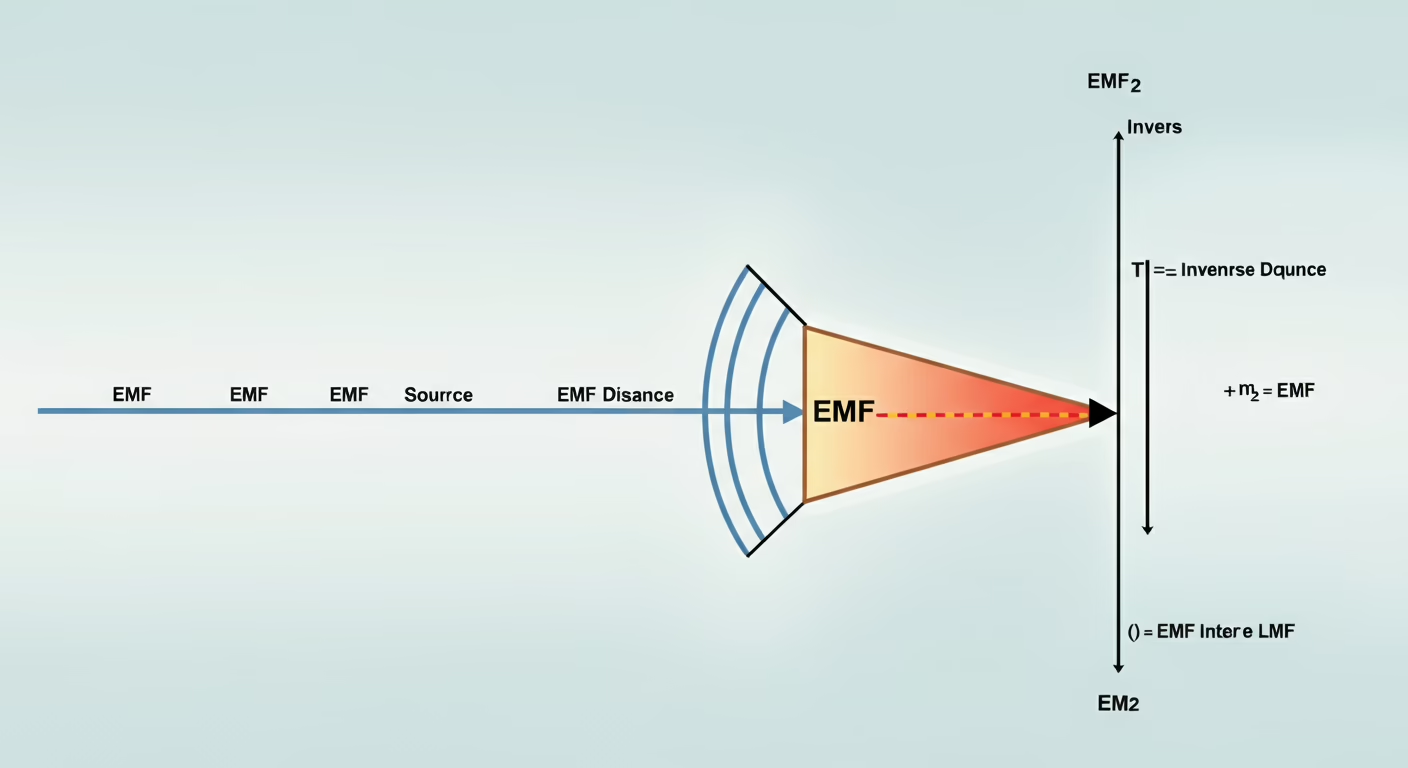
| Distance from WiFi Router | Typical RF Level |
|---|---|
| 1 foot | 10-100+ μW/cm² |
| 3 feet | 1-10 μW/cm² |
| 6 feet | 0.5-2 μW/cm² |
| 10+ feet | <. 0.5 μW/cm² |
| Another room (walls) | Often <. 0.1 μW/cm² |
Takeaway: Simply moving your WiFi router from your bedroom to another part of your home can reduce bedroom exposure by 100x or more.
Common Misconceptions
Misconception: If I am below government limits, I am safe.
Reality: Government limits only prevent heating. Thousands of studies document biological effects at levels far below these limits. Being under the legal limit does not mean no biological effect is occurring.
Misconception: There is a single “safe”. EMF level that applies to everyone.
Reality: Sensitivity varies between individuals. What causes no noticeable effect in one person may cause significant symptoms in another. Research-based recommendations represent levels at which biological effects have been documented in populations, but individual thresholds vary.
Misconception: Natural EMF (from the Earth) proves artificial EMF is safe.
Reality: While humans evolved with natural electromagnetic fields, artificial EMF differs significantly in frequency, intensity, and pulsation patterns. The body’s response to natural DC fields from the Earth is not comparable to its response to pulsed RF from a cell phone. In contrast to uncontrolled EMF exposure, some therapeutic applications like TENS therapy use carefully controlled electrical stimulation for health benefits, further illustrating that the type, intensity, and context of electromagnetic exposure all matter.
Misconception: Low SAR phones are safe.
Reality: SAR (Specific Absorption Rate) measures heating only and is tested under artificial conditions (head phantom, specific distance). Real-world exposure varies, and SAR does not account for non-thermal effects.
The Gap Between Standards and Science
The disconnect between regulatory limits and research findings is staggering. The FCC’s SAR limit of 1.6 W/kg was established in 1996 and is based entirely on thermal effects. the point at which RF radiation heats tissue. But the science has moved far beyond heating.
The lowest documented biological effect in peer-reviewed research occurs at a SAR of just 0.00012 W/kg (Nittby 2008), where researchers observed increased blood-brain barrier permeability. That is 13,333 times below the FCC limit. In other words, the regulatory standard allows exposure levels more than four orders of magnitude above where science has documented harm.
The BioInitiative Working Group. an independent body of researchers who reviewed over 3,800 studies. recommends dramatically lower limits based on the full body of evidence:
- Magnetic fields (ELF): 1 milligauss (mG) — compared to no residential limit in the US
- Radiofrequency radiation: less than 10,000 microwatts per square meter (µW/m²) — compared to FCC limits that allow millions of µW/m²
These recommendations reflect what the research actually shows, rather than what was convenient to regulate three decades ago. Until standards catch up with the science, the responsibility for managing your EMF exposure falls on you.
Frequently Asked Questions
The FCC allows exposures up to 1,000 μW/cm² for radiofrequency radiation, focusing solely on preventing tissue heating.
Independent scientific bodies recommend limits 100 to 10,000 times lower than FCC standards based on documented non-thermal biological effects at much lower levels.
The BioInitiative Report recommends exposure limits of 0.1 μW/cm² for RF radiation, which is 10,000 times lower than FCC standards.
Regulatory limits allow 833 mG (milligauss) for ELF magnetic fields, while research links biological effects to levels as low as 2-4 mG.
The Building Biology standard considers RF radiation below 0.1 μW/cm² as 'no concern,' and above 10 μW/cm² as 'extreme concern.'