A COMPARATIVE STUDY OF SHORT WAVE AND MICROWAVE DIATHERMY ON BLOOD FLOW: The Role of the Somatic and Sympathetic Nerves in the Vascular Response to Deep Tissue Heating
Lawrence L. Siems, A. J. Kosman, Stafford L. Osborne · 1948

Of 1,950 studies examining brain & nervous system, 83% found measurable biological effects from EMF exposure.
Research found effects on brain & nervous system at exposures as low as:
When you review the peer-reviewed literature on electromagnetic field exposure and brain function, the numbers tell a compelling story: 84% of the 2,753 studies examining this relationship have documented measurable effects. This isn't a fringe concern or preliminary finding. This is the dominant scientific picture, and it deserves your attention. The documented effects span multiple systems within your nervous system.
Of 2,753 studies examining EMF effects on the brain and nervous system, approximately 84 percent found measurable biological effects.
The scientific evidence demonstrates that radiofrequency electromagnetic fields from mobile phones and wireless devices produce measurable effects on nervous system function and cellular processes in the brain.
Source: BioInitiative Working Group. BioInitiative Report: A Rationale for Biologically-based Public Exposure Standards for Electromagnetic Radiation. Edited by Cindy Sage and David O. Carpenter, BioInitiative, 2012, updated 2020. www.bioinitiative.org
| EMF Type | Studies | Showing Effects | Percentage |
|---|---|---|---|
| ELF | 229 | 208 | 91.00% |
| RF | 305 | 222 | 72.00% |
Source: Dr. Henry Lai research database
Showing 2,030 studies
Lawrence L. Siems, A. J. Kosman, Stafford L. Osborne · 1948
JASPER, HH · 1948
W. W. Salisbury, John W. Clark, H. M. Hines · 1948
JAMES D. HARDY, HAROLD G. WOLFF, HELEN GOODELL · 1947
N.P. Kokhanovich · 1941
F. W. HARTMAN · 1937
BYNUM, James Arthur · 1936
Twenty-four male university students underwent a test with a 1000 MHz centimeter wave UHF field at 10 mW/cm2. The experiment used an interpolated learning paradigm with word association groups. After four days of practice memorizing nonsense syllables, subjects were divided and each received four experimental trials. One hour after original learning was complete, the total number of correctly recalled responses was measured. The study reported no significant differences between irradiated and non-irradiated groups.
Paul J. Reiter · 1936
DEAN CLARK, JOSEPH HUGHES, HERBERT N. GASSER · 1935
The researchers compared electrical stimulation of the saphenous nerve at strengths that activated only A and B fibers with stimulation that also activated C fibers. After blocking A and B fibers by compression or asphyxia, stimulating the remaining C fibers alone still produced reflexes.
HAROLD NEIFELD, M.D. · 1935
Bordier H. · 1935
Alfred Strassburger, Erwin Schliephake · 1934
Weissenberg, E. · 1934
Semadeni B · 1934
Cepero-Garcia, G., Comas-Cespedes · 1933
E. D. Adrian · 1931
P. Grützner, R. Heidenhain · 1878
Frank A. Brown, Jr.
Finch ED, McLees BD
Unknown authors
Unknown authors
Eight male hooded rats performed a vigilance task pressing two levers for tones and food pellets during 40-minute sessions in Styrofoam boxes located in the far zone region of a horn in an anechoic chamber. After stable responding, they were exposed to 1.28 GHz microwaves pulsed at 380 pps with 2 µsec pulses at power densities from 0 to 15 mW/cm². At 15 mW/cm² all eight rats showed decreased observing lever response rates, with some ceasing responding, but most adapted by the third exposure. Seven rats decreased response rates at 10 mW/cm² and three showed disruption at 5.5 mW/cm², while other behavioral indices were less sensitive.
Unknown authors
Control samples were processed identically without microwave power applied. The authors concluded that low power density pulsed microwave energy does not significantly alter calcium efflux.
Unknown authors
Researchers measured local cerebral blood flow in multiple brain regions of conscious rats using a radioactive iodoantipyrine technique. Rats were exposed for 30 minutes to pulsed microwaves at 1 mW/cm² or 15 mW/cm² average power density, or sham exposure. Both exposure levels increased blood flow by 10 to 144 percent in 16 of 20 regions, with the largest significant increases in the pineal, hypothalamus, and temporal cortex at 1 mW/cm² and in the pineal, temporal cortex, inferior colliculus, and medial geniculate at 15 mW/cm².
Unknown authors
The liposomes undergo thermally induced phase transitions between 30 °C and 40 °C. Samples were exposed to continuous-wave 2.4 GHz microwave radiation at power levels up to 25 mW/cm² while held at 36 °C. An increase in bilayer fluidity appeared above a threshold of 10–15 mW/cm², and at ~20 mW/cm² the fluidity change matched a ~3 °C temperature shift while bulk temperature rose only ~1 °C. The authors concluded a steady-state temperature difference exists between the bilayer interior and the surrounding aqueous medium under these exposure conditions.
Unknown authors
The paper reviews research on the ability of humans to perceive the natural electromagnetic fields of the earth and includes new data from interviews with sensitive persons. The review also references studies showing that animals and plants can orient to the earth's electromagnetic field. Sun Bear, an American Indian medicine man, reports seeing earth energy fields, and Dr. Valerie Hunt's studies indicate some people may see invisible fields as accurately as instrumentation. Dr. William Tiller proposes a model where the human nervous system acts as an antenna to detect exterior field changes.
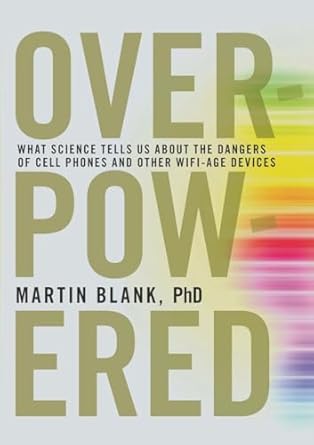
For a comprehensive exploration of EMF health effects including brain & nervous system, along with practical protection strategies, explore these books by R Blank and Dr. Martin Blank.