Change in CNS cholinesterase activity in animals with various functional profiles after exposure to low intensity decimeter waves
S. V. Nikogosyan, I. A. Kitsovskaya · 1968

Of 1,603 studies examining cellular effects, 85% found measurable biological effects from EMF exposure.
Research found effects on cellular effects at exposures as low as:
The science demonstrates a striking consistency: of 2,018 peer-reviewed studies examining how electromagnetic fields interact with human cells, 1,736-or 86 percent-documented measurable biological effects. This isn't a fringe finding or a handful of outlier studies. This is the weight of accumulated evidence across multiple independent research groups, institutions, and countries.
When 86 percent of independent research shows biological effects but safety guidelines remain essentially unchanged, there's a credibility gap worth noticing.
Research shows that 66% of studies published after 2007 report measurable effects on protein and gene expression at intensity levels commonly used by wireless devices, indicating a clear biological response to EMF exposure at current regulatory limits.
Source: BioInitiative Working Group. BioInitiative Report: A Rationale for Biologically-based Public Exposure Standards for Electromagnetic Radiation. Edited by Cindy Sage and David O. Carpenter, BioInitiative, 2012, updated 2020. www.bioinitiative.org
Showing 1,633 studies
S. V. Nikogosyan, I. A. Kitsovskaya · 1968
R. C. Sharma · 1967
Wojciech Sawicki, Kazimierz Osthowski · 1967
STANISLAW BARANSKI, ZBIGNIEW EDELWEJN · 1967
Eustace F. G. Douglas et al. · 1967
Researchers implanted chronic bipolar electrodes in the centre median and ventralis anterior thalamic nuclei of squirrel and stump-tail Macaque monkeys. They applied rectangular current pulses of 70 Hz and 3 ms duration between the inion and nasion to induce electroanesthesia. As current intensity increased, the amplitude of depth evoked potentials decreased gradually and disappeared at anesthesia levels sufficient for surgery. Peripheral sensory responses were similarly depressed, and cross-thalamic responses vanished when surface responses disappeared.
Itsuo Yamaura, Shiko Chichibui · 1967
W. Stodolnik-Baranska · 1967
Edward J. Zuperku et al. · 1967
Taccari, E., Crespi, M., Ddainotto, F. · 1967
Russell L. Carpenter, Clair A. Van Ummersen · 1967
George A. Hall, William A. Schlegel · 1967
Researchers compared the bursting strength of rabbit sclera after cryosurgery, diathermy, or no treatment using a device that measured the force needed to rupture the tissue. Six rabbits received paired treatments: cryosurgery in one eye with the fellow eye as control, diathermy in one eye with the fellow eye as control, or cryosurgery in one eye and diathermy in the other. Six weeks after treatment, diathermy-treated sclera required about half the force to rupture compared with control sclera, while cryosurgery-treated sclera showed only a slight reduction.
A. M. Kadoum, H. J. Ball, S. O. Nelson · 1967
Researchers exposed yellow mealworm larvae to radiofrequency electric fields at sublethal levels and observed the resulting adults. Exposures during the sixth instar caused leg malformations and absences, while fifth-instar exposures did not affect leg development. Longer exposure times reduced the number of imaginal legs that developed, and exposures later in the last instar caused more severe damage.
Robert O. Becker, David G. Murray · 1967
Esko J. Valtonen · 1967
Garry D. Hanneman, D.V.M. · 1967
Gopal P. Kamat, David E. Janes · 1966
Carl M. Olsen, Clifford L. Drake, Stuart L. Bunch · 1966
Spores of Fusarium solani f. phaseoli treated with microwaves germinated on an "all-or-nothing" basis, while water bath treatment gave a conventional germination pattern. Microwave treatment at 2450 MHz of 0.1N NaOH solution produced hydrogen peroxide, whereas water bath heating to the same temperature did not. Microwave finish-drying of potato chips resulted in higher amounts of triglycerides, diglycerides, and longer chain aldehydes in the extracted oil. Mesophilic bacteria were reduced up to 99% and viable spores of Penicillium, Aspergillus, and Rhizopus were also reduced, while Saccharomyces cerevisiae cells heated to 56°C by microwaves had a respiration rate of 0.57 ul 02/min compared with 2.88 ul 02/min for water bath heating at the same temperature.
J. Richard Toleikis et al. · 1966
Three studies were conducted on squirrel monkeys with trephined skulls and Delron chambers mounted over the sensory motor cortex. Unit activity was recorded using 3 molar KCl glass micropettes with a tip diameter of approximately 10 μm. The exposure used 70 Hz rectangular current pulses of 3 ms duration with a DC bias of 2.5 mA. A triaxial electrode configuration and differential microelectrode preamplifier minimized the rectangular artifact pulses in the recordings. The current was capable of inducing marked changes in the unit potential firing rate.
Joseph H. Vogelman · 1966
Yu. A. Trifonov, I. A. Utina · 1966
E. M. TRUKHAN · 1966
E. J. Valtonen · 1966
V. A. Druz, Yu. M. Madiyevskii · 1966
Robert E. Stowell, Glenn C. Faith, Joe L. Griffin · 1966
Laser irradiation of mouse liver caused histologic disruption and mitochondrial staining loss, while Physarum polycephalum showed central coagulation and peripheral cytoplasmic gelation. Freezing and thawing mouse liver diminished all measured nuclear metabolic activities, with rapid thawing causing greater impairment than slow thawing.
M. SAITO, H. P. SCHWAN, G. SCHWARZ · 1966
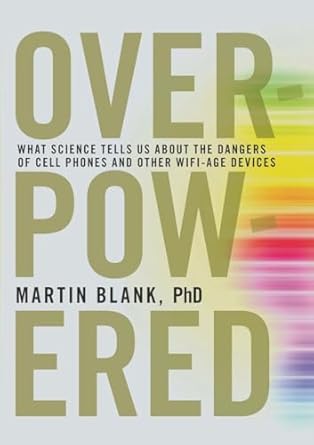
For a comprehensive exploration of EMF health effects including cellular effects, along with practical protection strategies, explore these books by R Blank and Dr. Martin Blank.